The decision of the Ministry of Defense to suspend the provision of military aid from the reserves of the Bulgarian Army to Ukraine has provoked a sharp reaction from the opposition parties.
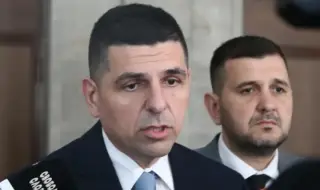
No weapons were donated to Ukraine, emphasized the co-chairman of "Yes, Bulgaria" and MP from "Democratic Bulgaria" – Ivaylo Mirchev in the program "Speak Now" on BNT.
"First of all, we must say that Bulgaria has provided about 2% of the total weapons and ammunition that have left Bulgaria for Ukraine from the warehouses of the Bulgarian Army. An additional 1%, outside of these 2%, is from the warehouses of the gendarmerie, over 100 armored personnel carriers, and the remaining 97% are from Bulgarian factories. Ukraine has paid for these 97% of weapons and ammunition that go to Ukraine from Bulgarian factories. This money, about 6.5 billion euros, enters the Bulgarian economy, they work for Bulgaria. I claim that from 2022 to now it is about 6.5 billion for weapons sold by Bulgarian factories. Which is 90% of the total provision. The remaining 3% are 2% from the warehouses of the Bulgarian army and 1% from the warehouse of the gendarmerie, over 100 armored personnel carriers. These 97% that we have produced in Bulgaria and sent as weapons and ammunition to Ukraine, were paid for by Ukraine or by partners of Ukraine. These 3%, which are from the gendarmerie warehouses and the army warehouses, were paid for by the European Peace Mechanism and from tripartite deals of the Bulgarian state with other countries. There are no donated weapons. There are no donated ammunition. Everything that we have sent, we have received. There is a big misconception in Bulgarian society that Bulgaria has donated weapons to Ukraine. This is not true," he said, adding that Ukraine currently does not need anything from our warehouses.
"And the saddest thing in this case is that Bulgaria has not managed to modernize its army in recent years, as a result of which Ukraine currently does not particularly need anything from our warehouses. Maybe there are a few units that would be of interest. On the other hand, at least this is a country that already makes 7 million drones per year. For 2026, they plan to produce 7 million drones. Imagine what it's about. We're not going to produce drones for the Bulgarian army. We've come this far. From that point of view, we have things in our warehouses that can go. And it's not true that there aren't any. Bulgaria, by the way, is the largest warehouse for Soviet weapons. It's 40-50 years old. It doesn't do much work, because the war is already being fought in a different way. Everyone sees this in the news - it's all robots, drones, not the old conventional way", Mirchev also said.
"The question is that we haven't given anything to Ukraine, as rumors have it. This is not true. Ukraine is one of the countries that has invested a lot in the Bulgarian economy in the last 4 years - 6.5 billion euros. Very few countries have purchased production for such amounts. Then, when Bulgaria gets into the world video exchange in this way, we have to ask ourselves the question - is this good or bad? When all European countries help Ukraine, it is not about dividing society and saying “enough with this Ukraine“. The question is where Bulgaria is in all this. Europe is at two speeds – not only in terms of whether you are in the eurozone and Schengen, but in terms of security. When important decisions are made – where to produce modern weapons, whether there will be a common European army, a nuclear umbrella over European countries, how to improve security – Bulgaria, instead of being at the core of making these decisions, we do what would please one person, and that is Putin. If there is a desire from the Kremlin, for one or two countries in the EU to say “we will not send weapons to Ukraine“. And what happens? We do not sit at the decision-making table,” concluded Ivaylo Mirchev.