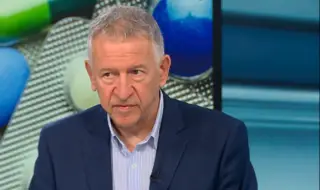
The proposed inclusion of private hospitals in the scope of the Public Procurement Act will not eliminate the large differences in the prices of the same medicines. This was stated in “Hello, Bulgaria“ by the patient representative on the NHIF Supervisory Board and former Minister of Health Stoycho Katsarov.
According to him, the change will not lead to the expected result, because dozens of medical institutions will continue to organize separate procedures at different times and for different quantities.
“You cannot hold 80 public procurements at different times of the year, for different quantities and under different conditions, and expect everyone to achieve the same price. The differences will remain, regardless of whether private hospitals hold tenders,“ said Katsarov.
He recalled cases in which the same medication was purchased at drastically different prices by individual medical institutions. According to him, these differences occurred in compliance with the current rules and will not disappear only with the expansion of the obligation for public procurement.
“The problem is not whether a hospital is state or private. The problem is in the model itself - the hospital negotiates, and the Health Fund pays what is agreed“, he pointed out.
Katsarov proposes that the NHIF take over the centralized negotiation of the prices of oncology drugs for the entire country. According to him, the Fund has a much stronger position, because it is the only public payer and can negotiate for all medical institutions simultaneously.
“The one who pays must negotiate the price. If the NHIF negotiates for the entire country and for the entire year, the price will be the same for all hospitals and could be significantly lower“, said the patient representative.
According to him, a similar mechanism is already used for other groups of medications, including insulins and diabetes medications.
“Nobody organizes separate auctions for insulin in each hospital. The Fund negotiates these products and the prices are among the lowest in the European Union. As the sole buyer, it can also request an additional trade discount“, explained Katsarov.
He dismissed concerns that centralizing the process would inevitably lead to new corruption risks. According to him, the NHIF has been negotiating the prices of almost all the medications it pays for for years, with the exception of some of the medications for oncological treatment.
“Where the Fund negotiates, we do not see these scandalous differences. Where hospitals negotiate and the Health Insurance Fund pays, there are cases of one medicine costing 46,000 leva in one hospital and 150,000 leva in another“, he said.
Katsarov stressed that the current system does not only lead to higher costs. The many separate procedures and contracts can also create problems with patients' access to the necessary treatment.
“The negative effect is not only financial. As a result of these procedures, sick people sometimes go without medicine. Therefore, the solution must be both cheaper for the system and safer for patients“, he said.
According to his calculations, centralized negotiation could save between 40 and 50 million leva per year. These funds could be used for more medicines, medical devices and tests.
“This is the money of insured citizens. Instead of being wasted on an ineffective model, they can be invested in additional treatment, research or products that patients really need“, said Katsarov.
He believes that the lack of such a change can be explained in two ways.
“Either the problem is not understood and therefore the right solution is not offered, or it is understood, but there is an interest in not solving it. These are the two possibilities“, said the former Minister of Health.
According to him, criticism should not be directed solely at hospitals or traders, since they work according to the rules created by the state.
He suggests that the model be extended to medical devices, for which the NHIF also allocates significant public resources. “The fund can negotiate not only medicines, but also stents, valves, artificial joints and other devices. This will create equal conditions and limit large differences in co-payments by patients,“ he said.
According to Katsarov, the change can be implemented relatively quickly if there is political will.
“The solution is simple - NHIF negotiates prices, pays directly to the manufacturer or supplier and hospitals are excluded from the pricing process. This could start as early as next week,“ he said.