There is an increase in support for GERB compared to the data from public opinion polls opinion in November and December, but there is no breakdown of support against these levels in terms of "Continuing the change" – "Democratic Bulgaria". It's somewhat surprising how much of a difference they make.
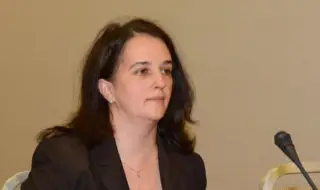
This is what the political scientist Assoc. Dr. Ruza Smilova said in the program "Bulgaria, Europe and the world in focus" on Radio "Focus" in a comment on the "Gallup" survey, which shows voter turnout below 40% and a lead of 10% for GERD-SDS.
She explained this lead with the rotation that did not happen and the more convincingly articulated position of GERB in the media. "I expected to see a decrease in support for PP-DB rather than an increase in support for GERB, considering the survey by "Market Links” for the high levels of disillusionment with the political process among Bulgarians. Over 50% of the people are disappointed, and there is no way that this disappointment can be translated into an increase in the rating of any of the parties that were in power until now, Smilova commented.
In recent years, voter turnout has been permanently below 40%, she noted. "In a way, it surprises me that colleagues give 40%. I personally expected it to fall more. We will see if the fact that the elections will be 2 in 1 will not lead to an increase in voter turnout, added the political scientist.
She expressed concern that the artificially generated scandals lead to the withdrawal of a considerable percentage of voters from the ballot boxes. "We've seen it back in 2013 with Kostinbrod, we've seen it repeated many times. One of the criteria by which it will be judged whether the elections were conducted fairly is how many scandals we will see. The less scandals, the better. And the less the services interfere with the election process with signals, the better. This does not mean that the Ministry of Internal Affairs should not do its job. We saw that the Ministry of the Interior did not do its job well in the local vote and allowed a rather large percentage of vote buying – something that was not the case during the official offices, which organized a series of three elections”, pointed out Ruzha Smilova.
She expects the campaign for European and national elections to be fierce. "Instead of talking and debating policies, we will see a war of compromise. The first blows have already begun. The most worrying thing is that in this war we once again see the direct involvement, and selective involvement of the services – DANS, the Ministry of the Interior, the prosecutor's office, who choose to extract incriminating information for some political players and systematically ignore signals that may implicate other political forces. This practically leads to the intervention of the services in the political process. Instead of them guaranteeing equality of the players, fair and neutral conduct of the elections, once again we are witnessing the involvement of the services and taking a political side in them”, pointed out Ruza Smilova.
In her words, people who occupy leading positions in services are very rarely completely independent. "In a tense political situation, these dependencies begin to have their influence on the electoral process, and this is particularly worrying,”, the political scientist emphasized.