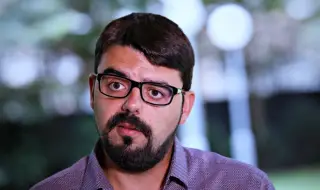
With the postponement of reforms, the Bulgarian parliament has said "goodbye" of the funds under the Recovery and Sustainability Plan. This is what he said in the program "Bulgaria, Europe and the world in focus" on Radio "Focus“ the energy expert from the Center for the Study of Democracy Martin Vladimirov.
If we don't immediately start implementing the projects under the Recovery Plan, we will effectively lose all the funds. But the funds cannot even be transferred before certain mandatory steps are achieved, the specialist is emphatic. "The plan for recovery and sustainability is a contract between the European Union and the member country Bulgaria, in which key reforms in various systems of the Bulgarian economy, administration of justice, etc. are listed in great detail, and against these reforms funds are allocated in tranches . There are 4 tranches – we have only received the first tranche, while most countries are already on the 3rd tranche,” he explained.
In his words, not only will we lose European funding, but those projects that have started to be implemented now will have to be paid for with national funds. "I mean we are giving up the money from Europe, we will give additional funding to complete the started projects and on top of everything we are giving 1 billion for the reclamation of Mini "Maritsa Iztok“ which billion is set in the Territorial plans for a just transition, which can also not be approved and the funding does not come.“
The reason for all this, according to him, is Bulgaria's refusal to reform and liberalize its electricity market, and this is one of the most important reforms for which the European Commission will not compromise. "This is one of the most key reforms because it is tied to the support for coal plants in Bulgaria. By liberalizing the wholesale market, Bulgaria will not be able to grant direct subsidies to the two American plants in the form of long-term power purchase contracts, and to the state-owned "Maritsa Iztok 2", which receives capacity on the regulated market regardless of whether it operates at a profit or not .“
For him, the alternative is the funds we receive from the sale of carbon dioxide quotas, which are equal to 2.4 billion for last year, and these funds, according to him, can be used to reduce energy poverty and to completely restructure the Bulgarian economy, "but we don't spend them on that, we spend them to finance the coal plants”. The winners of this situation are the coal plants and all the companies that gravitate around them, providing a variety of auxiliary services, the expert explained.
For Martin Vladimirov, Bulgarian energy is dominated by private and political interests, and decisions are not made on the basis of expediency and long-term vision, but are based on short-term political and economic goals. According to him, every government has the opportunity to reverse the direction of the negative development process, but it must have the political will and desire for a real change in the way decisions are made in the Bulgarian energy sector.