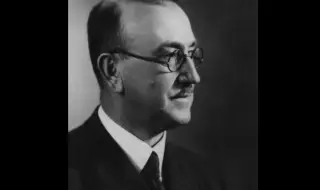
The coup of May 19, 1934, which was carried out by the Military Union and the Political Circle “Zveno”, was the result from numerous domestic and foreign policy prerequisites.
At the beginning of the 30s of the 20th century, the Kingdom of Bulgaria was in a complicated internal and foreign political situation. As is known, there has been a world economic crisis since 1929, which, despite the actions of the Bulgarian governments to support economic development and deal with social tensions, inevitably affects the Bulgarian economy.
To this, of course, the traditional problems of Bulgaria must be added
in connection with its unenviable position in the Versailles system of treaties and especially the international isolation at the European and Balkan level. This is the basis of the agreement signed on February 9, 1934. in Athens, the Balkan Pact, between the representatives of Greece, Turkey, Yugoslavia and Romania, which guarantees the territorial status quo of the peninsula and is clearly directed against Bulgaria and Albania. They alone strive for revision.
The hard-knit governing coalition between the Democratic Party, BZNS – Vrabcha 1, the National Liberal Party and the Radical Democrats is an expression of the serious party fragmentation in Bulgaria at that time. In addition to the ruling parties in the 23rd National Assembly, the following political groups are also represented: the Democratic Alliance, the Workers' Party, the Macedonian Group and the Social Democratic Party.
Outside the parliament, there are about 40 other political parties, which gives reason to talk about “decay“ of political life. This led to instability, but on the other hand, the years from 1931 to 1934 were one of the most democratic in modern Bulgarian history. These years are also times in which authoritarian and totalitarian regimes are gaining strength in Europe.
There are also two different from the traditional political organizations in the country.
The "Unit" circle created in 1927 is an elitist fascist-type structure. They are announcing the reduction of electoral bodies and the introduction of the corporate principle. They are also against the multi-party system and aspire to a more authoritarian way of governing.
The Military Union was created at the beginning of 1919, in the conditions of the defeat of Bulgaria in the First World War, the officers who were members of it were worried about their future, in view of the defeat of the Kingdom in the war and the subsequent restrictions imposed by the Treaty of Neuilly . The organization strives to limit the role of parties in society and is a great opponent of the BZNS and the communists. It uses the tacit support of Tsar Boris III, and the main figures are Kimon Georgiev, Damyan Velchev, Krum Kolev, etc.
The military alliance also played a decisive role in the implementation of the Nine-War coup. From the beginning of 1934, there was a crisis in the relations between the parties of the ruling majority. The desire of the BZNS for another ministerial seat is rejected by the democrats and the government is reeling. In this moment of instability, the Military Union has already decided to work on organizing another coup.
On May 9, the king gave the post of Minister of War to Gen. Atanas Vatev from the union, which is a clear sign of his attitude to the cooked action. On May 15, Prime Minister Mushanov resigned from the government, making it easier for the military. A decision was made on May 19, 1934 at 2:40 a.m., the Military Union together with the political circle “Unit” to carry out the coup.
The password to start the actions is “Saber“.
Everything goes according to plan, including the desire not to spill blood, because the coup plotters meet no resistance.
Kimon Georgiev and Pencho Zlatev meet with Tsar Boris III at 5 o'clock. Although he accepts what happened, the monarch wants things to be done in a constitutional way and for the arrested Mushanov to be released in order to return the mandate. A government headed by Kimon Georgiev is formed. It mainly includes representatives of the “Zveno”, but there are also people from the traditional parties, albeit from the lower echelon.
On May 19, the new rulers issued a manifesto to the Bulgarian people, in which they explained their actions with “The complete dissolution of the parties, which deeply affected society, the state and the national economy.“ The document talks about limiting local self-government, centralizing the administration and more serious involvement of the state in economic life, which is in the spirit of world economic trends in the 1930s.
The National Assembly has been dissolved and over 180 decrees have been issued, which aim to radically change the political-economic system. Ministries were reduced from 10 to 8, and the sixteen counties were converted into 7 districts. All municipal councils have been dissolved. A purge is being carried out in the administration and in the army, and only personnel loyal to the new government are appointed.
On June 14, the landmark ordinance was issued – law on the prohibition of party-political organizations and their divisions.
Their properties and archives are confiscated. Democratic rights to freedom of speech and association are restricted. It is this regulation that cripples parliamentary democracy for a long period of time.
In the propaganda order of the Minister of Defense Zlatev issued on July 27, there is talk of “the bright future of the renewal process”. The revolution would bring a “new era” and governing in the national interest. According to the document, power is now exercised by competent people and the “dictatorship of numbers and the crowd” has been abolished.
The main governing body of the new authority should be the Directorate for Public Renewal created at the beginning of June – it is headed by a director and has a branched structure of several departments and services. It should work in direct connection with and direct other state institutions. From July 30, the state, borrowing the practices of Italian fascism, began to organize casion professional associations that “serve as organs of the state to conduct its economic and social policy”.
Thanks to the reductions and optimization of the state apparatus, the 19-year-olds managed to achieve about half a billion BGN savings and Kimon Georgiev declared the financial situation stable at the end of the summer. Persecutions are organized mainly against the communists, but some of the leaders of the traditional parties are also targeted.
In the summer of 1934, mass arrests of VMRO activists also took place.
The revolutionary organization falls under the ban on political organizations. At the same time, Tsar Boris III was not satisfied with the growing influence of the military in the political life of the country. Over time, the disagreements between them increased.
After two changes in the government, on April 21, 1935, the monarch managed to form a new cabinet headed by the civilian non-party diplomat Andrey Toshev. This allows him to limit the role of the military as much as possible and establish an authoritarian regime under his command. His actions are called by some historians “tsarist counter-coup“. In the end, without having organized the coup of May 19, 1934, the Tsar successfully took advantage of it. He managed to outwit the organizers, thus increasing his personal power.