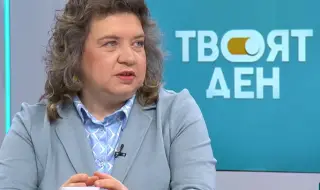
" There are points with which, at first reading, I do not agree. There is one underlying motif that can be seen throughout the solution – that the court itself is divided. On certain issues they managed to achieve either a majority or unanimity, on others they did not succeed."
This is what Assoc. Nataliya Kiselova, lecturer at the Sofia University "St. Kliment Ohridski", after the Constitutional Court ruled on the latest amendments to the Constitution.
"The victory is not complete, as the opponents of the reform claim,", she believes.
"When you are the main mover in changing the Constitution, when you are a co-sponsor, and then you participated in the discussions and in 4 votes on substance, you should not participate from the beginning. Because it is clear that you will support the changes", Kiselova said regarding the participation of Desislava Atanasova in the vote, after she was a participant as a parliamentarian in the adoption of the texts, which were then challenged before the Constitutional Court.
Referring to the wide majority with which the constitutional changes were approved, the specialist pointed out that he is "opponent of high majorities because they do not give wider support, but rather an opportunity for the minority to blackmail".
The difference between the 2015 constitutional amendments and the current ones, according to Kiselova, is in the "political gentlemen's agreement,", which, according to her, they clearly failed to achieve now – "an unwritten, unspoken, undisclosed agreement", which is why all changes were challenged.
There is a certain opening of the curtain to see how the institutions function in our country. Before, the CS gave predictability about its work, now the tactic of announcing day by day is incorrect, reports the teacher.
"These 12 judges live in our environment, they have contacts, families and surely it affects them too. This is also a question of conversations between them. The issue of media appearances of constitutional judges, participation in public events in general – they must decide among themselves. Is it permissible to participate in matters that may subsequently be disputed in the body of which you are a member. If you have a personal opinion, you have the right to a special opinion – you write it and make it public," she emphasized.
Natalia Kiselova disagreed with the thesis that the only solution from now on is the convening of the Supreme Court.
What is being restored - the chief prosecutor exercising legality supervision over the activities of all prosecutors, will actually be pressure from within, the constitutionalist opined.
There is a dilemma – whether the prosecutor's office should be unified or decentralized. This is a matter of political decision, pointed out Associate Professor Kiselova.
The way in which people enter and grow internally in the judicial system is a serious problem, she added.
"The problems come from what kind of people are nominated and what kind of people are elected. Not only from the National Assembly, but also within the judicial system. Shouldn't all of the panel of judges be indisputable?"
The more constitutional regulation the judiciary received, the more we are not satisfied with its work, commented Nataliya Kiselova in the program "Politically INCORRECT".
"They thought that by raising them to the constitutional level, they would make them more stable. No!"
Amending the Constitution should be the last step, not the first, she is categorical.
In response to a question, is it possible to have another edition of the "home book" for the election of an acting Prime Minister, Assoc. Nataliya Kiselova pointed out that "cooperation between the authorities can also be a lack of cooperation", but expects a "much more careful approach on the part of the President", because the crisis is deepening instead of let's get out of it.
"The benefit will be that the state will not be further destabilized. He will do consultations again. If the National Assembly has elected an ombudsman and a deputy ombudsman, the circle of persons will be expanded. (…) It always matters what a person's name is, what qualities they have and what addictions they have. In a caretaker government, it is important who the ministers are."
With another composition of the Constitutional Court, the provisions that remained in force and were not canceled may be challenged – this is an opinion that is starting to be launched, Prof. Kiselova explained. At the moment, however, she considers it incorrect to appeal to the court again.