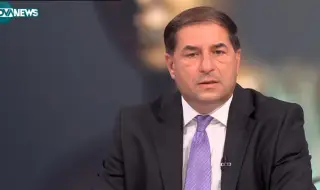
If there is no legal change that would refer the six months for the procedure for electing members of the Supreme Judicial Council to the existing situation, Borislav Sarafov can put the Prosecutor General in office until the issue is resolved by the National Assembly. There is a principle of continuity of state governance.
This was what Doctor of Constitutional Law Borislav Tsekov told NOVA.
This week, an interpretation of the Supreme Judicial Council focuses attention on the acting Prosecutor General Borislav Sarafov, who remains in office regardless of the 6 months specified in the Judiciary Act.
"The interpretation of the Prosecutor's College is correct. It is based on the exact meaning and content of the norm of Article 170, paragraph 15, voted in the National Assembly, in force from January 21. In the event of early termination or expiration of the mandate of the Prosecutor General, an acting prosecutor is appointed. A transitional provision is brought into line with the current case, but probably due to a lack of legal competence, such a provision is not provided for", commented Tsekov.
The Prosecutorial College of the Supreme Judicial Council will not take action to appoint a new acting Prosecutor General. The reasons are that the provision adopted on January 21 by the National Assembly is effective only in the future and there is no explicit legal norm that would give it retroactive force.
"The National Assembly intervened without having the authority to do so and terminated a pending procedure for which the SJC has explicit constitutional authority. In addition, it introduced a categorization of the SJC - those whose mandate had expired did not have the right to fully perform their functions while others did. This is not constitutionally provided for. Regardless of whether the SJC is filled, if it meets the requirements for a legal quorum and majorities for decision-making as a collective body, it can and should function. There is no way that a high constitutional body, given that the Constitution does not explicitly provide for its powers to be automatically terminated, can stop functioning just because someone thought that after the mandate expired, the SJC had no moral right. The Council is obliged to fulfill its powers, the blame lies with the National Assembly, it has been dragging out the renewal of the personnel for years", Tsekov pointed out.
At the beginning of the year, amendments to the Law on the Judiciary were adopted, which terminated the procedure for electing a chief prosecutor and introduced a ban on this composition of the Supreme Judicial Council from opening new ones and electing chairmen of the supreme courts and prosecutor No. 1.
The transitional and final provisions stated that within six months of the law entering into force, the National Assembly and the bodies of the judiciary would begin a procedure for electing members of the SJC. That is, this was to happen by July 21.
"10 years were wasted by people who talked about judicial reform, but did not want to carry it out and were not competent to carry it out. Absurd and untenable constitutional changes were adopted and therefore fell to the Constitutional Court. The real reform consists of legislative changes and such in the judicial and material-technical expertise. The EC noted the failure of PP and Hristo Ivanov - people professionally unsuitable for judicial reforms. They were in a toxic trance. I call on these people to take a step back, if they do not understand the subject. The reform must change the quality of justice, and not serve interests, "the constitutionalist also said.