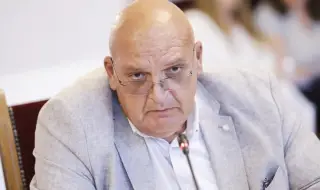
After the tragic incident in Nessebar, in which a child died, the chairman of the Bulgarian Medical Union Dr. Nikolay Brunzalov commented that the main cause of death was the severe altitude injury, and not the actions of the medical teams.
"The cause of this child's death is neither in the resuscitation vehicles, nor in the work of the medics, nor in their logistics. The problem is clear what it is – broken rope and attractions, for which no one has conducted the relevant control so far, "said the guest of "Denyat ON AIR".
Dr. Brunzalov explained that in the event of a fall of over 40 meters, the chance of survival is minimal, regardless of the speed of the reaction.
He also added that the rescuers and medics acted according to the rules, and the first minutes after the incident were crucial. However, the injuries were incompatible with life.
"All rescuers provided first aid, because they are required to have the relevant certificates from the Bulgarian Red Cross. There was a stationary office, beautifully equipped with the necessary equipment nearby. The colleague called a second resuscitation vehicle. If necessary, a third and fifth would have been called. "It's about a child falling from 40 meters because his seat belt, which was supposed to keep him alive, broke," Dr. Brunzalov told Bulgaria ON AIR.
According to him, it is incorrect to claim that the death occurred due to the ambulance's delay or the lack of a doctor in the first team.
He pointed out that in Bulgaria, as in many European countries, in such cases, paramedics are the first to respond, and not always a resuscitator. Even if there had been two resuscitation vehicles on site, the outcome would have been the same. The chairman of the Bulgarian Medical Association emphasized that the real problem is the lack of a sufficient number of ambulances, teams and funding for emergency care. He is categorical that the responsibility lies with the state and the Ministry of Health, which do not provide the necessary resources.
"Who should provide emergency care in Bulgaria? The state. The Ministry of Health. Is there an area in Bulgaria where there is an adequate number of ambulances, an adequate number of teams? One, if you can find one, would be good, but there is none. The difference is huge – there are many times fewer. And these people really practice this profession in very difficult conditions," said Dr. Brunzalov.
He also raised the broader issue of the chronic underfunding of the healthcare system. According to him, the case in Nessebar once again shows that reforms and a clear policy are needed to provide healthcare services with enough doctors, nurses, paramedics and modern equipment.
"How many times do we have to repeat that Bulgarian healthcare is underfunded? This is yet another case that shows that reform is necessary. Less money enters the healthcare system in Bulgaria than in any other European country, a member of the EU. There is no other country with an 8% health insurance contribution and allocates only 5% of GDP for healthcare. There is none," said the chairman of the Medical Union.