The Executive Director of the Bulgarian Food Safety Agency, Dr. Svetlozar Patarinski, and the Chief State Veterinary Inspector, Assoc. Prof. Iliyan Kostov, will hold a meeting with representatives of the European Commission in Brussels tomorrow. This was reported by the BFSA, quoted by Nova TV.
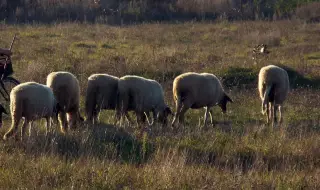
The main focus will be the discussion of the advantages and disadvantages of the implementation of vaccination of small ruminants against smallpox, as a measure to prevent and limit the spread of the disease, the BFSA informs. The conversation will discuss the current epizootic situation in Bulgaria and neighboring countries.
At an extraordinary meeting of the Central Epizootic Council under the Council of Ministers, convened by Deputy Prime Minister Tomislav Donchev on July 28, measures to deal with small ruminant pox were discussed, the Ministry of Agriculture and Food announced at the time, BTA recalls.
"In order to successfully deal with the spread of the disease, the state and the industry should join forces in implementing stricter and more effective measures. These include increased border control and decisive action against illegal trade in animals - one of the main reasons for the spread of infections," Tomislav Donchev pointed out at the meeting.
Minister of Agriculture and Food Georgi Tahov explained that a number of measures have been introduced to limit the infection. It was also stated that advance payments of compensation to affected farmers are made within one week of an outbreak being identified, even before the completion of administrative procedures for receiving the full amount of compensation.
The control over the purchase and transport of raw milk, as well as the temporary ban on trade, movement and grazing of small ruminants in the affected municipalities, remain in force. Visits by veterinarians and samplers to farms are also prohibited, it was stated at the meeting.