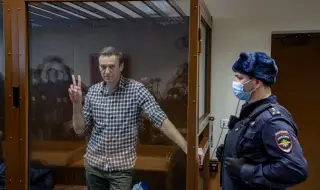
The Council of the European Union has imposed sanctions on six people - most of them scientists and researchers - for their involvement in the development of the toxin that killed Kremlin critic Alexei Navalny, Reuters reports.
The EU said the sanctioned individuals were involved in the development of chemical weapons, in particular the substance epibatidine, traces of which were found in samples taken from Navalny's body after his death. The toxin is found in poisonous frogs from the "tree frog" family in South America and does not occur naturally in Russia.
Russia has demanded that European countries accusing Moscow of poisoning Navalny provide concrete evidence to support their claims.
Those on the EU sanctions list are subject to asset freezes and a ban on entry to the European Union.
Navalny, Russia's most popular opposition leader, died suddenly in prison in the Arctic Circle on February 16, 2024, at the age of 47. Two years later, it was revealed that he had been killed with a poison developed from the toxin epibatidine.
In 2020, Navalny survived poisoning with the nerve agent Novichok, undergoing treatment in Germany and being arrested at the airport upon his return to Russia.