


Modern minimally invasive procedures are increasingly replacing classic surgical interventions, sparing patients, shortening their stay in hospital and significantly improving their quality of life. University Hospital “St. Ekaterina“ hosted a two-day international forum dedicated to modern minimally invasive procedures in patients with oncological, liver, pulmonary, gastroenterological and other diseases. How are minimally invasive technologies developing and how are they changing modern medicine… Dr. Krasen Ivanov, gastroenterologist at University Hospital “St. Ekaterina".
- Dr. Ivanov, what are the biggest advantages of minimally invasive drainage procedures over traditional surgical interventions in patients with oncological and liver diseases?
- Minimally invasive drainage procedures provide significant advantages for both patients and medical teams. They are performed under ultrasound or X-ray control, without the need for large surgical incisions, which reduces the risk of complications, pain and recovery period. Ultrasound-guided procedures are increasingly replacing surgical interventions. In patients with oncological and advanced liver diseases, this is especially important, because we are often talking about people with reduced body reserves and multiple concomitant diseases.
- To what extent is Bulgaria competitive in the field of interventional gastroenterology and ultrasound-guided procedures?
- In recent years, Bulgaria has made significant progress in this area. Especially with the introduction of endoscopic ultrasound. We have highly qualified specialists and modern equipment that allows the implementation of procedures comparable to those in leading European centers. Of course, there is potential for further development, especially in terms of access to highly specialized services in different regions of the country.
- What are the most common conditions in which patients need drainage procedures, and how quickly does symptom relief occur after their application?
- Most often, drainage procedures are required for fluid accumulation in the abdominal cavity (ascites), biliary obstructions, liver abscesses, cysts or other pathological fluid collections. In the majority of patients, improvement occurs very quickly - sometimes in the first hours after the procedure. Pain, abdominal tension, difficulty breathing and general discomfort are reduced, which significantly improves daily functioning.
- You are among the pioneers in Bulgaria in the placement of peritoneal tunnel catheters for the treatment of malignant ascites. How has this technology changed patients' lives in recent years?
- Peritoneal tunnel catheters represent an important step forward in palliative medicine. Before them, many patients had to be hospitalized repeatedly for punctures and evacuation of fluid. Now they can control their condition much more easily, at home and under the supervision of medical specialists. This reduces the frequency of hospitalizations and provides more independence and comfort in everyday life.
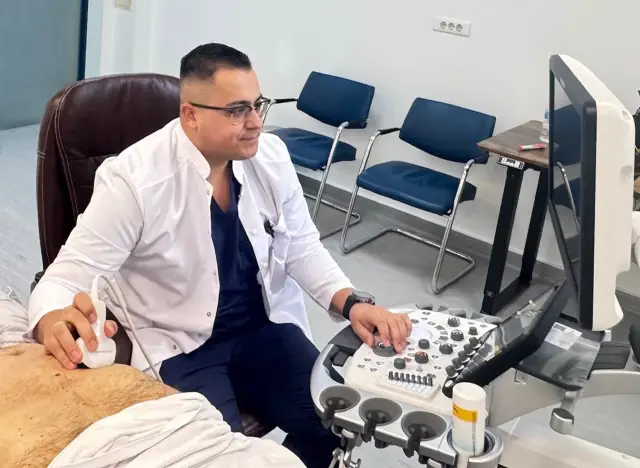
- More and more patients with oncological diseases are being treated outside the hospital. To what extent do modern drainage systems allow safe home monitoring and control of accumulated fluids?
- Modern systems have been developed for this very purpose. They are easy to use, reliable and allow controlled drainage while following clear medical instructions. With proper training of the patient and his relatives, as well as regular contact with the treatment team, home monitoring is safe and significantly improves the quality of life.
- Liver biopsy often causes concerns among patients. How do new ultrasound techniques increase the safety and accuracy of the procedure?
- Modern ultrasound allows extremely precise needle guidance in real time. This allows us to choose the most appropriate site for sampling and avoid important vascular structures. This reduces the risk of complications and increases the diagnostic value of the biopsy. In addition, the use of modern imaging technologies makes the procedure shorter and more comfortable for the patient. The classic percutaneous (through the skin) liver biopsy remains an established and widely used method, but modern interventional gastroenterology offers a significant upgrade through liver biopsy under endoscopic ultrasound control. This technology allows us to visualize the liver in real time and reach lesions that are difficult to access or invisible to standard ultrasound through the abdominal wall. The advantage is not only the higher precision in sampling, but also the ability to examine different areas of the liver through minimally invasive access. This is especially valuable in small focal changes, deep lesions or patients with specific anatomy.
- What symptoms are most often underestimated by people, but can actually be a signal of serious liver or gastroenterological disease?
- Many people ignore symptoms such as prolonged fatigue, unexplained weight loss, bloating, changes in bowel movements, yellowing of the skin and eyes, lack of appetite or constant discomfort in the right hypochondrium. These complaints do not always indicate a serious illness, but when they are prolonged or progress, it is important to seek advice from a specialist.
- How do you see the development of interventional ultrasound and minimally invasive procedures in the next five years - will even more patients be able to avoid major surgeries and long hospital stays?
- I am convinced that this trend will increase. The development of imaging diagnostics, new drainage systems and advanced interventional techniques will allow more and more diseases to be treated in a gentle manner. I expect a significant expansion of the indications for minimally invasive procedures, which will reduce the need for major surgical interventions and shorten the hospital stay for many patients. Our main goal remains not only effective treatment, but also preserving the best possible quality of life.