


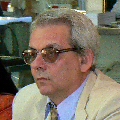
„One name at that time made us all lose both our minds and words out of fear. This name was Efrem Chuchkov - the most wanted by our police and military Bulgarian commissar in Macedonia. We called him FIRE Efrem.“
Galib Vardar, an officer of the Turkish military intelligence
Efrem Chuchkov was born on November 21, 1870 in Shtip. He gave his life for the freedom of Macedonia and its unification with Bulgaria.
He avoided publicity. He avoided political struggles, parties, intrigues and the "spotlight".
In the beginning, he was called "Gotse Delchev's right hand". Later, in the press of that time and in their memoirs, his contemporaries characterized him as:
„The Practitioner of the Organization“;
„Colossus of the revolutionary cause“;
„Organizer of combat activity and instructor of the detachments“;
„Legendary commander and apostle of the liberation struggles of the Macedonian Bulgarians“;
„One of the notable leaders of VMORO/VMRO”;
„Unwavering defender of the founding principles of the Organization, who kept his name untarnished“.
He participated in the organization of illegal revolutionary committees, mainly in Macedonia, but also in the enslaved part of Thrace. After the beginning of the arrests in November 1897 in the Kochani, Shtip, Kratovo, Palanechko, Radoviško, Kumanovo, Skopje and other regions as a result of the Vinnik affair, Efrem Chuchkov managed to withdraw and temporarily transfer to Bulgaria. Then Mishe Razvigorov - one of the hundreds of captured and tortured activists, did not expose Chuchkov and his comrades, but took the blame only on himself and was exiled.
On April 12, 1898, the voivode Efrem Chuchkov led the first detachment of the Chetnik Institute of the VMORO. He led a huge number of battles against the Turkish enslavers and later - against the Serbian occupiers, and is immortalized in some of the folk songs of the Macedonian Bulgarians. The Turkish authorities declared Efrem Chuchkov one of the greatest enemies of the Ottoman Empire and the most dangerous Bulgarian commie. Sometimes cavalry and gendarmerie camps surrounded entire towns and villages in Macedonia in order to capture or kill Chuchkov and his chetniks.
At some periods he was a Bulgarian teacher in Shtip, Pehchevo and Melnik, albeit with a foreign nofuz (identity card), under the name “Simeon Mihaylov”. In parallel with his teaching, he carried out active revolutionary organizing and agitating activities. At the end of the 19th and the beginning of the 20th century, he sometimes stayed in Sofia, where in front of Chuchkov and his “crucifixion of a dagger and a revolver” volunteers from the territory of the Principality of Bulgaria, willing to dedicate their lives to the cause of winning the freedom of Macedonia, took the oath.
His contemporary Hristo Popkotsev wrote about him: “He roamed the villages and palanquins of his kingdom, sometimes with a detachment, sometimes without a detachment, sometimes disguised as a beggar or a goldsmith, sometimes as a teacher under the foreign name Simeon, sometimes as a peasant and sniffed out by the Turks, always managing to slip out of their hands in time and skillfully...“. And he adds (referring to the period 1912-1913): “Thanks to him, Shtip remained Bulgarian for a whole year!“.
In the summer of 1908, in his capacity as head of the Skopje Revolutionary District, member of the Central Committee of the Organization and de facto head of the VMORO, Efrem Chuchkov managed to save most of the Organization's weapons and organize their concealment. At that time, Chuchkov called the promises of the Young Turk regime to grant autonomy and rights to the Bulgarian population of Macedonia “a farce aimed at keeping Macedonia under Turkish slavery“ and managed, supported by his assistant and former Chetnik Todor Aleksandrov, to persuade the Chetniks from the Skopje and Bitola revolutionary districts not to surrender their weapons, so that they could continue the fight against the enslaver.
During the Balkan War, Efrem Chuchkov and his detachment liberated Kochani, Shtip and the Shtip region, defeating the Turks in a series of battles (including the Battle of Sultan Tepe), capturing hundreds of Turkish soldiers and establishing an improvised form of Bulgarian power there. He sent a false notification to the Serbian command, vaguely “stamped” with a heated silver five-lev Bulgarian coin, that a regular Bulgarian army had entered Shtip and a “Bulgarian military commandant's office had been established”. In this way, and by disguising his Chetniks and hundreds of local volunteers in clothing resembling Bulgarian military uniforms, he managed to deceive the Serbian generals, who were observing the Štip Valley with their binoculars from the heights not far from the city, and to stop the advance of the approaching Serbian army.
After being appointed Bulgarian governor of Shtip and the Shtip district and remaining in this position until June 25, 1913, Efrem Chuchkov held the same position during the First World War after the defeat of Serbia and the temporary liberation of Vardar Macedonia, as well as the position of chairman of the District Permanent Commission. He was awarded Bulgarian military orders. It is a curious fact that his scribe at that time was Ivan Mihaylov.
After another crushing national catastrophe as a result of the First World War, Todor Alexandrov and Efrem Chuchkov led the resumption of the Organization, which, after the ethnic cleansing of Adrianople, now bears the name Internal Macedonian Revolutionary Organization (IMRO). Although his youth had passed, Chuchkov refused offers in Sofia from the Minister of Internal Affairs Alexander Dimitrov for a clerical position in the State Commission for Refugees and continued the path of illegal struggle in the mountains of the re-occupied Vardar Macedonia, transformed into Southern Serbia. In its reports, Serbian military intelligence reported joint patrols by Aleksandrov and Chuchkov in Eastern Vardar Macedonia together with revolutionary detachments. The two met most often in "their base", as they themselves called Georgi Daskalov's house in the village of Pokrovnik, Gornodzhumaysko.
Along with his tours to strengthen the illegal network in occupied Macedonia, in the period 1919-1923 Efrem Chuchkov once again acted at the border posts (mainly in the main distribution center - Kyustendil) as a coordinator, organizer and instructor of the detachments entering Macedonia from Bulgaria. In parallel with his revolutionary activity in Macedonia, he was also chairman of the Committee for Assistance to Refugees in Kyustendil. However, his combat actions against numerous units of the regular Serbian army were inevitably doomed. Ultimately, his detachment was defeated after a series of unequal battles (for example, in 1922 alone, he fought seven battles with Serbian military units in the Maleshevo and Kochani regions). Seriously ill as a result of his wounds and the hardships of life underground, Efrem Chuchkov died in the Red Cross hospital in Sofia on October 1, 1923. His dying wish to be buried in Kyustendil was fulfilled.
In issue 743 of the newspaper “Tselokopna Bulgaria” (Skopje, 1943) there is the following text: “The enemy knew the strength and abilities of Chuchkov and therefore did everything to destroy him. The famous Skopje policeman Dervish-effendi gave a bag of gold to have Efrem Chuchkov in his hands, alive or dead. But "Uncle Efrem", as the people called him, was elusive. His very name was a secret. The people loved him and kept him close. For thirty years, Chuchkov, as an apostle and voivode, worked for the freedom of Macedonia. His deeds are remarkable and are known throughout his native country. He never tired, he never bowed his head in despair. Chuchkov was and remained a great secret for those close to him.
The authorities in the Republic of North Macedonia publish books about Efrem Chuchkov, make and broadcast films about him and his interaction with comrades, without ever indicating that Chuchkov was a Bulgarian revolutionary, voivode and patriot, including a Bulgarian teacher, and during the wars for national unification – Bulgarian district governor in Macedonia.
In our western neighbor, Efrem Chuchkov is, for example, one of the main characters, along with Gotse Delchev and Dame Gruev, in the anti-Bulgarian opera "Ilinden" by the composer and co-author of the libretto Kiril Makedonski. In their publications and speeches, the statesmen in the RSM call Efrem Chuchkov a "great Macedonian", a "Macedonian national hero" and a "colossus and martyr of the struggle of the Macedonian people for national liberation". This is a frank provocation and a mockery of his name, which is shameful and disgraceful for Bulgaria.
However, Efrem Chuchkov is an almost forgotten apostle of the liberation epic of the Macedonian Bulgarians in our country. Until 1934, before the course towards a great rapprochement with Yugoslavia began, there was a school named "Efrem Chuchkov". At least one street in Sofia still bears his name, but when asked who he was, none of the respondents could answer a random poll. And it could not be otherwise, because in the chaos of the 1990s, due to some administrative oversight, they even stopped reporting his name during the checks-dawn for the fallen heroes of Bulgaria.
In 2023, the Bulgarian National Commission for Military History (BNCH) - a member of the International Commission for Military History at UNESCO - prepared and adopted a "Call for the payment of due national tribute to the hero of Bulgaria Efrem Chuchkov", containing calls for the construction of his bust-monument in Borisova Garden, for announcing his name at dawn checkpoints (as it was years ago), for including information in Bulgarian history textbooks about his revolutionary work, and for implementing popularization initiatives at the national level to raise public awareness about this famous Bulgarian revolutionary, voivode, and teacher.
The BNKHI call was unanimously joined by scientists and public figures who participated in the Solemn Scientific Conference at the Central Military Club on the occasion of the 120th anniversary of the Ilinden-Preobrazhensko Uprising. The appeal was also supported by the Institute for Historical Research at the Bulgarian Academy of Sciences, the Union of Bulgarian Writers, the Union of Bulgarian Journalists, the VMRO – BND and the Union of Reserve Officers and Sergeants. VMRO – BND published a brochure “Efrem Chuchkov – Apostle of the Revolutionary Struggles of the Macedonian Bulgarians”.
The appeal was sent to state institutions, but they have not taken any action. On this occasion, the prominent Bulgarian writer, translator and researcher Rumen Stoyanov stated the following in his essay “Bulgaria, Efrem Chuchkov and Macedonia”:
“... because of our own sloppiness, it turns out that in the RS of Macedonia people know more about Efrem Chuchkov, who bravely fought for his cherished Pan-Bulgarianism, than we do in Bulgaria... Are we acting as treacherously towards Efrem as we did towards Gotse, whose bones we gave to Bulgarian-hating slanderers? Prime Ministers, ministries, parliamentary committees, protocol chiefs of the ceremonial inspections, publishing houses, which, like Pontius Pilate, are conveniently entrusted with the compilation of today's Bulgarian textbooks, are all silent and do not respond to the Appeal of our military historians sent to them long ago to pay due all-Bulgarian tribute to this apostle and martyr of the revolutionary struggles of the Macedonian Bulgarians, they do not care about the duduk for some hero of the wars for national unification Efrem Chuchkov, although he worthily headed the VMRO!”
And in his amazing book “Let Us Remember” another valiant national awakening figure – Rosen Petrov, asked a number of painful questions:
”Why is this great hero not written about in Bulgarian textbooks? Why have we traditionally let the RSM “appropriate” him? Why don't we at least honor him? Why, after the chaos of the 90s, is his name no longer even mentioned during the dawn inspections? Why isn't there at least one bust-monument?... His opponents valued him, it remains for our state to start doing so too. May the ashes of time not cover the fiery Ephraim, burned in the flames of the struggle for the Bulgarian name. And it depends on us.”
In 2025, the Bulgarian Socialist Workers' Party (SBP) again published a special declaration-appeal in support of the vocation of military historians, reminding the institutions in the country that it is high time that real measures be implemented to restore the memory of this key historical figure and a worthy supporter of the Bulgarian cause. A large number of Bulgarian public figures, historians, writers, journalists and researchers also announced their individual support for the appeal. No specific actions by the state administration followed.
In the rare cases when I have received responses from some institutions, they express principled support for the appeal of military historians, but they demand that I provide a source of funding for the bust-monument and the necessary permits from the Sofia Municipality, which is beyond my power. I feel that more and more state officials are not aware that it is the state that is obliged to take care of the hero who gave his life, and not some of his relatives or a non-state organization. As for the other appeals of the historians contained in the appeal - for the name of the hero Efrem Chuchkov to be announced during the dawn checks and for the inclusion of information about his revolutionary work in Bulgarian history textbooks - there is no response. There remains hope for more help from the media and for a possible mass civic initiative.
Yavor Chuchkov