


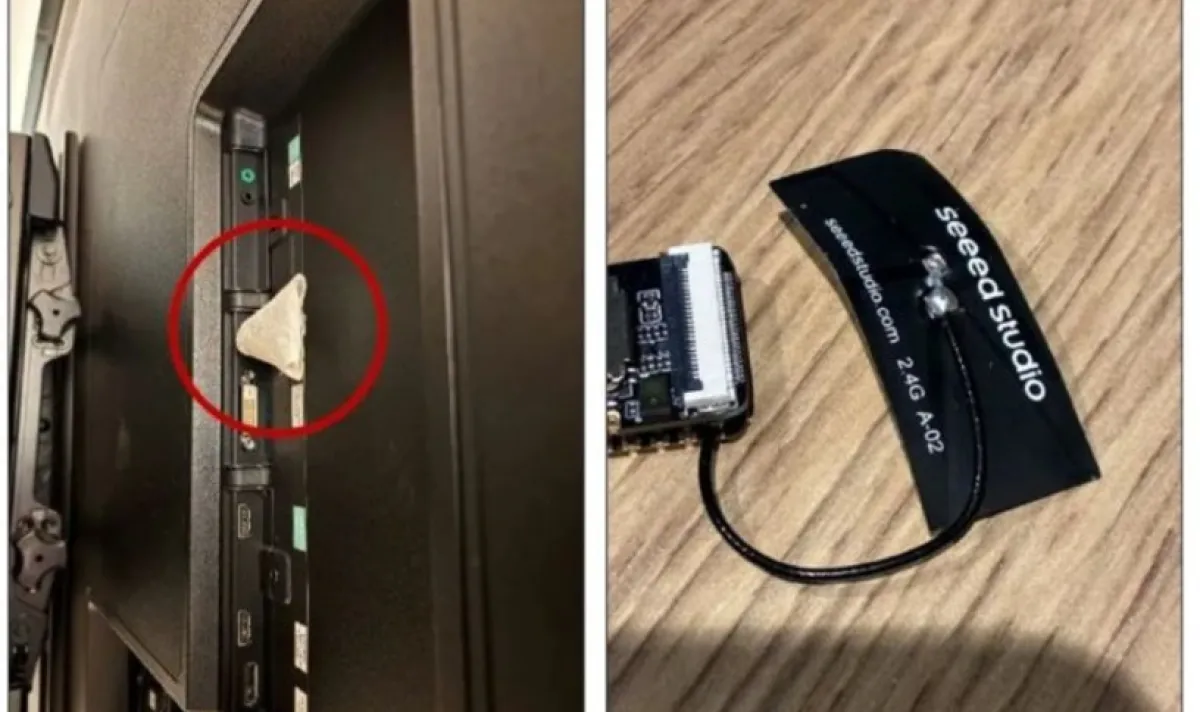

The Federal Bureau of Investigation has arrested product manager Abdurahman Al-Foznan on charges of installing hidden audio recording equipment in a key conference room at OpenAI. Investigators suspect that the former employee of the startup was trying to collect confidential information from meetings of senior management. The company confirmed the incident, specifying that at the moment there is no evidence of leakage of user data, software code or internal parameters of artificial intelligence models.
The arrest was made in San Francisco after company security discovered a recording device attached to the back of a television in the meeting room on September 30. The device was disguised with a piece of toilet paper and plugged directly into the USB power port. According to the analysis from the internal investigation, the microphone was installed around September 28. To identify the suspect, OpenAI used specially developed proprietary AI models that analyzed security camera recordings and the chronology of the device's encrypted memory.
The investigation reveals that Al-Foznan did not have official access to the room in question, where the most sensitive commercial and technological strategies are discussed. However, video recordings from October 5 show him in close proximity to the room. Additionally, a bag with personal documents and a second listening device were found in another corporate building. The search history of his personal chatbot account also found specific queries regarding methods for continuous audio recording and data transfer via Wi-Fi.
The detained employee worked at OpenAI from July last year until the time of his arrest, where he was responsible for the development of software related to AI agents. His professional business card lists an education from the Massachusetts Institute of Technology (MIT), as well as previous experience as a senior systems engineer at Meta, Microsoft and SAP. Al-Foznan also held a partner position at the Saudi venture capital fund Raed Ventures, which is backed by the country's royal family.
Technical analysis shows that the Seeed Xiao ESP32-S3 Sense microcontroller was used for espionage - an affordable module worth about 13 euros. The board has a digital microphone, a MicroSD card slot and the ability to wirelessly transfer data over short distances via Wi-Fi. The investigation into the case continues under the direct supervision of federal authorities.