


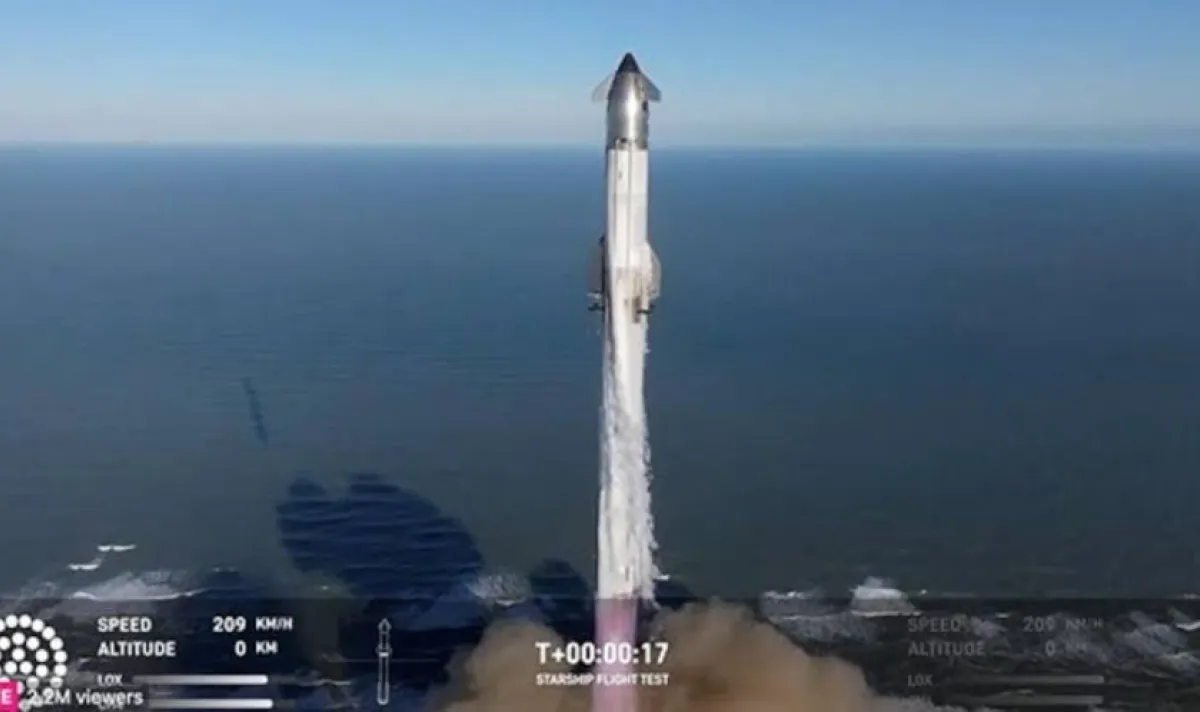

SpaceX failed to catch the Super Heavy booster with the mechanical arms of the Mechazilla tower during Starship’s 15th test flight. After separating from the upper stage, the booster began returning to the launch site at the Starbase facility, but the landing and capture attempt was aborted.
Instead of heading toward the tower, Super Heavy was diverted to a fixed point over the Gulf of Mexico. According to the Associated Press, the booster fell into the water and exploded. Reuters reported that the vehicle briefly hovered above the surface of the sea before exploding. The reason for aborting the maneuver was not announced.
„This is certainly not the news we were hoping to hear today“, SpaceX commentator Kate Tice said during the live broadcast.Super Heavy Booster 22 is the first booster from the V3 version that was supposed to be returned and caught by the tower. The vehicle is about 72 meters tall, and the attempt was part of SpaceX’s broader goal of recovering both Starship stages after every flight. To date, the company had caught three Super Heavy boosters with Mechazilla’s mechanical arms.
Ship 42 continued its flight in orbit
The unsuccessful booster return did not end the mission. The upper stage, Ship 42, reached orbit about 27 minutes after launch and began the autonomous part of its flight. It deployed 26 Starlink V3 satellites intended for SpaceX’s internet network.
The plan calls for the ship to remain in orbit for about 22 hours and complete approximately 14 orbits around Earth. After that, SpaceX is expected to attempt its return to Starbase and its capture by the same tower. This would be the first attempt to catch Starship’s upper stage and the first recovery of both stages during a single flight.
Starship’s 15th test flight was broadcast by SpaceX on its website and on X. The company presents the reusability of both stages as key to more frequent launches and to its future missions to the Moon and Mars.
Sources: apnews.com, space.com, streetinsider.com