


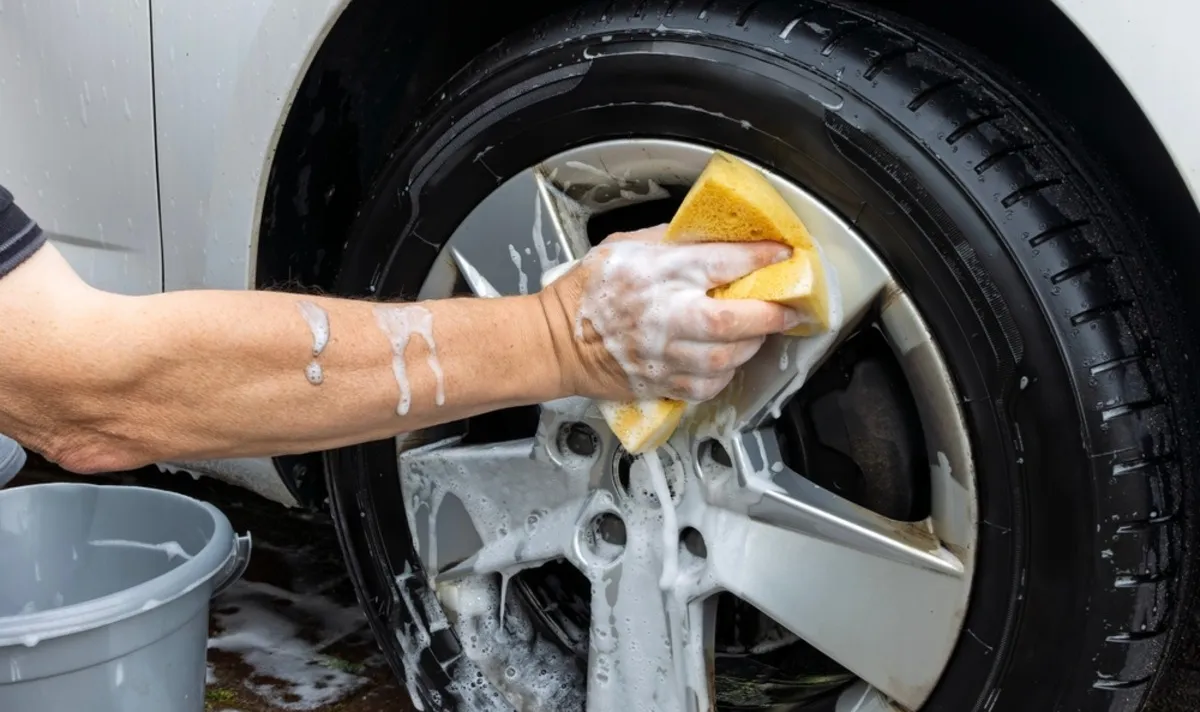

The black deposits that inevitably appear on the rims after every more dynamic urban drive are far from ordinary road dirt. In essence, they are microscopic metal and brake-pad material particles released by the constant friction between the brake pads and discs. Over time, this aggressive dust literally becomes embedded in the finish, forming permanent stains and pitting that can turn even a perfectly maintained car into a neglected-looking machine.
The physical process of braking itself involves continuous friction, with every application of the pedal releasing millions of tiny fragments. While some of them are carried away by the airflow as the vehicle moves, the remaining aggressive fraction settles firmly on the metal surfaces. The problem affects not only drivers with an aggressive style and frequent hard braking, but even those who opt for calm and moderate travel along narrow city streets.
In the rush of everyday life, regular care of the rims is often put on the back burner, but this is a mistake that comes at a high price. The longer the accumulated black film remains on the wheels, the more difficult it becomes to remove it completely, as its corrosive properties begin to eat away at the clear coat. When the contamination is still fresh and the car is washed weekly, ordinary car shampoo does an excellent job, but old and deeply embedded dirt requires specialized chemicals.
Deep cleaning requires a high-quality wheel cleaner capable of effectively breaking down and softening metal particles without damaging the delicate factory finish. The procedure begins with thoroughly rinsing the rims with clean water under pressure, washing away larger grains of dirt and protecting the surface from scratches. The specialized cleaning product is then generously applied over the entire area, with particular attention paid to the inner spokes and hard-to-reach corners, and is left to work for several minutes.
Once the active foam has done its job, the dirt is gently agitated with a soft wheel brush, while a finer brush is recommended for the small openings around the bolts. Finally, everything is thoroughly rinsed with a stream of water, and the procedure is repeated if necessary. To prevent rapid future contamination, drying with a clean microfiber cloth should be followed by the application of protective wax or a special sealant that creates a barrier and repels brake dust until the next wash.