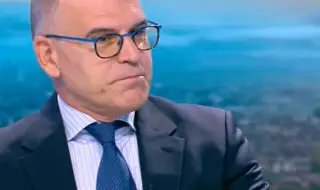
The Fiscal Council has declared itself against the policy of a 3% budget deficit. This was stated by its chairman Simeon Dyankov at a hearing in the Subcommittee for Control of Public Funds in the National Assembly, BNR reports.
The meeting was not attended by deputies from the ruling coalition and from "DPS-New Beginning":
Like the International Monetary Fund, the Fiscal Council has recommended a slowdown in the growth of salaries in the public sector.
The Fiscal Council warned that the economy in Europe is slowing down and this will also affect Bulgaria. The expectations are that wages in the private sector will slow to a growth rate of about 5%, and unemployment will rise slightly.
In the absence of the ruling party, the Fiscal Council admitted that their invitation to the National Assembly is the first official one for the consultative body. The expectation is that this year the deficit could be below three percent, but data is only being used for the first seven months:
"I believe that the government - and this is realistic, the government will finish with a budget within 2.9% of the gross domestic product and possibly, since at the moment we do not know exactly on an accrual basis how much military spending will be estimated, with an addition for military spending that is recognized under the derogation currently approved", said Lyubomir Datsov from the Fiscal Council.
The Chairman of the Council Simeon Dyankov
warned that the policy of a 3 percent deficit hides dangers:"Because if you make a budget of about 3% in advance, there are always surprises, they are usually negative. And that is precisely why one of the conversations that I hope to have with you in the coming weeks is how to avoid in the future programming a budget, knowing that it will be very difficult, and then being surprised by either the situation in Europe, or President Trump's tariffs, or some external blow, so to speak, over which we have no direct influence".
A serious reform of the pension model is needed, the Fiscal Council also warned, but not of the tax system, which is among the most modern in Europe.