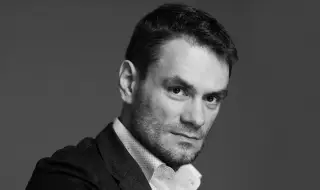
As an employers' organization representing the most significant industries in Bulgaria, we believe that the proposed state budget for 2026 does not meet the real needs of the Bulgarian economy and does not provide the basic conditions for growth - predictability, competitiveness and an investment environment. Instead of focusing on reforms and effective management of public funds, the project relies on a mechanical increase in revenues through higher social security burdens and expansion of spending”. What should we expect? Iliya Krastev, Chairman of the Board of the Bulgarian Employers' Association for Innovative Technologies (BRAIT), spoke to FACTI.
- Mr. Krastev, what do you not like about Budget 2026, since politicians define it as the only possible one?
- I would not agree that this is the only possible budget from the business point of view. It is aimed at short-term filling of deficits by increasing social security burdens and expenses, but does not contain strategic solutions for increasing productivity and investments. The economic growth is mainly due to domestic consumption and public spending, while exports and industrial production are declining.
This shows that there is no sustainable growth engine.
A budget that is driven more by political impulses than by macroeconomic arguments cannot provide the necessary predictability for business.
- You are talking about a lack of strategic vision and predictability. We are entering the eurozone - what awaits us after that?
- Entering the eurozone is an important process, but it is not a panacea. If we continue with an approach based on administratively increasing costs and the tax and social security burden, without reforms and without increasing productivity, we risk becoming the only EU country that enters the eurozone without economic benefits from this - without growth in investments and without improving competitiveness.
The eurozone works in favor of countries that have stable, reformist and predictable economic policies.
If we are not in this category, we will transfer our internal imbalances to the common currency.
- Many economists claim that the draft budget is oriented towards current deficit filling. Do you share this opinion?
- Yes. The draft clearly shows the logic of short-term solutions - increasing revenues through higher social security contributions and expanding spending, without seeking a return. Although on paper a deficit of about 3% is set, it has been achieved at the expense of reducing the capital program and overly optimistic expectations for revenues, which will be difficult to realize with slowing industrial production and low debt collection. In such a structure, there is always a risk that the real deficit will be significantly higher if revenues are not confirmed.
In such a case, capital expenditures will probably be limited or a new loan will be requested, or both - in a more pessimistic scenario.
This will lead to an increase in debt, and at the same time there is no optimization in the number of administrations, and wage growth there continues by inertia. This is not a budget that builds potential for future growth. This is a budget that manages the present at the cost of the future.
- What does this budget say to investors, since it includes an increase in taxes and social security contributions?
- It tells them that the country is seeking fiscal balance through a greater burden on correct payers, instead of through better collection in sectors that traditionally operate in the shadow economy and where about 200 thousand people work. This creates an imbalance and sends a weak signal to investors.
An investor is looking for predictability, low regulatory risk and clarity in tax policy.
When he sees a mechanical increase in burdens, without reform and without improving the business environment, he prefers more predictable markets in the region.
- Public sector spending is increasing. Do you see reforms in return?
- At the moment, we only see spending, but not a change in the model. There is no optimization of the number of employees, there is no linking of remuneration to results, digitalization is moving too slowly, and there is essentially no assessment of effectiveness. More funds in the system do not automatically lead to higher quality of services if it is not clear how these funds are managed and what return they bring. This is visible in healthcare, for example - huge resources, but without a significant improvement in results.
- What effect will the increase in the social security burden have on business?
- The effect is clear - labor becomes more expensive, and Bulgaria becomes less competitive.
High-tech companies, which pay some of the highest salaries and, accordingly, the largest share of social security contributions in absolute value, feel this first. When burdens increase administratively, without assessing the impact, business is directed towards markets that offer a more predictable and stimulating environment.
- How much does people's labor actually become more expensive?
- The most important thing in this case is not the number itself, but the mechanism by which the business environment changes. The increase in social security contributions by 2 percentage points, which is actually about 10%, and the increase in the maximum social security income automatically make labor more expensive precisely in the sectors with the highest added value. This means a greater burden precisely on the companies that bring the most investment, the best-paid jobs and the highest productivity. Such a policy does not stimulate growth, but limits it. It does not encourage the attraction of innovative companies, but puts them in less favorable conditions compared to competing countries in the region that offer a more predictable and stable framework.
- Increased business costs are passed on to prices and increase inflation. What kind of economy are we building then?
- An economy that grows nominally, but not in productivity. This is not a sustainable model. When you administratively increase labor costs, costs along the chain increase, prices rise, inflation accelerates, real incomes shrink and consumption decreases. This leads to a spiral that does not stimulate either investment or growth. A sustainable economy is built through productivity, innovation and a predictable environment, not through cost injections and increasing burdens.
------------------------------------------
Ilia Krastev is a member of the Board of Directors of AIBEST and a long-time CEO of A Data Pro. Under his leadership, A Data Pro has expanded its global presence to over 80 countries. He is actively involved in projects related to artificial intelligence, innovation and education, and is an advocate for strong connections between business, institutions and academia.