The beginning of 1997 remains one of the most dramatic pages in the recent history of Bulgaria. Hyperinflation, bankrupt banks, devalued savings and mass public discontent led to an escalation of the protests and the storming of the parliament on January 10.
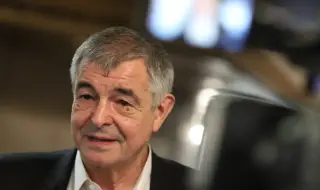
Stefan Sofianski - then mayor of Sofia, and later acting prime minister - spoke about the events in the first person on the program “Offensive with Lyubo Ognyanov“.
“I remember everything minute by minute“, said Sofianski and rewound the tape to the morning of January 10. Shortly before 8 a.m., the late Nikolay Dobrev, then the resigned Minister of the Interior, called him. "Stefan, do something, it's getting scary," are the words that still ring clear in his mind today. Initially, the tension seemed manageable, but by noon the situation was quickly spiraling out of control.
Sofianski describes the first clashes around the parliament, the indecisiveness of the police and the subsequent escalation. "I found myself in a nightmare - breaking glass, a crowd pushing, police who didn't dare to intervene," he said. According to him, the first serious clash occurred when a deputy tried to leave the parliament, which further heated up the situation.
Together with the then newly elected president Petar Stoyanov, who had not yet taken office, Sofianski tried to stop the crowd. "Holding hands, we begged people not to enter the parliament. We were afraid of a pogrom," he recalled. Despite their efforts, after throwing smoke bombs and using tear gas, control was lost and the protesters stormed the building.
The most difficult moments came at night, when police units from the country were brought to Sofia. “That's when the real fighting began. People were fighting“, said Sofianski, emphasizing that the tension was not provoked by the army. “The soldiers came to inspire respect. These are the sons of those same people in the square“, he noted.
Sofianski did not hide his emotion, describing the nightly beatings and chaos in the center of the capital. “There was nothing good that night. It was agony – Bulgarians against Bulgarians“, he said and added that it was these scenes that left the deepest mark on his mind.
The crisis ended on February 4, 1997 with a decision to call early elections, and Stefan Sofianski was appointed acting Prime Minister. He admitted that taking on this responsibility was extremely risky. “The dollar was 3,000 leva. Everyone refused. I agreed, only if I determined my team“, he said. Thus, a government was formed with key economists and financiers, which introduced the currency board – a measure that Sofianski defines as the only possible salvation at that moment.
Today, with the distance of time, the former acting Prime Minister believes that Bulgaria took the right path after 1997, but it had a difficult time. “The direction is right, but the execution is poor – we are going slowly, winding, falling into the ditches“, he said. Regarding the eurozone, Sofianski expressed a critical position, emphasizing that a strong economy should precede membership, not the other way around.
“They didn't win me over with words. I was a relatively successful mayor and making this commitment was extremely risky. Talks were held with other people, but they all refused. For example, Alexander Bozhkov refused to become prime minister. There were others who were talked to, but I can't name them. I set a condition that I would determine my team myself and only then did I accept“, he said.
At the end of the conversation, he sent a clear message: “No more January 10 and 11. That was a sad and shameful moment for Bulgaria.“ Sofianski wished the country to have a stable and strong government that would work for real economic development, so that “Bulgaria would be bubbling with work, not with crises“.