Before we were invited to become members of NATO, a number of large Western European countries, as well as some people in the Pentagon, had doubts about whether to make a major expansion - 7 countries were waiting to be invited: the Baltics, Bulgaria, Slovenia, Croatia and Romania. Then they came up with all sorts of reasons to say that we were not ready for NATO membership, by inventing criteria such as "they have a lot of tanks".
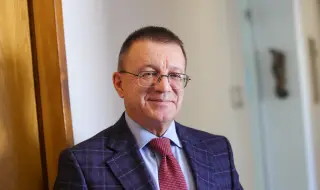
This was told to the Bulgarian National Radio by Boyko Noev, former Minister of Defense and Head of the Permanent Diplomatic Mission of Bulgaria to NATO in Brussels until 1999. He said that this was not the reason why Bulgaria gifted tanks to the Republic of North Macedonia.
"It was to preserve statehood there, because a civil war had begun, and the apparatus of the North Macedonian state was not sufficient to oppose the unrest. That is why Bulgaria helped with tanks, ammunition and many other things, including humanitarian aid. Bulgaria helped selflessly, but not because it did not need the tanks".
May 6 is a day of pride and reckoning for everyone. The pathos surrounding this day, however, "sometimes tends to conceal the problems that exist".
"Since its liberation from the Ottoman yoke, Bulgaria has been one of the most militarized countries in Europe, and after the end of World War II, when they put us in the Soviet camp, we became the most militarized country in Europe. I can say this as a participant in the disarmament negotiations in the late eighties, of conventional weapons. At the end of the negotiations, each country had to say what it had in certain categories of weapons, and when the Bulgarian figures came out, many were very surprised, because Bulgaria had 3,200 tanks. We announced 450 combat aircraft, not including transport aviation, missiles, guns over 100 millimeters, armored vehicles and what not. Today this sounds like lost pride, but then, and perhaps by today's standards, one immediately asks oneself the question: "And what did this cost our people, who needed this militarization".
... The treaty on the reduction of conventional weapons throughout Europe was signed and each country, in accordance with the agreed quotas, reduced the corresponding armaments. These were armaments as a result of the Cold War both in the East and in the West, in huge quantities. Then many of these weapons were destroyed. Others went to warehouses. The Russians took most of them behind the Urals. Maybe some of them are now being brought into the fighting in Ukraine".
In the early 1990s, the military's equipment could not be maintained, and soldiers were allowed to go on leave to eat at home, said Noev, according to whom combat readiness is tested on the battlefield, not on paper. Calls for "neutrality" of our country appeared after the collapse of the Warsaw Pact, he recalled:
"After the collapse of the Soviet system, when the question and the opportunity arose for Bulgaria to return to Europe, to reunite with the European peoples, then by "neutrality" and "national interest" the opponents of leaving the Soviet sphere of influence understood "not to the West". I think that what we hear from some today is exactly that. But these are old, nostalgic things that will not happen. There is no way! Bulgarian citizens have decided this issue categorically and clearly, and if there is a referendum today, it will still be like that.
The army is part of society, and the men and women in the army are citizens, Noev pointed out
"The phrase: "Whoever does not feed his own army will feed someone else's" is often reminded of such gatherings, of brandy and salad. Of course, whoever does not allocate money for defense puts the security of his country at risk, but the question is what kind of defense should it be. Bulgaria needs a defense that will ensure the protection of the people and the functioning of our society and economy, and the protection of our way of life from possible external encroachments. As a member of the large European family and NATO, Bulgaria is much safer because it knows that if necessary, it will be helped. We are privileged because we have many allies in our region. The only one that is not yet a member of the EU, I don't know if it will become a member of NATO, is Serbia. It is a small country and although it has armed itself a lot recently, it is not a threat to Bulgaria. I would not say that Russia's war against Ukraine is a direct threat to Bulgaria either.
Restoring conscription following the example of Northern Europe is possible in extreme cases, but it would not yield the same result, Noev commented:
"Danes, Swedes, Finns, Norwegians sign up with honor and almost with pleasure, because they are defending a country they love. They love what their parents and themselves have created and they go to defend it. They have this feeling. We do not have such a feeling, because we have made our country a pig's den in the last 10-15 years, especially with this outrageous corruption. Should we protect Peevski's security or Borisov's? I am sure that if people are convinced that the lives and health of their families and loved ones depend on this, they will not hesitate, as is the case in Ukraine".
"We have more soldiers and military personnel per capita than many other countries and we are in one of the first places in NATO after only Turkey and Greece. If you add the police, firefighters and all the services that we support, Bulgaria is a country that throws into the "security" sector a huge amount of money from the taxpayer's pocket and human resources that could be used in material production. If you add it to the huge administration, you get why we are not well and there is no money".
According to Noev, there is no justification anywhere why our country needs exactly a 35,000-strong army. He pointed out that the shortage in it is due to old equipment and low salaries:
"A driver mechanic in the army receives less than a driver in public transport. The motivation is not only material. People should also feel that their profession is respected in society, that they should not be ashamed to wear uniform.
There should be "full ventilation" in the Ministry of Defense and the Defense Headquarters, Noev is convinced.
The agreement that the caretaker cabinet signed with Ukraine is mainly beneficial for Bulgaria, which can draw from the Ukrainian experience, for which Ukrainians are paying with their blood, he is categorical.
"The issue of the gap between the financial capabilities of the state and the real needs of the army is difficult. It has not been resolved, but it must be addressed boldly and we should no longer set ourselves illusory goals and chase quantities that we cannot achieve. We have been talking about a 20% deficit for 6-7-10 years now. This cannot continue like this.