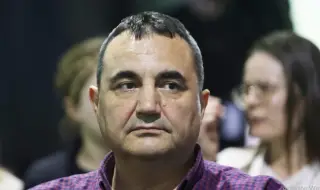
"The need for the opposition in Parliament has disappeared after the changes in the rules of the National Assembly, commented on "The Network" on the "Hristo Botev" program by Vesselin Stoynev, author at "Deutsche Welle".
Did you understand whose parliament is?
"The parliament always belongs to all those whom the parliament represents – all Bulgarian citizens. And in a narrower sense, it represents those who managed to jump the 4 percent barrier and represent the people who voted for them. Of course, this is a line that betrays intoxication from victory. The majority is huge for "Progressive Bulgaria", writes BNR.
And probably Mr. Kutev wanted to say: "Look now – we, at the moment we will lead the parliament. Before, you led it." But by "you" he means some "assembly", and these are actually coalitions that do not have a dominant majority of one party – as is the case everywhere in the world, when no one can govern independently and govern with others. In our country, the euphemism "assembly" has been imposed, because it was indecent to form a coalition with those whom you criticized until yesterday.
They should not have tried to strengthen their power ex officio through changes in the rules. Having such a huge majority, the parliament is theirs – Indeed, with this majority they can easily make any decisions at any level: in committees, in the plenary hall, dictate the pace of work of the National Assembly. This is about rules that have been in effect in the last few parliaments, and you are now changing them – I can't explain it in any other way than with fear. Because they are inexperienced. They are probably not afraid that the old parliamentary hyenas from all parties – outside their own – will sabotage them and "find their way", even though they are much smaller. I understand this fear, but ultimately, within two or three months, the new deputies from "Progressive Bulgaria" should get to class and not be so vulnerable – in quotes."
In which areas of governance should we hurry and in which – no
"We are witnesses that the legislative marriage has become extremely large precisely because of this fast legislation. We had a notorious 27-second committee, which aimed to prevent the opposition from entering the committee room. Fast legislation - what will you gain, for example, if instead of 7 days you reduce the consideration of applications for regulators or others to 4 days. How will we understand who is who with so many people? When will we study them? Or if you halve the time for a law to enter the plenary hall from a committee, or the time for it to reach a committee - when will the interested parties come to express their opinion? When will they read it? When will they think? A law - even a technical one - for non-lawyers, for non-deputies, is an extremely complicated thing. MPs should be able to get to know what they are pushing for, not just push because their party colleague told them to "push".
Europe's Euroscepticism
"I have a feeling that there is a lot of misunderstanding here – both from the new rulers, especially Mr. Radev, who should be familiar with it because he was president for nine years – and from many speakers who support this thesis. You see – Europe almost froze somewhere 10 years ago and is not adequate to the changing world. Nothing like that.
We don't notice it and we don't notice how we can fall out of those who will be at the forefront of the transformation – of the survival of Europe in another way.
For example – It is not true that the Green Deal is "green". It has long ceased to be a green deal. This money and these programs are being transformed into innovative business, into key development, into defense.
Huge resources will be redirected for the next budget – they are already being planned. In terms of security, Europe is trying to build a common defense policy without waiting for countries like Hungary to veto it. When the big ones started driving this process, most wanted to join them – those who didn't want to – get better.
So this statement that Europe was and should have been more Eurosceptic, that it was a "weak" European Union that cannot stand up to the US or China – nothing like that. Europe realizes this and sees through the eyes of all member states whether they can achieve it. Of course, this is a long process, because Europe is not a federation, it is not even a confederation. It is not a single state.
The Union depends on political developments in each individual country, on elections, on the sovereignty of each state – and it is very difficult to overcome this in order to have a unified European Union. But this does not mean that we should be Eurosceptics. On the contrary – we should participate in the change, in the transformation of Europe that is happening. And we seem to miss that it is happening right now. It is changing right now."
Why are we missing out
"First – I have the feeling that on a cognitive level we are missing out. We are guided by some clichés and politicians miss that Europe is not the Europe of 15 or 10 years ago – which – "stopped the crooked cucumbers" or spoke some pathetic words. Now we missed a meeting in Bucharest – we sent an ambassador..."
The topic of reforms in the judiciary
"There is a jealousy there: lest it turn out that "Progressive Bulgaria" is following the agenda of "Democratic Bulgaria" and saying: "No, we will do it our way. Not like you. Not with a commission to remove Peevski's security – we will remove it separately." or "We will choose the SJC election according to our new rules."
Do they really want it to be theirs, and for them to be the leaders, and not follow someone else's agenda, or do they actually want to pretend that they are making a change – we will find out very soon.
We have been commenting on these things as negative expectations for a long time. But they are now in power and they have to show what they will actually do. One way or another, there is public pressure and public expectation. And they cannot - with this topic, imposed for years - escape a serious judicial reform. No matter how much they mimic - they will still have to do something positive."
"Our" and "yours"
"Let's say that we will accept this. The question is whether it is expedient. They - as you can see - do not have people. According to some calculations, to really govern the entire country, you need about 3,000 people. Where can you get 3,000 people - where can you get them? A large part of the government - not a small part - are former people from the Ministry of Energy. The Minister of Energy says that there were very serious problems in this ministry and that is why she fired the head of the BFSA. This same minister has been a deputy minister in the same ministry for 5 years – under all governments for these 5 years. So there is no public explanation there why something is being done. There is no rationality.
Who are "ours", who are "yours", provided that they themselves do not have "theirs". This is a completely new formation that is still being built in power.
But they are certainly under great pressure. Because on the one hand, power – complete power – gives you, so to speak, a very wide collar around your neck. On the other hand – all eyes are on you. And you cannot justify yourself to anyone. This thing with the "heavy legacy", which everyone always does after starting to govern – and it doesn't work anymore, no matter how true it is. It may be a little true, it may be a lot true - but it doesn't work.
Right now you're in power, and after the first-second month no one will give you any more credit. And in my opinion they're in such a hurry - chaotically, slightly hastily - because they know that their credit of trust is the big advance they have. With it they can come out with the expectations towards them, but at least by the fall it will be over. And from then on this public distrust will begin to be felt. This is mandatory. Everyone who is in power consumes it. There are very rare exceptions for this not to happen.
So that's why they're in a hurry. While they still have this credit - and they make big promises a little chaotically, then go back on it. Others did the same. GERB was also a party that was built while in power. People appeared out of nowhere who then served a second and third term, and also entrenched themselves in local government.
The same will happen with "Progressive Bulgaria". It is important for them to reaffirm themselves in the presidential elections and then to put down roots in local government."
"This means stabilizing your power – being able to hold on to it longer. Especially when you came to power as a protest vote, as a desire for great change and for "sweeping out". And that is based on the personal rating of one person. That was the case with Simeon, and with Boyko Borisov, and it is the same with Rumen Radev. In fact, all those people who sent "Progressive Bulgaria" with a huge majority in parliament, they did it because of Rumen Radev.
From there on - how he will find 3000 people, besides those 130 that we will first see in the parliament - who they are and what they are - is a great mystery and a great difficulty. And in fact, after the "unbearable ease of governance" that is first to come... I think they feel it and that is why they are so nervous. Because on the one hand you have a lot of power, on the other - you can stumble at every step in this power, because you still don't know where you are and who you are with. Who are your people."