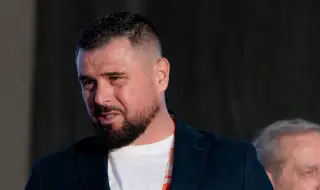
20 athletes won 27 medals for Bulgaria at the World Championships for Athletes with Down Syndrome in Sofia. Bulgaria was represented in five disciplines - athletics, artistic gymnastics, rhythmic gymnastics, tennis and table tennis. The championship brought together nearly 400 athletes from 27 countries. What a great challenge that was… Slav Petkov, president of the Federation of Adapted Physical Activity (FAFA), spoke to FACT.
- Mr. Petkov, the World Championships for Athletes with Down Syndrome, which took place in Sofia, is already history. What is your personal assessment of the championship and did it live up to the expectations you had before the start?
- Honestly, the championship exceeded my expectations. Even before the start, we had high goals and believed that we could organize a strong event, but the interest, atmosphere and level of performance were even above what we expected. I think Sofia performed well as the host and the championship left a lot of positive emotions and a good foundation for future similar initiatives.
- Bulgaria finished with an impressive 27 medals, including 11 gold medals. To what do you attribute this success of the Bulgarian athletes?
- I attribute this success mostly to the hard work we put in even before the start of the competition. The preparation was long, purposeful and disciplined, and the athletes showed perseverance, character and desire for success. These 27 medals, including 11 gold, are the result of the efforts of the entire team - competitors, coaches and all the people behind the organization and preparation.
- Sofia became the first city in Eastern Europe to host such a world championship. What feedback did you receive from the international federations, delegations and guests?
- We received extremely positive feedback. The email and social profiles of FAFA were literally flooded with congratulatory addresses and messages on the good organization of the championship. The international federations, delegations and guests appreciated both the sporting level and the conditions, the organization and the hospitality. For us, this is recognition that Sofia and Bulgaria can successfully host events of such a scale.
- Which Bulgarian competitors impressed you the most, not only with their medals, but also with the character and spirit they showed during the competition?
- I would not like to evaluate who performed how, because behind each result there is enormous work, dedication and personal history. But if I had to say which moments will remain the strongest in my heart and mind, it is undoubtedly the debut of our young gymnasts - Nikolay Todorov, Radoslav Tanchev and Alexey Petrukovich. They showed not only sporting qualities, but also courage, character and confidence to stand on such a big stage. For me, they are proof that the future of Bulgarian gymnastics for athletes with Down syndrome is in good hands.
- Did the championship manage to change public attitudes towards people with Down syndrome and their opportunities for development through sports?
- I definitely think that we managed to change people's attitudes. This championship showed in a very clear way that people with Down syndrome have enormous potential when given the opportunity, support and environment for development. We saw not just sporting results, but discipline, character, perseverance and a desire for success. I believe that many people left with a different view not of limitations, but of opportunities. If we have managed to change even a part of the public perception, then we have achieved something much greater than medals.
- What legacy does this championship leave for Bulgaria?
- I think that we are currently setting a new beginning for the development of people with Down syndrome in Bulgaria. The legacy of this championship is not only the medals or the organization, but the change in the way society views the opportunities of these people. We have shown that when there is support, access and a chance for development, they can achieve world-class results. I hope this will be the beginning of more opportunities, more investment in sports and greater public attention to their potential.
- Will it lead to more children and young people with Down syndrome starting to play sports actively?
- I hope so. I sincerely expect the parents of these children to see through this championship what their children are capable of when they get the opportunity and support. Sport is not just a path to achievement - it builds confidence, discipline, social skills and independence. I believe that this championship will give courage to more families to direct their children towards active sports and development according to their interests and abilities.
- During the preparation for the championship, you received support from state institutions, sports federations and public figures. How did you feel the state's commitment?
- This was a big step that all institutions took together and I am sincerely grateful for the support we received. We felt real commitment – not only in words, but also through concrete actions, trust and desire for this championship to happen in the best way. I am glad that the state stood firmly behind us and together we managed to show the whole world that Bulgaria is a socially responsible and oriented country that believes in equal opportunities and supports the development of people with Down syndrome. I hope that this will not remain a one-time success, but will be the basis for even more initiatives, policies and opportunities in the future.
- Is our society ready to accept athletes with Down syndrome more openly…
- I think that the moment is now ripe and our society is increasingly ready to accept athletes with Down syndrome more openly. Personally, I was very impressed by the way people welcomed these athletes in the center of Sofia - with respect, attention and sincere support. This showed that when people see the opportunities, efforts and emotion behind sport, prejudices remain in the background. I believe that this championship did not just gather an audience, but helped to build more understanding, acceptance and confidence that these athletes are a full part of our society.
- What bonuses does the state provide for the success of the athletes?
- We expect legislative changes to be made in the future that will allow these athletes to receive deserved recognition and financial incentives for their achievements. I believe that the results they showed fully justify such a step. It is a matter of time and of public and institutional sensitivity to the significance of their work. I hope that this championship will be another argument in the direction of such positive changes.
- Has the Federation for „Adapted Physical Activity – Bulgaria“ become more recognizable worldwide?
- Yes, I think that the Federation for „Adapted Physical Activity – Bulgaria“ is already becoming more and more established at the international level. We see that we are recognized and talked about more and more often in the world of adapted sports. This is the result of many years of work, consistency and the efforts of the entire team.
Personally, I am very grateful to my colleagues and our modest team, because behind these successes there is a lot of work, dedication and faith in the cause. This recognition is not only for the federation, but for all the people who contribute daily to the development of sports for people with Down syndrome in Bulgaria.
---------------------
Bulgarian medalists
Athletics
Alexander Asenov - four gold medals 200 m, long jump, triple jump, silver 100 meters
Slavi Bogdanov - two bronze medals, 1500 m race walk, 3000 m race walk
Gymnastics
Emiliyan Kostadinov - a total of 4 medals, silver on floor, bronze on parallel bars, vault and rings
Nikolay Todorov - junior category, 3 medals, gold all-around, floor and parallel bars
Radoslav Tonchev - junior category, 2 silver medals, all-around and floor
Radena Angelova 2 gold medals, mixed parallel bars, bronze vault
Rhythmic gymnastics
Vasilena Bogdanova - 2 medals, gold ball, bronze hoop
Mikhaela Rangelova, junior category - 5 medals, gold ball, hoop, ribbon and clubs, silver all-around
Alina Daniels - silver rope
Total 25 medals and two cups. Third place team - men's gymnastics and team women's rhythmic gymnastics.