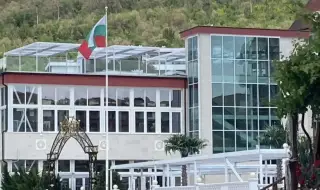
Sometimes the state proves that the law still exists. But it does it so slowly that in the meantime people begin to wonder whether justice is not just an administrative procedure without a deadline. Such is the case with the restaurant "Amore" in the "Talyana Beach" complex near the resort "Elenite" - a building that for years was a symbol of the question of whether there are any rules on the Bulgarian Black Sea coast at all.
Back in 2018, construction of the two-story restaurant began literally a few meters from the beach. Signals, complaints, inspections, administrative proceedings, orders, lawsuits and appeals followed. During all this time, the restaurant was built, completed and operating.
Six years.
A procedure that should protect the law has been going on for so long. Now there is already progress. From information provided to FACTI bg under the Access to Public Information Act, it is clear that the Municipality of Nessebar has taken specific actions to forcibly remove the illegal construction. Financing has been secured, a public procurement has been carried out and a contract for the demolition of the site has been signed.
This is undoubtedly good news. But it also raises several uncomfortable questions.
If there was an order to remove the illegal construction back in 2019, why did it take almost seven years to actually demolish it??? (ed. – this should happen after the end of the summer season, so there are a few surprising ones)
Why has the illegal building been operating all this time?
How much revenue has the site generated that the court has finally determined to be illegal?
And the most important question - why in Bulgaria does illegal construction so often survive longer than the administrative proceedings against it?
The numbers themselves in the municipality's decision are also interesting. It becomes clear that three reports, four complaints and two objections were submitted to the administration. Eleven inspections were carried out, and in six of them the employees were not even allowed to enter the construction site. This means that more than half of the inspections were completed without actual access to the site.
Is it normal for a state body to be unable to enter a construction site that it is inspecting? If this happens in such a publically known case, what about all the other illegal constructions that no one writes about?
The decision also makes it clear that the municipality has provided 80,000 leva excluding VAT for the forced removal, and that a contract for 35,000 euros excluding VAT was subsequently concluded. VAT for the demolition itself. That is, the illegal construction will cost tens of thousands of levs more in public funds, since the owner has not voluntarily complied with the order.
This is where the other important question arises. How much does each illegal construction cost society?
Not only in terms of money for removal.
But in terms of time.
As the work of the courts. As inspections. As expertise. As administration. As public distrust. Especially when we are talking about construction on the very seashore.
The case of “Amore“ comes just days after another public debate about the madness of “Baba Alino“ in Varna, not to forget the tragedy in “Elenite“, where after the devastating flood, the questions of overbuilding, narrowed riverbeds and whether the institutions react in time or only when it is already too late were raised again.
Of course, restaurant “Amore“ has nothing to do with the causes of the flood. But it has to do with a much bigger problem. That illegal construction on the Black Sea coast for years does not seem like an exception, but a practice. And when an illegal building remains in place six years after the first signals, society inevitably begins to lose confidence that the law applies equally to everyone.
Still, something positive must be taken into account.
The Nessebar Municipality is no longer talking about future intentions. There is a public procurement. There is a contract. There are funds provided.
And there is a commitment to remove the illegal construction immediately after the end of the legal ban on construction activities during the summer season.
There is only one thing left.
This time, the institutions should bring what they have started to the end. Because the real news will not be the signed contract. The real news will be the day the excavators actually start work. Otherwise, the restaurant is working, welcoming guests, organizing celebrations…
R E S H E N I E
I provide access to public information as follows:
In connection with an illegal construction, representing a two-story building in the “Talyana Beach“ complex, the town of Sveti Vlas has so far filed 3 reports, 4 complaints and 2 objections in the municipal administration. 11 inspections have been carried out by employees in the “Construction Control“ department, and in 6 of them the employees were not provided with access to the construction.
In connection with the illegal construction taking place in the PI with identifier 11538.13.15 under the CCCR of the town of Sveti Vlas, administrative proceedings have been initiated under Art. 225a of the ZUT, an order No. 1472 of 07.08.2019 was issued to Viktor Borisov - Deputy Mayor “Legal Services and Municipal Property“ for the removal of an illegal construction representing a “Two-story building“ in the “Talyana Beach“ complex, Sveti Vlas. After the expiration of the deadline (30.10.2025) for voluntary implementation of the Order, a request was made to allocate funds in the budget for 2026 in the amount of 80,000 leva excluding VAT or 40,903.35 euros for the forced removal of the illegal construction and the preparation of a PBZ and PUSO. For this purpose, a procedure for awarding a public procurement contract was carried out, contract No. 233/24.03.2026 was concluded. under Art. 20, para. 3, item 1 of the Public Procurement Act with the subject: “Removal of illegal construction “Two-storey building“, located in the PI with identifier 11538.13.15 under the CCCR of the town of Sveti Vlas, Nessebar municipality, “Kozluka” area. The value of the planned works and activities is 35,000 euros excluding VAT.
The removal will begin after the lifting of the ban under Art. 15 of the CCCR, according to which the performance of construction and assembly works in the national resorts along the Black Sea coast is prohibited from May 15 to October 1.