Water is becoming an increasingly serious and costly business risk in Central and Eastern Europe. More than half (52%) of the companies surveyed have been affected by at least one significant negative water-related event in the past five years, including business interruption and rising costs. The outlook is also not encouraging: 58% of companies expect water risks to have a moderate or significant impact on their business over the next five years. This is shown by a new report by WWF, developed in collaboration with EY denkstatt Austria.
The report “Water Risks and Business Preparedness in Central and Eastern Europe“ is based on a survey conducted between April and June 2026 among 115 companies from Bulgaria, the Czech Republic, Hungary, Romania, Slovakia and Ukraine. While the results are indicative and not statistically representative of all companies in the region, the study offers important insights into current business practices. The data shows a significant gap between risk exposure and level of preparedness. While 46% of companies have assessed water risks in their own operations, only 23% have done so in their supply chains. Over half of the survey participants (53%) do not have a dedicated water management strategy, and only 7% believe they are very well prepared to manage water-related business risks.
Drought and water scarcity are at the top of the expected business risks (49%), closely followed by floods and extreme rainfall (46%). Deteriorating water quality, pressure on ecosystems and regulatory uncertainty are also among the main concerns of companies.
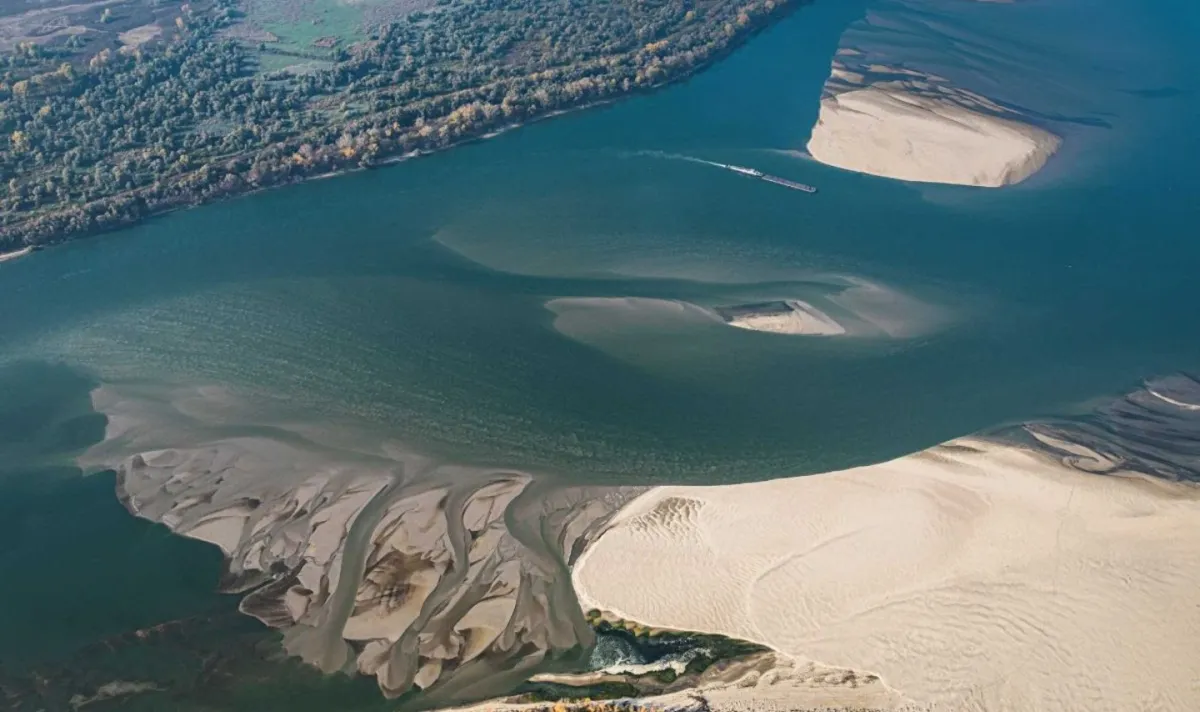
The report’s publication follows a summer in which extremely low levels on the Danube River showed how quickly water shortages can disrupt economic activity. In 2026, low water levels hampered freight and passenger transport in the region, and a shortage of cooling water forced nuclear power plants in Hungary and Romania to reduce or temporarily stop electricity production. Agriculture, tourism and other economic sectors have also suffered losses and difficulties, highlighting how water shortages can affect the entire economy.
“Water has long been seen as a resource that businesses can take for granted – a reliable resource, available whenever and wherever it is needed. In Central and Eastern Europe, this assumption is becoming increasingly difficult to maintain,” said Andreas Beckmann, Executive Director of WWF Central and Eastern Europe. “Companies depend on the health of rivers, wetlands and freshwater ecosystems around them. Collaborating with suppliers, other water users and public authorities to protect and restore these shared resources is key to building long-term sustainability.”
“Companies that take timely action to manage water risks are in a better position to protect their operations, increase the resilience of their supply chains and make informed investment decisions. Understanding where a business is at risk is not just about avoiding losses. It can also help identify opportunities for more efficient operations, stronger partnerships and long-term competitiveness. “The cost of inaction can be much higher than the cost of preparation,” said Willibald Kaltenbrunner, Managing Partner of EY denkstatt Austria.
The biggest gap is outside the company
Companies are twice as likely to assess water risks within their own operations as they are across their supply chains. A similar gap is seen when assessing water impacts: 48% have analysed the impacts of their own operations, while only 25% have done so across their supply chains.
This is particularly important because water risks and impacts do not stop at the company’s borders. Even if a company manages water effectively in its own facilities, it can face delayed production, higher costs, or supply shortages if a key supplier operates in a water-stressed area, if a transportation route is disrupted, or if the condition of local freshwater ecosystems deteriorates.
Investments do not grow at the same pace as risks
Despite widespread exposure to water-related risks, nearly half of the companies surveyed (45%) expect their water management spending to remain flat over the next three years. Only 28% plan to increase this investment, with just 4% predicting significant growth.
The data shows that having a water strategy is associated with greater willingness to invest. Among companies that have already been affected by water-related issues, 52% of those with a water strategy are considering increasing their investment in this area over the next five years. For companies without such a strategy, this share is only 26%.
The message to business is clear: recognizing water risks is only the first step. Companies need to assess where water shortages, floods or deterioration in water quality could disrupt their operations, threaten their supply chains or increase costs. The report calls for clear accountability, locally-relevant targets, and closer collaboration with suppliers and other water users. The real challenge is whether companies will translate this understanding into real investments before the next shock forces them to do so.

WWF: Over half of companies in Central and Eastern Europe are already affected by water-related issues
Only 23% have assessed water risks in their supply chains, revealing a serious gap in corporate risk management
Oct 22, 2026 08:57 58