


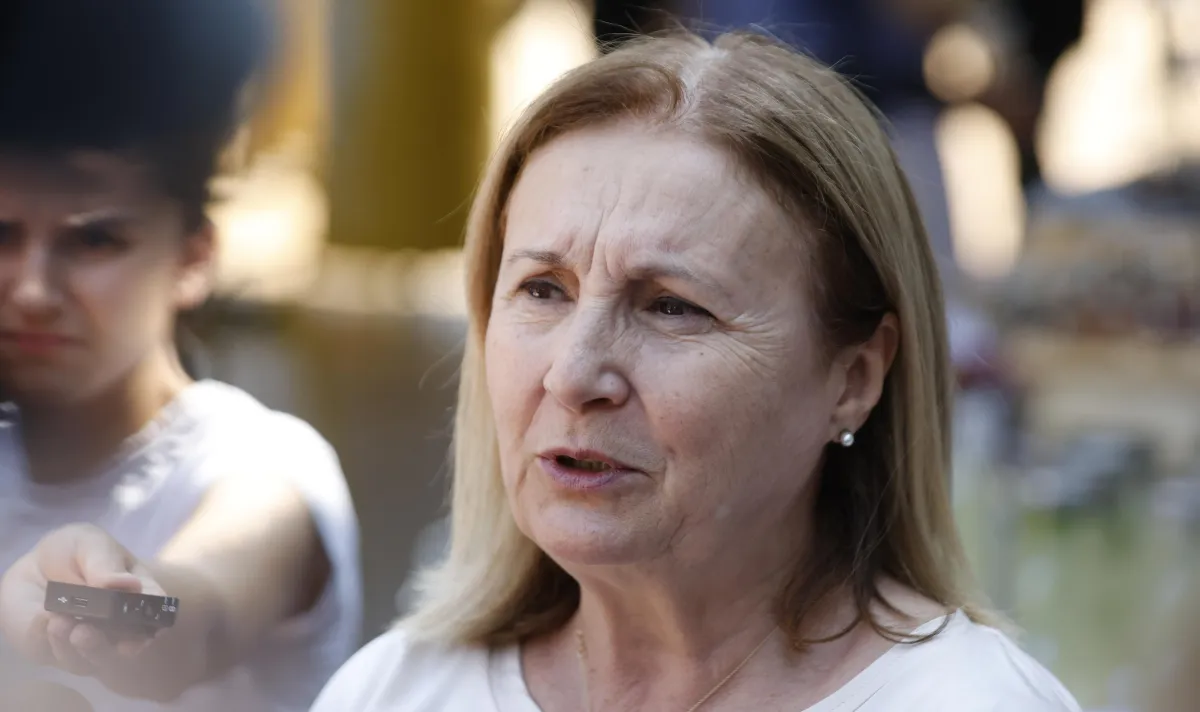

Rumyana Buchvarova described the government’s actions as confused and said that expectations of the cabinet were not being met. In an interview for the “Metronome” programme on FOCUS Radio, she said that those in power were not making it sufficiently clear what they wanted to achieve.
“For the first time, we also have a government that is confusing matters in terms of foreign policy.”Buchvarova is a former deputy prime minister and minister of the interior, as well as a former ambassador of Bulgaria to Israel. She is part of Andrey Gyurov’s campaign for the presidential election.
According to Buchvarova, rising fuel prices and the overall inflation trend will make the situation more difficult for Bulgarian citizens. In her words, skill and courage in decision-making are needed to contain the effects.
She expressed scepticism that the government would handle the situation in the best possible way, despite its accumulated six to seven months of governing experience. Her assessment also covers foreign policy, where she believes uncertainty and a lack of a clear line can be observed.
Buchvarova commented on Bulgaria’s position on the declaration concerning the key principles of European security, discussed at the meeting of the European Political Community in Dublin. Bulgaria supported the document with reservations regarding the preamble. Prime Minister Rumen Radev explained that the reservations were related to the need for the wording to take into account developments in the peace negotiations in Ukraine.
According to Buchvarova, such a position creates uncertainty among the country’s international partners. She described it as unserious to focus, at a forum with broad international participation, on editorial notes to a document that should demonstrate the unity of the European political community regarding the war in Ukraine.
In her words, this behaviour brings no benefits to Bulgaria and may undermine the partners’ trust. At the same time, the government’s position is that the declaration was supported and that the reservations concern only the preamble.
During the conversation, Buchvarova also commented on Russia’s demand that NATO return to its 1997 borders. In the latest proposals related to possible negotiations on Ukraine, Moscow is insisting on restrictions on the Alliance’s military presence in countries that joined after that date.
According to the data presented, such a condition would affect 16 of NATO’s 32 member states, including Bulgaria. Buchvarova said she did not expect it to be accepted, but warned that the very fact that it had been put forward showed a trend towards a return to the division into spheres of influence.
She described this as a rejection of Europe’s historical development over the past nearly 50 years and called for the process to be monitored with the utmost attention.