



On March 1, 1941, a solemn atmosphere reigns in the Belvedere Palace in Vienna. At 1:35 p.m., Prime Minister Prof. Bogdan Filov, who is the leader of the Bulgarian delegation, signs a protocol on Bulgaria's accession to the Tripartite Pact. On the part of the Allies, the document is initialed by German Foreign Minister Ribbentrop, Count Ciano - Minister of Foreign Affairs of Italy, and Japanese Ambassador Oshima.
It all began half a year earlier. On November 17, 1940, during a visit by Tsar Boris III and Foreign Minister Ivan Popov to Berghof in Germany, Hitler offers the two immediate accession to the Tripartite Pact. The Tsar barely manages to turn down the offer. Hitler's pressure intensified even more in connection with the planned German invasion of the Balkans in the spring of 1941. Thus, on January 1, 1941, the long-delayed alliance with Germany became a fact, after Bogdan Filov again negotiated the final accession to the Pact in Berghof. Two months later, the treaty was signed in Vienna.
“Bulgaria sees in the pact concluded between Germany, Italy and Japan an instrument of that policy, which aims to enable the peoples to develop peacefully, to strengthen their well-being and to guarantee a just and lasting peace. Bulgaria enters the Tripartite Pact, guided by the desire to cooperate, within its capabilities, in achieving this lofty goal. As a faithful partner of the Tripartite Pact, Bulgaria hopes to contribute its duty to the establishment of lasting peace and a new, more just order in Europe. “ This was stated in the Declaration of Bogdan Filov, read on March 1, 1941 in Vienna.
On March 2, 1942, the government majority in the National Assembly ratified Bulgaria's accession to the Tripartite Pact with “roaring ovations”. Already on March 1, units of the German army entered Bulgarian territory. This put an end to the policy of neutrality that Bulgaria had followed after the outbreak of World War II and it became an ally of Hitlerite Germany.
The Tripartite Pact was signed on September 27, 1940 in Berlin by the Foreign Ministers of Germany, Italy and Japan. In practice, it played a major role in world politics over the next few years. The pact formalizes cooperation between the three countries in the military field and guarantees interaction in securing their interests on a global scale.
In the following months, Hungary, Romania and Slovakia successively joined the Tripartite Pact.
By including Bulgaria in the pact, Tsar Boris III and the Bulgarian rulers, according to the opinion of a number of historians, chose the only possible favorable outcome at that moment. Thus, our country was saved from defeat, from giving hundreds of thousands of victims, from falling under a foreign military force and establishing an occupation regime.
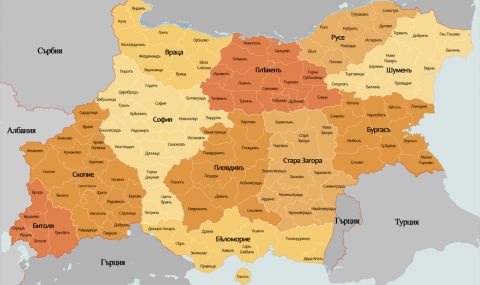
Regardless of the motives, namely – revision of the Treaty of Neuilly and the return of the lands in Aegean Thrace and Vardar Macedonia, the long-term consequences of our country's alliance with Hitlerite Germany, fascist Italy and militaristic Japan are catastrophic.
The Bulgarian state receives from the occupying Hitlerite troops the lands in Macedonia and Thrace for temporary administration until the end of the war.
Thousands of Bulgarian Jews from Macedonia and the Aegean Sea are murdered in Nazi camps.
In 1943, the Bulgarian-German Belev-Dannecker Agreement was signed for the deportation of about 20,000 Jews from the new and old borders of the Kingdom of Bulgaria. The Commissariat, with the assistance of the army and the police, actively participated in the deportation of Jews from the pre-war territories of Greece and Yugoslavia administered by Bulgaria.
Historical responsibility for these events lies with Tsar Boris III, Prime Minister Bogdan Filov, as well as all members of parliament at that time who supported the ratification of the Tripartite Pact.