


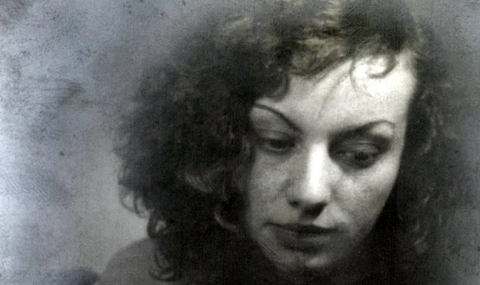

On July 9, 1974, the body of the Bulgarian writer Lyuba Todorova Gancheva, known to the general public by the pseudonym Yana Yazova, was discovered in Sofia.
Yana Yazova was born in Lom on May 23, 1912. Her father, Todor Ganchev, was a doctor of philosophical sciences who graduated in Zurich, Switzerland. Her mother - Radka Beshiktashlieva was the daughter of a famous merchant from Constantinople. Yana's great-grandfather - Hristo Stoev Dryankov was the uncle of Hristo Botev and an associate of Vasil Levski.
This is what the Bulgarian History website says.
In Lom, her mother is a teacher and her father is a school inspector. She and her sister, who was two years older, were long-awaited children. Mila was born in 1910 after a 10-year marriage. That is why the caring parents called their first child Mila, and the second - Lyuba.
In the first grade, Yana's teacher was her own mother. Shortly after, the family moved to Vidin, then to Plovdiv, and in 1930 she settled in Sofia. In the capital, Yana Yazova graduated from the First Girls' High School (1930), and then from "Slavonic Philology" at Sofia University (1935). Yana possessed a beauty that the old Sofia residents said that when she walked on the yellow cobblestones, they sighed under her footsteps. Because of the pitch-black color of her hair, her rejected suitor Nikolai Fol called her a “black poisonous flower”.
Lyuba Gancheva's fate changed when a figure of exceptional importance to her entered her life - Professor Alexander Balabanov. He fell in love with her at first sight in 1930 and loved her for the rest of his life. The prominent translator and critic was everything to her - both a patron, a lover, and an inspirer (he was the prototype of most of her characters). The young Lyuba Gancheva received her pseudonym Yana Yazova precisely from this person who was so important to her. The relationship between the two aroused public interest, not only because of the 33-year age difference. Her talent and beauty, combined in one place, as well as the patronage of Balabanov, who was a close friend of Tsar Boris III, caused violent hatred and animosity against her among many other writers of the time. One of the evil arrows against Yana Yazova, for example, was that she was the “only spelling mistake” of Professor Balabanov.
Although after 1944 society denounced Yazova as the mistress of the famous professor, their love was not consummated. Her first husband was the millionaire John Tabakov, whom she met in Paris and became engaged to. In 1938, however, Balabanov managed to break off their engagement and the planned wedding.
It seems that Professor Balabanov felt true love for Yana, and his jealousy is proof of this. In August 1938, in Sozopol, Yana Yazova became friends with the marine painter Mario Zhekov. Yana felt great with the other artists - she wrote, and they painted around her. She is moved by the dark blue sea and sand, the ruins of old houses, the melancholy of the thousands of people who, one after another, have left this ancient city. The news of the strong friendship quickly reaches Sofia and Alexander Balabanov decides to intervene. He is enraged by the relationship between Yazova and the artist who is younger than him. A scandal breaks out between the three in front of witnesses. Zhekov cannot stand it and attacks Balabanov. However, the spark of love between the writer and the artist is extinguished prematurely by the professor. However, they remain friends. Zhekov painted houses and fishermen from Sozopol for Yazova, which she used when writing the novel "Captain".
Later in one of her letters to Balabanov, Yazova wrote: "You found the only and shortest way to make my life hell, and you know that in hell no one loves anyone".
Yazova, however, married engineer Hristo Yordanov in 1943. He was one of the managers of Radio "Sofia", who had lived in France for 16 years. He provided her with the material opportunity to create and spared her the humiliations that writers like her who did not want to applaud the regime were subjected to.
Thus, after the coup of September 9, 1944, Yazova had the opportunity to refuse to join the writers who had adopted socialist realism as their artistic method. In 1959, her husband died, and a year later she tried to break out of isolation by submitting her manuscript of the novel “Levski“ to the “Narodna Kultura“ publishing house. The manuscript was approved for publication, but Yazova had to go through the usual procedure for so-called bourgeois writers - to repent. She had nothing to do, however. She was offered to write a poem about Georgi Dimitrov, and after she refused, the manuscript of the novel was returned to her.
In Yana Yazova's poems, published in the period 1931-1934, the reader is introduced to characters from the social bottom - vagabonds, beggars, prostitutes, etc. In her prose - the novels "Ana Dyulgerova" (1936) and "Captain" (1940), she searches for the dimensions of the extraordinary personality, the rebellion of the spirit against prejudice and fate. Her drama "The Last Pagan" is dedicated to the conversion and struggle of Vladimir Rasate against the Byzantization of Bulgaria. The play was translated into German by Prof. Alexander Balabanov.
By 1944, Yazova had also written the first historical novel with a non-Bulgarian theme - “Alexander the Great“, using serious historical sources, also reincarnates in some of the main characters. The novel was typed in a printing house, where it burned down during the bombing of Sofia, and was printed posthumously decades later.
After the trilogy “Balkans“, which includes “Levski“, “Benkovski“ and “Shipka“, after 1944 she also wrote her well-known novel “Salt Bay“.
Yana Yazova died under circumstances that remain unclear to this day. The last sign that she was alive is her note in a notebook dated May 19, 1974. Her body was found in her home at the end of July. There were signs of violence on the body, but it was already half-decomposed in the heat. She was buried on August 9 at the Central Sofia Cemetery. Yana Yazova's file was destroyed.