


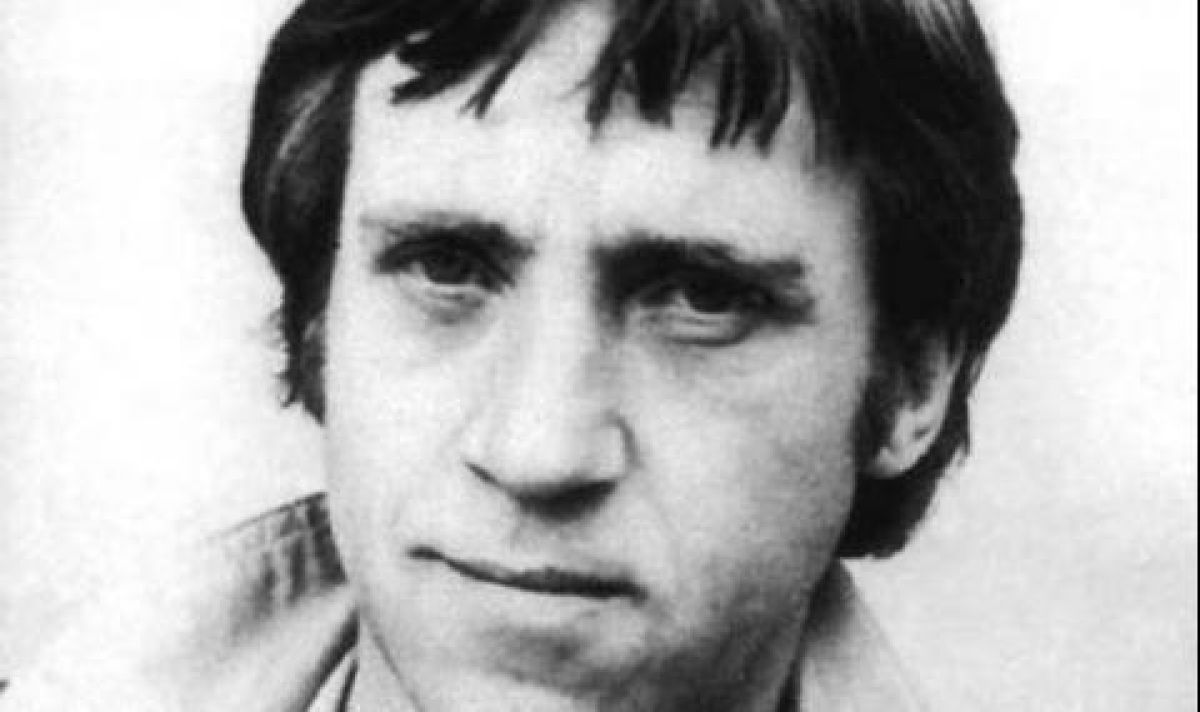

Vladimir Vysotsky died on July 25, 1980 at the age of 42. The official version of his death is a heart attack, but it is more likely that it was a consequence of alcohol and drug abuse. In 1986, he was posthumously awarded the title of "Honored Artist", and in 1987 a feature film and a documentary film dedicated to him were released. After his death, a fund was created in the USSR to preserve and preserve his work. There is also an asteroid named after him.
Even then, he was respected for his acting achievements, but many of his songs were banned in the USSR, as they touched on taboo topics in the Union at the time.
Despite the ban on his songs, Vysotsky gave concerts throughout Russia, as well as in France, the USA and other countries. He has released ten albums in Russia, and in 1987, his unreleased recordings began to be released.
Vysotsky was known for his enormous talent, but also for his strongly expressed love for women. Like most brilliant artists, he was a complex and contradictory personality. His third great passion was alcohol. He often abused it. At least twice in his life he attempted suicide, recalls Dani Ivanov in his blog.
Here is what journalist Alyona Neykova writes about Vysotsky in her article titled “Vladimir Vysotsky the (un)known star from another Universe“
Those who watched his first steps in cinema and theatre never even imagined that the young man with a hoarse voice would become a real phenomenon, a role model, and an extraordinary icon. Some even believe that the first steps of actor Vysotsky were quite uncertain. But despite the occasional play on the stages of third-rate theaters and participation in episodic roles in the cinema, in the end he achieved a magical transformation into one of the brightest stars, leaving an indelible mark on the lives of both intellectuals and the most ordinary people.
A huge role in Vysotsky's growth as an artist was, of course, played by the "Taganka" Theater. This temple of Melpomene captivated the eyes of the entire country, and the actors in it allowed themselves to say from the stage what was forbidden to almost everyone else. Vladimir Vysotsky's talent began to shine precisely from the stage of "Taganka". His unique voice was heard not only by the audience in the theater, but also by people on the street, by the entire nation. Perhaps it was the unusual hoarseness of speech, the unchanging guitar, the sharp mind, the innate intelligence and the endless charisma that were given to Vysotsky as compensation for his absolutely unheroic and somewhat even trivial appearance.
It is an open secret that fame came to him first because of his undeniable qualities as a bard. As a poet, author and performer, Vysotsky managed for decades to instill in the audience what he only later managed to convey as an actor on the theater stage and with his incarnations in the cinema. Although many of his colleagues tried to perform Vysotsky's songs, only he managed to do it in such a way that from the simple truths heard, the sweet-sad feeling of a lump in the throat appeared.
For some today it may be strange, but for that time it was an absolute fact that for a long time there were no official recordings of Vysotsky's songs. Both lyrical and satirical texts and sheet music were distributed illegally for years, from acquaintance to friend, from neighbor to relative, from student to colleague... His music, born from the great symbiosis of the bard's unique hoarse voice and his guitar performances, could be heard in every home where there were tape recorders. Vysotsky's poems were passed down from mouth to mouth, gradually becoming folk art.
However, no one perceived Vysotsky as an ardent revolutionary or fighter against the communist regime. He wrote his songs and performed them in that unique way not because he wanted to prove something to anyone, but because he could not live any other way.
And in the cinema, the image of Vladimir Vysotsky was for a long time more mysterious than bright and categorical. Viewers seemed to pay more attention to him after the film “Vertical” (1966). In it, the 28-year-old Vysotsky is bearded and performs the cult “Song for a Friend” (“Pesnya o druge”). In each subsequent film and on stage, he seems to be happy to change his appearance, but he always manages to be himself. The image of the revolutionary Brodsky, in which Vysotsky reincarnates, not only presents the actor as a different, multi-layered and ambiguous artist. He proves to the esteemed audience that he is not just an image on the screen, but has character, that he is not a Bolshevik mummy, but a living person.
Vysotsky is one of the few actors of that time who managed to abstract himself from the politicization of his roles. The image of the White Guard lieutenant Brusentsov in the film “Two Comrades Served” (“Two Comrades Served”), and his incarnation as investigator Gleb Zhiglov in “The Meeting Place Cannot Be Changed” (“Mesto vstrechi izmeni nelzy”) are also extremely impressive. It was after this series that it became impossible for Vysotsky to “not let himself” be filmed. Unfortunately, however, the actor managed to play only one more noticeable role on the screen – Don Juan in Mikhail Schweitzer’s “Little Tragedies”. He does it in such a way that to this day, viewers can only regret that in the film, along with the sword, the actor did not grab his famous guitar. And neither the scale of the tragedies, nor the modest stature of Juan himself could stop the attraction to him of Laura and Donna Ana. And in real life, neither Marina Vladi, nor his first wife - actress Iza Zhukova, nor Lyudmila Abramova - the most beautiful actress of the Soviet Union, nor other representatives of the fair sex were able to resist the endless charm of Vysotsky.
Of course, one can think for a long time about what else Vysotsky could have played in the cinema and in the theater, but, alas, he did not succeed. He left this world only at the age of 42 and a half. However, the fact is that his roles are probably fewer than they could be, not only because of the lack of courage in the people on whom this depended at the time. Vladimir himself never sought to participate in any film or production at all costs.
His boundless talent allows the actor to be himself in every role - and thus to be extremely convincing and unique. It is precisely because of this fact that directors forgave Vysotsky all his "flights in reality and in dreams" - the numerous failed performances, alcohol, drugs, arrogance and arrogance. And despite all these weaknesses, delusions, ostentation, leather raincoats, Mercedes, women and illnesses, he remained a person. And - one of the brightest. Which, against the backdrop of the deficit of these same personalities, makes Vysotsky an even more significant and valuable figure for all time.
Vysotsky is neither a symbol nor a tribune, he is not a rebel, nor an icon. He is the (un)known star from another Universe. Without him, life would be boring and empty. And if God ever decides to speak, he will do so with the divine hoarse voice of Vysotsky.