


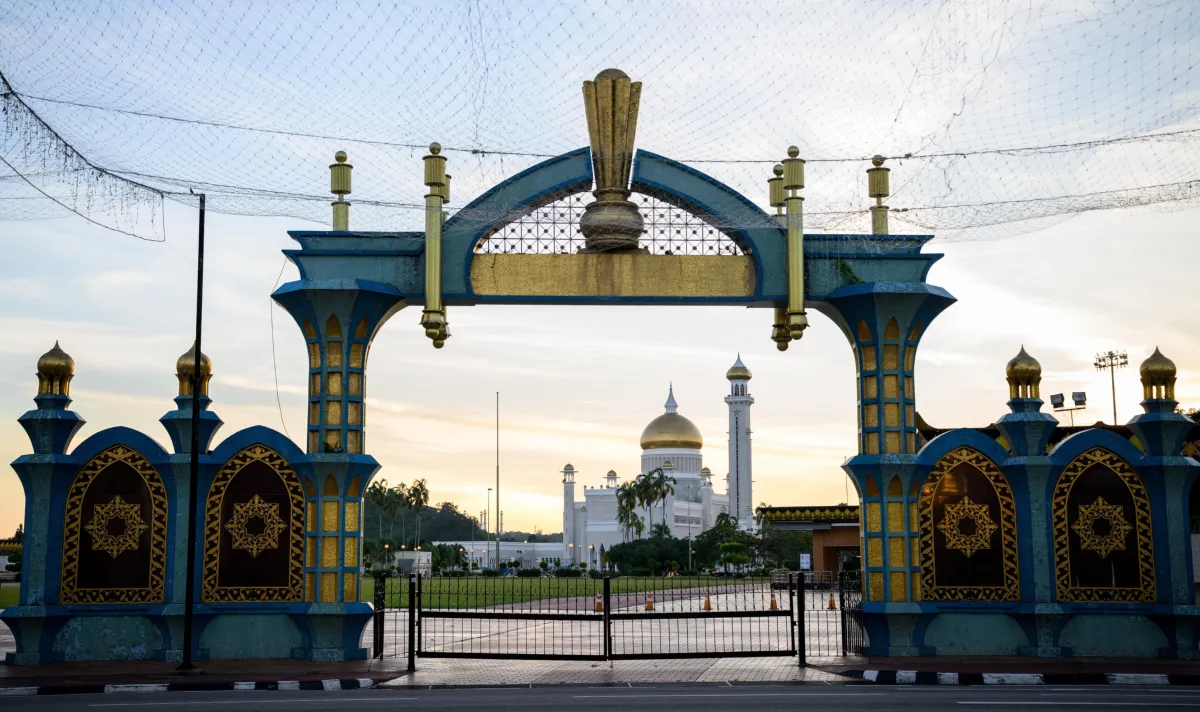

In Brunei, the distance between the golden dome of the capital’s mosque and the dense tropical rainforest can be measured not only in kilometres, but also in centuries of history. The small Southeast Asian country has a population of 458,600, according to an estimate for 2025, while around 70% of its territory is covered by tropical forests. It is precisely the combination of Islamic heritage, life by the water and wildlife that has prompted CNN Travel to recommend Brunei as a tourist destination. “One of the smallest countries in Asia” is the description used by the publication.
The starting point for many visitors is Bandar Seri Begawan. One of the capital’s landmarks is the Omar Ali Saifuddien Mosque, recognisable by its golden dome and marble columns. Another important attraction is the Sultan Haji Hassanal Bolkiah Islamic Heritage Museum. It houses Quranic manuscripts, religious relics and astronomical instruments connected with the development of Islamic culture.
Life on the Water
Kampong Ayer stretches along the Brunei River – a complex of around 30 villages built on stilts above the water. Wooden bridges and walkways with a total length of around 30 kilometres connect the different parts of the settlement. Its history goes back at least 600 years, but Kampong Ayer is not an open-air museum; it is a functioning residential community.
Visitors can get around by boat or on foot along the wooden walkways, passing houses, small eateries and local markets. The Brunei River also leads to mangrove forests, where river safaris offer sightings of proboscis monkeys – endemic to the island of Borneo – as well as macaques, monitor lizards and numerous waterbirds.
From Ambuyat to Coral Reefs
Local cuisine is part of the experience. One of the characteristic dishes is ambuyat – a thick mixture made from sago, traditionally picked up with bamboo sticks and dipped into a sour, sometimes spicy sauce. The cultural calendar includes Hari Raya Aidilfitri – the festival marking the end of Ramadan – as well as Independence Day on 23 February. During ceremonies and festivals, kain tenunan is worn – traditional textile made by interweaving threads and adding gold and silver fibres.
Along the coast, Muara and Meragang beaches are among the places for relaxation. Beneath the surface lie coral reefs, diverse marine life and around 30 shipwreck sites that attract diving enthusiasts.
Brunei’s Tropical Side
In the eastern district of Temburong, routes pass from longboats on shallow rivers to Ulu Temburong National Park. The park is part of a protected area of tropical forests and offers trails, waterfalls, river routes, kayaking and floating downstream on special inflatable tubes.
One of the attractions is a canopy walkway, from which the green cover of the forest can be seen. The country’s biodiversity includes more than 500 bird species, 170 mammal species and 80 amphibian species. In Brunei, urban mosques, water villages, markets and the jungle are not separate worlds, but parts of a single journey through a small country with an unusually diverse landscape.
Sources: obozrevatel.com, edition.cnn.com