


On the island of “St. Kirik and Julita“ near Sozopol, a modern port for passenger ships and a yacht marina is planned to be built. This became clear at the end of January from a statement by the Deputy Prime Minister and Minister of Transport and Communications in resignation, Grozdan Karadzhov. According to him, by a decision of the Council of Ministers, part of the island is being transferred for management from the Ministry of Culture to the state enterprise “Port Infrastructure“. The goal is to develop the tourist infrastructure and relieve the load on the fishing port in Sozopol. Andrey Gyurov's office revised this decision of the Council of Ministers in January, after there was a huge wave of dissatisfaction. So, while some see an opportunity for modern integration between a cultural, scientific and tourist center, others warn of risks of fragmentation of the concept for the development of the island of St. St. Kirik and Julita as a center of culture. According to archaeologists, the balance between development and preservation is possible, but requires a clear vision and long-term planning. And what else… Archaeologist Dr. Kalin Dimitrov, scientific leader of the underwater archaeological research in the water area of the island of St. St. Kirik and Julita, spoke to FAKTİ.
- Mr. Dimitrov, how do you assess the decision to divide the island of “St. St. Kirik and Julita“ and what risks does it pose for the cultural and historical heritage there?
- The most important thing we can say about this decision is that it is already in history. The decision was not consulted with any of the interested parties – it came like a bolt from the blue as a result of agreements between the former leadership of the Ministry of Culture, the Ministry of Transport and the State Enterprise “Port infrastructure“. The decision of the Council of Ministers appeared on January 21, 2026, completely unexpectedly for everyone working on the development of the island as a cultural, museum and scientific center. It was practically made in the dark. Before that, there was only cursory communication with the Center for Underwater Archaeology that there was an idea to develop the port, but no one assumed that such a large area would be transferred. This is what caused the strong resistance – united archaeologists, cultural workers, architects, the municipality and the local community. Everyone saw this as a serious threat to the concept of the island becoming a cultural and scientific center.
- Did it suddenly become an island of discord?
- I would not say that it was an island of discord. Rather, there were no two equal sides. There was a large community with a clear vision and a small group that, at the last moment of the government of the “Zhelyazkov“ cabinet, tried to implement this transfer. The idea was part of the island to gradually separate from the general project and develop in a different way. However, they greatly underestimated the resistance and mobilization that this decision would cause. In my opinion, they did not expect such a reaction at all and simply showed greed.
- How do you assess the role of international partners, including UNESCO, in the future development of the island?
- Not everything is under the auspices of UNESCO. The organization gives legitimacy to the Center for Underwater Archaeology, which is being transformed into an Institute for Underwater Heritage with international functions. There is an agreement between the Bulgarian government and UNESCO, ratified in the National Assembly, for this transformation. Attracting UNESCO was a key element in securing external funding and accelerating the project for the island. The concept has existed since 2011, but real actions are almost absent. There were international visits - including that of the Assistant Director-General of UNESCO for Culture, who visited the island three years ago and described the project as very large-scale. However, in his words, there was also some doubt as to whether we would be able to we realize.
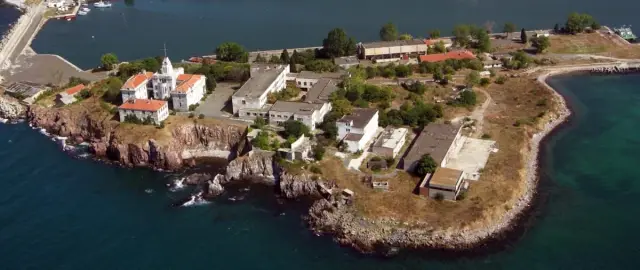
- Can the construction of the port infrastructure coexist with the archaeological sites on the island?
- It can. In principle, the 2011 concept is for the overall development of the island. The port is intended to function as part of the infrastructure, not separately. The problem with the division was that something was created independently with another principal, without it being clear how it would comply with the cultural center. In addition, the configuration of the separated plot makes it difficult to access the rest of the island. Those parts that have the potential to generate income were removed, and the cultural center, by its nature, will be mainly a consumer of funds. Therefore, the infrastructure must support its functioning.
- What is the real archaeological potential of the island and what has not yet been studied?
- In practice, there are about two long seasons of work left. There are areas that have not been explored – behind the Fishery School building and at the southern end of the island, where there is archaeological potential. But in general, the end of the archaeological research is in sight. Probably by the end of next year, archaeologists will be able to say that they have completed their main work and the integration of the discovered structures into the concept for the development of the site will begin.
- What is the underwater archaeological potential in the area?
- Underwater settlements will continue to be explored in the future, because this is happening more slowly. They can be part of the living attractions of the future cultural center. In the bay there are remains of prehistoric settlements from the late Stone-Copper, early and middle Bronze Ages. Structures of wooden pile buildings with rich material have been preserved. The work there can continue for several more seasons, but it is not necessary to excavate everything. Part of the site may remain as a kind of archaeological archive for the future.