


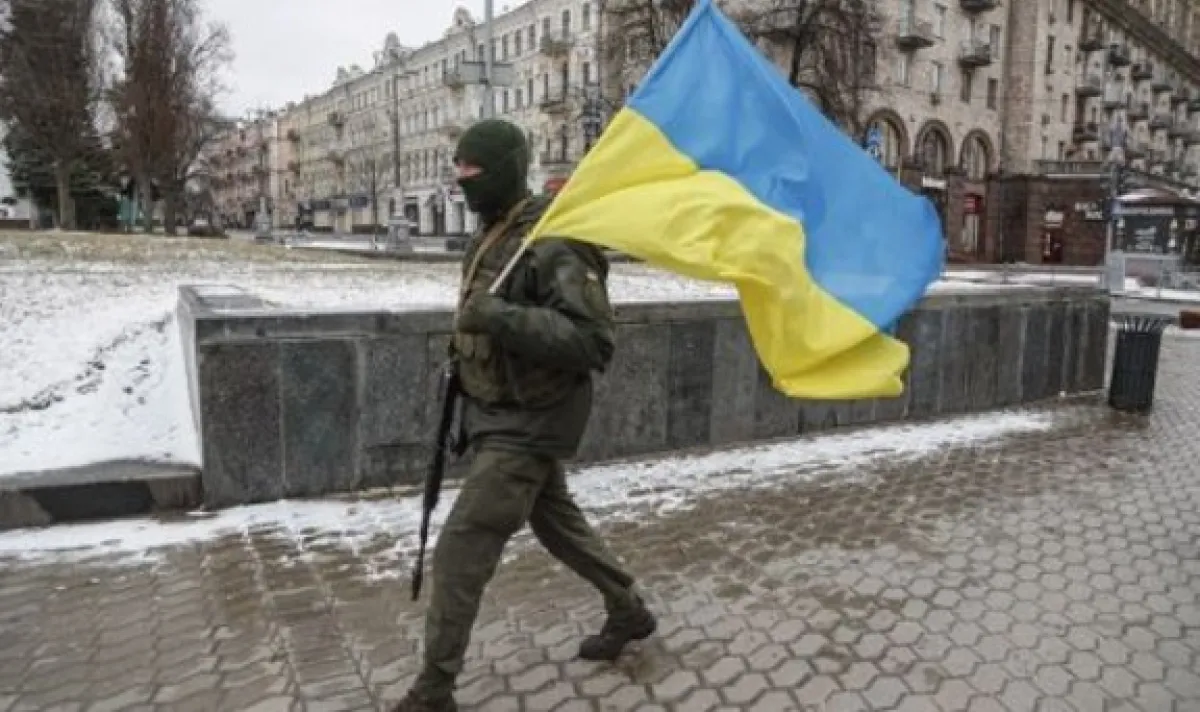

It will soon be five years since Russia began its invasion of Ukraine—an event that ignited the largest war in Europe in generations and shattered the foundations of the international order established after the Cold War. Despite the enormous human and material losses, the end of the conflict is still nowhere in sight. But every war ends sooner or later—through military victory, a negotiated settlement, or an uncertain ceasefire—and the conflict in Ukraine will be no exception.
The long-awaited peace may provide very little relief in the face of the deeper crisis confronting the Ukrainian state today. On the contrary, it could mark the beginning of an entirely new struggle, in which the country will have to deal with the devastating consequences of years of warfare—without the extraordinary resources and international attention that sustained it throughout the conflict.
Russia has already secured control over most of the territories at the center of its claims even before the full-scale invasion, while expanding its occupation to new areas and officially laying claim to territories far larger than those it actually controls. Meanwhile, Ukraine has become the poorest country in Europe in terms of nominal GDP per capita, falling even behind Moldova. The country faces the prospect of emerging from the war with a devastated industrial core, millions of citizens abroad, and an economy entirely dependent on foreign aid.
Even reaching an agreement to freeze the conflict along the current front line would present Kyiv with almost insurmountable challenges: maintaining a fragile agreement between two heavily armed armies, rebuilding its destroyed industry, reintegrating hundreds of thousands of soldiers, persuading millions of refugees to return home, and financing a massive reconstruction process—all at a time when Western governments are facing growing fiscal pressures of their own.
The greatest danger lies in the possibility that Ukraine will be expected to function as a peacetime economy without the conditions necessary for economic recovery being in place. Foreign aid may gradually decline, private investment is likely to remain limited because of security risks, and the country’s reduced workforce and diminished industrial capacity may prove insufficient to finance reconstruction. Consequently, the end of the fighting could mark the beginning of Ukraine’s most difficult economic and political battle.
Ukraine’s industrial base has been destroyed
Ukraine’s first major postwar challenge will be the devastation of its industrial economy—particularly in the eastern and southern regions that were once the country’s manufacturing backbone. Long before February 2022, Ukraine was struggling with aging infrastructure, insufficient investment, and demographic decline, while the loss of Crimea and parts of Donbas in 2014 had already weakened its industrial capacity. The full-scale war accelerated this process of disintegration, destroying factories, mines, power plants, railways, and entire industrial settlements, while severing the economic links connecting Ukraine’s main production regions with international markets.
According to a World Bank assessment from February 2026, Ukraine’s reconstruction needs amount to approximately $588 billion—nearly three times the country’s projected annual gross domestic product—while direct material damage exceeds $195 billion. Transport, energy, housing, industry, and agriculture account for a large share of this enormous burden, but the real challenge goes beyond simply rebuilding destroyed infrastructure. Ukraine must reconstruct an economy whose industrial foundations were systematically destroyed—often in territories that may remain outside Kyiv’s control after the war.
Donbas is a telling example of the scale of the problem. Transformed into one of Europe’s major industrial regions during the Russian imperial and Soviet periods, it became a center of coal mining, steelmaking, chemical production, and heavy machinery manufacturing in Ukraine. The destruction of the Azovstal and Ilyich steelworks in Mariupol resulted in the loss of two key industrial complexes, while years of fighting around Donetsk, Makiivka, Horlivka, and Avdiivka devastated industrial facilities and the infrastructure surrounding them. Coal mines abandoned during the fighting have been flooded and structurally compromised, making the restoration of some of them extremely expensive, if not economically impossible.
The problem is not limited to destroyed factories. Ukraine lost entire industrial ecosystems in which mines supplied steel plants, power stations provided energy for production, and railways connected manufacturing centers with export markets. Restoring individual sites without restoring these links would have minimal impact, while Russian control over significant industrial territories means that many enterprises cannot be rebuilt through reconstruction investment alone. Even in areas controlled by Ukraine, electricity shortages, damaged transport infrastructure, labor shortages, and security risks are hindering industrial recovery. Ultimately, Ukraine may have to abandon parts of its traditional industrial model and develop new sectors—such as defense manufacturing, agricultural processing, and technology. Replacing the jobs and export revenues once provided by metallurgy and mining, however, could take decades.
A demographic catastrophe that money cannot overcome
The destruction of factories and infrastructure is only one part of Ukraine’s future crisis. The country has also lost the population it needs for its recovery—a problem that may prove far harder to overcome than the physical destruction. Ukraine was already in demographic collapse before the invasion, but years of warfare have turned the problem into a national emergency involving military and civilian deaths, permanent disabilities, a declining birth rate, and mass emigration.
At least 5.9 million Ukrainian refugees remain abroad, while approximately 3.7 million people are internally displaced. As a result, millions of economically active citizens have been separated from their former jobs and communities, while the loss of military and civilian personnel further worsens the country’s demographic outlook. These losses will affect not only the availability of labor in the short term but also future generations, reducing the number of taxpayers, skilled professionals, and families capable of sustaining economic recovery.
The assumption that refugees will return once the fighting ends is becoming increasingly doubtful. Ukrainian children have spent almost five years in European schools, while their parents have found jobs, learned foreign languages, and built new lives abroad. For many families, returning would mean giving up their economic security for a country where their homes may have been destroyed, their former jobs no longer exist, and the possibility of renewed hostilities cannot be ruled out.
Ukraine therefore faces a fundamental contradiction: it needs millions of workers to rebuild its economy, but those workers may refuse to return until the economy has already been rebuilt. Meanwhile, the reintegration of hundreds of thousands of veterans—including those requiring long-term medical care, rehabilitation, and pensions—will place an additional burden on a state whose tax base is shrinking.
The result will almost certainly be a vicious cycle in which labor shortages deter investment, weak economic prospects encourage further emigration, and the continuing population decline makes recovery increasingly difficult.
Western aid: Who will pay for Ukraine’s survival?
Perhaps the greatest financial challenge facing postwar Ukraine is the possibility that the exceptional Western assistance currently keeping it above the economic abyss will gradually decline once the fighting ends. During the conflict, foreign governments and international institutions provided hundreds of billions of dollars to maintain public services, stabilize government finances, and prevent economic collapse, allowing Kyiv to devote a significant share of its domestic resources to defense. According to a 2026 assessment by the International Monetary Fund, Ukraine faces a cumulative financing gap of approximately $140 billion between 2026 and 2029, even before taking into account the far larger bill for rebuilding its devastated infrastructure.
The political circumstances surrounding this aid could change dramatically after a ceasefire. European governments are already facing rising public debt, weak economic growth, expensive military modernization programs, and increasing pressure on social spending, while political divisions over the cost of supporting Ukraine could become more pronounced once the immediate wartime urgency of the aid disappears. Although the European Union and international financial institutions have created multiyear support mechanisms, there is no guarantee that the current scale and generosity of funding will continue indefinitely.
Ukraine could therefore find itself trapped between declining foreign subsidies and an economy incapable of generating enough revenue to finance its own recovery. Rebuilding industrial infrastructure, maintaining public services, supporting millions of vulnerable citizens, and preserving a substantial military force would require enormous resources, while loans provided by international creditors could increase future repayment obligations. The country may face pressure to raise taxes, cut spending, privatize state assets, and implement painful economic reforms precisely when its exhausted population expects the end of the war to bring improvements in living standards.
The fundamental problem is that any future recovery plan for Ukraine would have to be adopted precisely when the political rationale for extraordinary wartime financing begins to weaken. Even continued Western support may prove insufficient if investment remains limited, economic growth stays weak, and the population continues to decline.
A fragile peace between two heavily armed armies
The difficulties facing Ukraine will not end with the signing of a ceasefire agreement. An agreement freezing the conflict along the existing front line would leave significant Ukrainian territories under Russian control, while unresolved questions over sovereignty, security guarantees, and the deployment of military forces could turn the resulting peace into a prolonged armed confrontation without continuous large-scale fighting.
Moscow entered the full-scale invasion already controlling Crimea and parts of Donetsk and Luhansk, while recognizing the separatist entities in Donbas shortly before launching its offensive. Since then, Russia has expanded its territorial control over much of Donbas and the southern land corridor to Crimea, officially claiming the entirety of Donetsk, Luhansk, Zaporizhzhia, and Kherson regions, including areas it does not occupy. These claims are not internationally recognized, but they create a fundamental obstacle to any lasting settlement: Russia could retain most of its earlier territorial gains while continuing to demand additional Ukrainian territory, leaving the political foundations of the conflict unresolved.
Implementing such an agreement would be a monumental undertaking. Hundreds of thousands of soldiers would remain deployed along a heavily fortified front, separated by minefields, artillery positions, and extensive defensive infrastructure, while the use of drones and long-range weapons would make monitoring compliance with the ceasefire difficult. Without reliable international monitoring and effective security guarantees, even relatively limited incidents could threaten the ceasefire, forcing Ukraine to maintain a substantial military presence despite the formal end of hostilities.
This would impose yet another major burden on the country’s already weakened finances. Maintaining a large army, extensive fortifications, modern air defenses, and sufficient ammunition reserves would consume resources desperately needed for housing, infrastructure, and industrial recovery. At the same time, reducing military spending could expose Ukraine to renewed pressure from Russia, particularly if Moscow preserves or even expands its military capabilities and resumes offensive operations.
The resulting uncertainty would also discourage private investment and complicate the return of refugees. Few companies would voluntarily invest billions in industrial facilities that could once again become military targets, while families who have secured stable lives abroad may hesitate to return to a country living under the constant threat of another war.
The threat of internal conflict: A divided Ukraine after the war
An even more dangerous consequence of an unfavorable peace agreement could emerge within Ukraine itself, where a government seeking to end the fighting and ease the suffering of an exhausted civilian population could face elements of a battle-hardened army unwilling to accept territorial concessions to Russia. After years of enormous sacrifices, hundreds of thousands of soldiers and veterans could view an agreement recognizing Russian control over occupied territories, limiting Ukraine’s military capabilities, or abandoning its aspirations for NATO membership as a betrayal of everything for which they fought.
The situation could become particularly unstable if political leaders tried to impose an agreement lacking broad public legitimacy while demobilized soldiers returned to devastated hometowns with few job opportunities and little prospect of economic recovery. The possibility of conflict between a government determined to preserve peace and armed groups determined to reject its terms could become one of the most serious threats to Ukraine’s postwar stability, especially if influential military commanders or nationalist organizations openly challenged Kyiv’s authority.
Such a confrontation would not necessarily become a civil war, since opposition to territorial concessions does not automatically lead to armed rebellion, and the Ukrainian army remains an institution operating under established command structures. Nevertheless, the combination of widespread weapons, the scars of war, economic hardship, and political polarization could create conditions for dangerous unrest, particularly if the ceasefire were perceived as legitimizing Russian territorial gains without providing reliable security guarantees.
In an extreme scenario, radicalized armed factions could refuse demobilization, challenge government orders, or attempt to obstruct implementation of the agreement, potentially provoking clashes with security forces and deepening divisions between civilian authorities and parts of the veteran community. For a country already struggling with devastated infrastructure, demographic collapse, and financial dependence, even a limited internal armed confrontation could prove catastrophic, undermining the government’s legitimacy, discouraging foreign investment, and threatening the fragile peace that was supposed to end years of destruction.
The war will end, but Ukraine’s greatest test is still ahead
The end of the war with Russia will not automatically mean the end of Ukraine’s crisis. On the contrary, it could mark the beginning of an even longer struggle for the country’s economic survival and political stability. After years of destruction, Ukraine risks being left without a significant part of its traditional industrial base, with millions of citizens settled abroad, enormous financial obligations, and an economy dependent on external aid. At the same time, Kyiv will have to maintain a large and well-armed military capable of deterring a new Russian offensive, even if this means diverting vital resources away from reconstruction and improving living standards.
The greatest contradiction of postwar Ukraine may be the need to rebuild its economy under conditions that make recovery exceptionally difficult. Destroyed enterprises will limit employment and state revenues, a lack of prospects will discourage refugees from returning, and the constant threat of renewed war will deter investors. To guarantee its security, the country will have to maintain enormous military capabilities that it would struggle to finance on its own. Ukraine thus risks falling into a vicious cycle in which economic weakness creates dependence on foreign support, while the need for permanent military readiness limits the possibility of overcoming that dependence.
These challenges will be compounded by the danger of an internal political crisis if the terms of a possible peace agreement are rejected by a significant part of society, the army, and the veteran community. A government seeking to impose peace and ease the population’s suffering could face organized resistance from people for whom territorial concessions represent a betrayal of the sacrifices of the war. Such opposition would not necessarily mean civil war, but amid a severe economic crisis and weakened trust in institutions, it could develop into a dangerous internal confrontation.
A lasting peace, large-scale international investment, deeper integration with the European Union, and the return of millions of Ukrainians could open a path to economic revival. But even under favorable circumstances, overcoming the accumulated losses would take decades. No agreement alone can restore the lost population, rebuild destroyed enterprises, or resolve the territorial dispute with Russia. Nor can Western countries’ willingness to finance Ukraine’s economy and defense be guaranteed indefinitely.
Ukraine may survive the war as an independent state, but emerge from it territorially diminished, economically exhausted, demographically weakened, and politically divided. The real question then will not simply be under what conditions the fighting ends, but whether the country will have the resources, population, and social unity needed to build a viable future.
Ukraine may survive on the battlefield, only to face an even tougher battle afterward. The war may end with the signing of an agreement. But the struggle for the future of the Ukrainian state could continue for generations.
Source: news.bg