


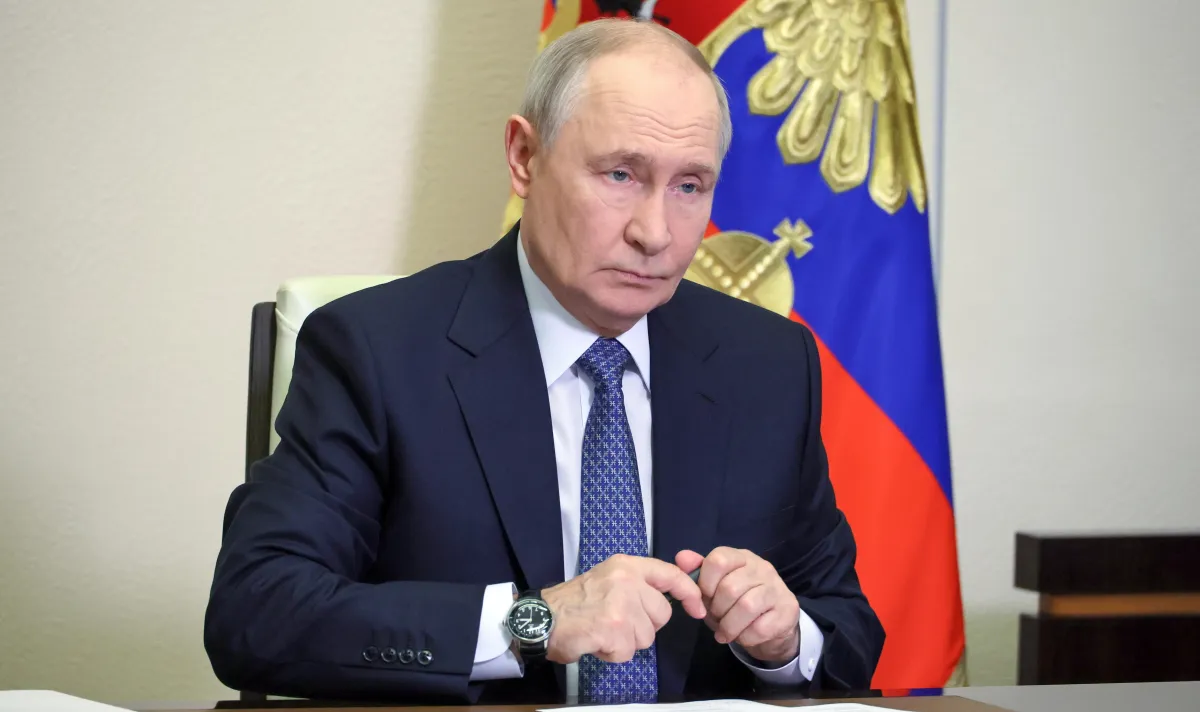

The territorial issue is not the real stumbling block for Vladimir Putin, while Russia is using it as part of a broader demand to change the security system in Europe. Russian opposition figure Olga Kurnosova said this in an interview with OBOZ.UA.
The trilateral talks between Ukraine, Russia and the United States in Abu Dhabi ended with an agreement on a large-scale exchange of prisoners of war, but without progress on a ceasefire or the territorial disputes. European representatives did not take part directly in the meeting. The head of the Russian delegation, Vladimir Medinsky, identified a new security architecture in Europe as a central topic of the negotiations.
Moscow puts NATO at the center
“The territorial issue is not the stone Russia is tripping over. More precisely, it is something the Russian side presents as a stumbling block,” Kurnosova said.
According to her, Putin’s demand is connected with returning NATO to its 1997 borders. The alliance would therefore have to lose the states that joined after that date. Kurnosova described this as an attempt by the Kremlin to impose on Europe a model in which Russia has the final say over the security of other states.
She recalled that before Russia’s invasion of Georgia, the NATO–Russia Council existed, while relations between Moscow and the alliance included discussions of joint action against terrorist threats. According to the opposition figure, Putin’s subsequent course returned Russia to a confrontational model incompatible with the agreements on European security.
Regional alliances as an opportunity for Ukraine
Kurnosova rejected the idea that success for right-wing parties in Europe would automatically mean a victory for Russian policy. She cited Hungary as an example of a country whose government puts national interests first, but said this does not necessarily mean support for the Kremlin.
“This does not mean that right-wing politicians are pro-Russian,” she said. In her view, if Russia continues to be perceived as a threat to the national interests of European states, governments will be more inclined to strengthen their defenses.
Kurnosova pointed to the Visegrád Group and Northern European defense cooperation as examples of regional formats that can develop in parallel with common European structures. According to her, Ukraine could seek more active participation in similar alliances, as they are directly linked to states that feel the Russian threat immediately.
“The main obstacle is Putin himself”
According to Kurnosova, Europe’s participation in the negotiations would make it more difficult for Moscow to impose its own interpretation of the continent’s future security. She believes that European states can exert pressure through sanctions, political decisions and restricting the Russian leadership’s access to its interests.
The opposition figure believes that not only the United States, but also China and the European states, could influence the Kremlin. “The main obstacle on the road to reaching any kind of agreement is Putin himself,” she said.
Following the meeting in Abu Dhabi, the agreement on the exchange of prisoners of war remains in place, while positions continue to diverge on ending the war, the territories and future security guarantees.
Sources: obozrevatel.com