


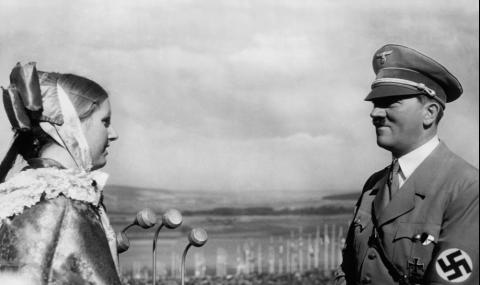

On August 19, 1934, a referendum was held in Germany. Nearly 89.9% voted in favor of creating the position of Führer - combining the rights and duties of the chancellor and president, which was held by Adolf Hitler.
A year earlier, he became chancellor after his party received a mandate to form a coalition government as the largest political force in parliament. On August 2, 1934, the then president Paul Ludwig Hans Anton von Benneckendorf und von Hindenburg died.
This opened the way for Hitler to hold a referendum.
Immediately after this vote, Hitler introduced a dictatorship, using the state apparatus to crush any resistance. It should not be thought that this process was reduced to a gradual erosion of civil rights or the rights of accused criminals. Everything happened very quickly, and often the Nazis did not even bother to deal with legal cases.
Many of their political opponents were crushed in battle or outright massacred. Nevertheless, in the prewar years Hitler had the sincere support of most Germans, because he managed to reduce unemployment and revive the economy.
Hitler then set Germany on a path of conquest that would lead to World War II. He won his first territorial gains practically without a fight. England and France, mired in their own economic problems, were so desperate for peace that they did not intervene when Hitler violated the Treaty of Versailles and began to build up the German army, nor when his troops occupied the Rhineland and built fortifications there (March 1936), nor when he forcibly annexed Austria (March 1938). They even tacitly accepted (September 1938) the annexation of the Sudetenland, the heavily fortified border region of Czechoslovakia.
The international agreement known as the Munich Pact, which the British and French had hoped would bring "peace in our time", left Czechoslovakia with its hands tied, and within a few months Hitler had taken over the rest of the country. At each stage he cleverly combined arguments in favour of his actions with threats of war if his wishes were not met, and each time the Western democracies yielded meekly. England and France, however, were determined to defend Poland, Hitler's next target.
He hastened to take precautions, signing a "non-aggression pact" with Stalin in August 1939 - actually an aggressive alliance, with the two dictators agreeing on how to divide Poland. Nine days later Germany attacked Poland, and sixteen days later the Soviet Union did the same. Although England and France declared war on Germany, Poland was soon defeated.