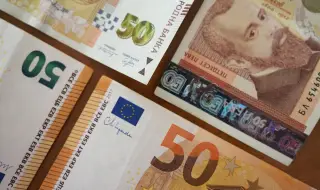
The next phase of European integration will be in the field of defense and security – – "common shield and common borders", said in an interview with BTA the former Austrian Chancellor Dr. Wolfgang Schüssel during an information visit of Bulgarian media to Austria on the occasion of the upcoming introduction of the euro in Bulgaria. Schüssel expressed the opinion that joining the eurozone is not only a matter of economics, but also of strategic political integration. In his words, for countries like Austria and Bulgaria, sharing a common currency with the other member states brings a number of practical advantages – facilitated tourism, stable exports and predictability of financial processes. But the most important thing is that the euro gives the country a full place at the heart of the European project.
In his conversation with the BTA envoy, Schüssel recalled that the introduction of the euro in Austria was preceded by difficult political and psychological challenges - from a budget deficit of over 5 percent to resistance to the loss of the national currency. The transition was successful thanks to a disciplined financial policy and a massive information campaign. – Information, information and more information - that was the conclusion,– said Schüssel.
According to him, the fears that with the euro Bulgaria will lose control over its economy are unfounded. – With the currency board, you are already following the eurozone - you will simply now have a voice in decision-making,– he said.
Schüssel insists that this is a moment of national importance that requires a cross-party consensus. In conclusion, he defended the idea of Europe as a unique place of freedom, worth protecting from nationalism and fear, with more trust, solidarity and a common vision.
The full text of the interview follows:
Mr. Schüssel, what were the main geopolitical and economic motives behind Austria's accession to the European Union and the eurozone? Apart from the economic arguments, what were the geopolitical considerations that stood behind the decision?
- Both types of considerations were important. From an economic point of view - Austria is almost like Bulgaria in terms of size and population. A country with tourism. From an economic point of view, sharing the same currency with 22 other EU countries is very important. Having millions of tourists using the same currency at home, for both Austria and Bulgaria, will be a convenient advantage. The same applies to exports.
But there is also a strategic, political argument. When Romania and Bulgaria joined in 2007, while I was still Chancellor, I personally celebrated this as a historic moment – not only for the two countries, but for Europe as a whole. However, if you are a member of the EU but not part of the eurozone, you are missing out on the most important areas of policy. And now, from 1 January 2026, when you join the eurozone, you will become a full member of the common market, Schengen and the monetary union – that will put you at the heart of the European project. And that difference is very significant.
What was the domestic political debate in Austria like then? Was there strong opposition to the introduction of the euro and how did you overcome it?
- We should not forget that five years earlier there was a citizens' initiative against the introduction of the euro, organised by the Freedom Party. It only collected around 250,000 signatures – that is approximately 4.5 percent of the population.
When I became Chancellor in 2000, Austria was facing a serious budget problem - the deficit exceeded 5 percent of GDP. Such a level would have blocked our accession to the eurozone. We had to work very intensively in the first two years to reduce the deficit from over 5 percent to zero. This was done through disciplined fiscal policy - spending cuts, some temporary tax measures and partial privatization. It was difficult, but necessary and it worked.
Was there also psychological resistance to replacing the schilling with the euro?
- Yes, and it was significant. The Austrian schilling had enormous symbolic value and from a psychological point of view was associated with great achievements. It had been part of our identity since the post-war period - one of the hallmarks of the rebuilt state and the economic miracle. For many people, the idea of giving up the shilling sounded like a loss, not a gain.
The adoption of the new currency was also made difficult by the exchange rate itself - one euro was equal to 13.76 shillings. Imagine how difficult it is for someone who shops every day to do their calculations "in their head" with such a ratio.
We had to conduct a large-scale information campaign: we provided calculators, organized public explanations, media campaigns. But despite this, only four weeks before the transition - in late November, early December 2001, surveys showed that 80 percent of people were not fully aware of what was coming. We had introduced dual price indication, consumer commissions, etc. three months before that. People were not aware, they did not care. It was a psychological problem.
The conclusion I made was very simple: information, information and more information. Even when you are convinced that the public has already heard everything, keep repeating it. Everyone must understand what is happening. And this is a historic decision for Bulgaria, I am sure.
Can such a campaign be carried out without political opposition, which we often observe in Bulgaria?
- Yes, it is possible, this is a pragmatic question. The introduction of the euro is an economic plus for Bulgaria for sure. And it is also a huge political achievement. You are either in or you are not. And if you are not, you always risk being treated as a "second-class" member. And Bulgaria does not deserve that. Your country deserves to be a full, respected member of the European family. That has always been my conviction. The single market, Schengen, the eurozone - these are the important things. These pillars are the core. The next step would be a common defense. And I think that we really need to cooperate together in this direction.
The parties in Bulgaria must step back from their local problems and differences. This is an issue of national importance that affects the future of the country.
There are fears in Bulgaria that with the introduction of the euro, control over the national economy will be lost. Are these fears justified?
- These fears are understandable, but unfounded. Every country that joins a common currency delegates part of its monetary sovereignty – that is a fact. But in return it receives participation in the decision-making process and stability.
In the Austrian case, even before the euro, our schilling was pegged to the German mark. In essence, we were already following the monetary policy of the Bundesbank. The situation in Bulgaria is similar today – the lev is pegged to the euro through the currency board. This means that you are not actually losing anything, but gaining.
After joining, you gain a seat at the table. From January 1, 2026, you will be part of ECOFIN and the meetings of the eurozone bodies, you will participate in the discussion and shaping of decisions. You will not be on the outside listening to what they will do and repeating it. This is a huge difference – from an observer you become a participant.
In one of your speeches you mentioned that the next step of integration will be common defense. Is it possible for Europe to have a stronger and more unified position in defense and energy?
- Yes, I am convinced of this. Over the past 30 years, we have lived in the illusion of the so-called peace dividend. After the end of the Cold War, almost all European countries reduced their armies. The German army, for example, decreased by a third - from 600,000 to 180,000 people. We reduced the fleets, aviation, air defense by half.
These savings brought us about 2 trillion euros in three decades, but that era is over. We learned a bitter lesson - war returned to the continent, and we did not see the signs of this. And it is not over. We must rearm. We have to work together, because otherwise it would be too expensive and not effective enough. I think the next step of European integration will be a kind of common defense, a shield, as well as borders.
How do you assess the current political situation in Europe? Are we witnessing a revival of nationalism in a new form or is this simply a reaction to global challenges?
- This is a very interesting and difficult question. In my opinion, there are two types of nationalism. A hundred years ago we had imperialist nationalism. Today this nationalism is still here - in America, Russia, China.
There we see classic imperialist nationalism, while in Europe - a kind of "cowardly nationalism" that is trying to preserve the status quo. People have the feeling that they can lose what they have achieved - security, identity, standard of living. Our task is to turn this feeling of uncertainty into positive energy.
Europe remains a unique place - a continent of freedom, of free thought, without anyone controlling or punishing you, of the freedom to create (free company), to marry.
In one of the recent issues of European Voices I read an article about the European way of life, which is worth defending. It said that if there were intelligent beings somewhere in space and they were looking for a suitable place to land, the best place would be Europe. Because here people are peaceful, open, hospitable, we are not hostile to guests. This is very important – the European way of life is worth defending. We need to know this and spread this message.