Bulgaria's membership in the so-called Peace Council, initiated by US President Donald Trump, will not be submitted for ratification within the framework of the 51st National Assembly. This was confirmed by the Foreign Ministry, after it was initially announced that the document signed in Davos by the outgoing Prime Minister Rosen Zhelyazkov would be submitted for approval in the coming weeks. The topic caused political reactions and opposing assessments, including from “DPS-New Beginning“, which insists that the ratification should not be postponed.
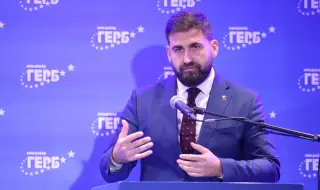
In the studio of “Your Day“ MEP from the European People's Party and GERB Andrey Novakov described Bulgaria's participation in the new format as rather positive. According to him, our country gains strategic visibility and access to direct dialogue at the highest level. “Four times a year, the Bulgarian Prime Minister, regardless of whether he is an official or regular, will sit at the same table with the President of the United States. This is not something we should underestimate“, said Novakov.
According to him, joining the Peace Council is a logical step also because of the choice of Nikolay Mladenov as its head.
“This is a Bulgarian with undisputed international authority. Bulgaria nominated him years ago, he was Foreign Minister and is one of the showcases of our country. The most natural thing was to support it“, the MEP emphasized.
Novakov also commented on the criticism that Bulgaria and Hungary remain the only EU countries that are part of the initiative. According to him, this should not be seen as an image problem. “We see that a number of European countries are taking a more cautious position, but this is a matter of time. The role of the UN is weakening and new formats for conversation and influence are being sought“, he pointed out, adding that such initiatives are a reflection of the changing world order.
On the topic of the postponed ratification, Novakov said that he understands the arguments of the outgoing Foreign Minister Georg Georgiev, but does not see anything dramatic in the fact that different political forces are seeking to accelerate the process. “Everyone has the right to submit whatever they consider necessary – be it in the National Assembly or in the Constitutional Court. This is a normal democratic practice“, he said.
The MEP also rejected speculation that membership in the Peace Council could be a bargaining chip for lifting sanctions under the “Magnitsky“ law. “I do not believe that every foreign policy action of Bulgaria should be interpreted through the prism of specific individuals. We are talking about a strategic partner like the US, not about private interests“, Novakov emphasized.
According to him, the benefits of participating in the initiative are not only image-related. “This is a channel of influence and an opportunity for Bulgaria to actively participate in the reconstruction of regions like Gaza and Ukraine when the conflicts end. Our companies and workers can be part of these processes – in construction, energy and infrastructure“, he said.
In a broader geopolitical context, Andrey Novakov also commented on Bulgaria's future orientation after the upcoming elections. According to him, no government has ever questioned the country's membership in the EU and NATO, but in recent years there have been alarming signals. "Bulgaria's civilizational choice was made in the 1990s and should not be wavered," the MEP stressed.
At the end of the conversation, Novakov also touched on the topic of passenger rights in the EU. He expressed optimism that real changes could be achieved by the summer, including the inclusion of hand luggage in the ticket price and automatic compensation for delayed flights. "96% of MEPs supported these changes. The goal is to stop abuses and make travel fairer for people," he said.