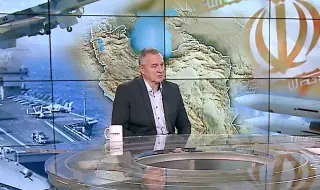
Former Chairman of the National Security Agency Tsvetlin Yovchev warned that although the direct military threat to Bulgaria is small, it cannot be completely ruled out against the backdrop of the escalation of the conflict between the US, Israel and Iran. In an interview for the program “PrimTtime“ he emphasized that the reaction of the Bulgarian authorities in the first days was too calm. “If we are talking about a direct military threat, the risk is small. But such a risk exists“, said Yovchev, adding that the government must openly inform the public about the potential dangers and the measures taken.
According to him, indirect risks related to terrorist acts, hybrid attacks and destabilizing information campaigns are more likely for Bulgaria, euronews.bg listed. Yovchev reminded that Europe is not protected from such acts and gave the example of attacks on diplomatic sites and incidents in European capitals. “There is definitely a risk of a terrorist attack“, he pointed out and stressed that the services must carefully monitor individuals suspected of having ties to Iranian services or radical organizations.
The former head of the National Security Agency also noted that Bulgaria has limited capabilities for protection against air attacks and cyber threats, as well as insufficiently effective tools for monitoring radicalization on the Internet. According to him, the country should strengthen the exchange of information with partner services and invest in analytical systems for tracking risks, including in financial transactions. “A well-organized campaign with little money can have a huge effect“, he warned, referring to hybrid information operations.
As a key measure, Yovchev proposed the creation of a permanent crisis coordination center at the Council of Ministers, which would analyze information from the services and monitor the development of various scenarios - from energy shocks to migration pressure. “It is necessary at the moment to create a permanent crisis center in which all available information would be collected“, he said. According to him, such a structure would allow for early warning and a faster reaction in the event of a possible deterioration of the international situation.