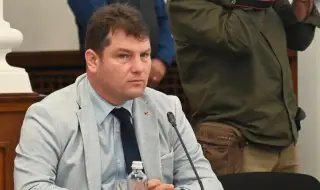
Food prices, inflation and the feeling of increasingly heavy pressure on the family budget have once again put the topic of “fair price“ at the center of public debate. How far does the role of the state in the free market go and when can the fight against high prices lead to the opposite effect – lower quality, hidden price increases and new distortions? Andrey Velchev from the Association “For Affordable and Quality Food“ speaks to FACT.
- Mr. Velchev, how do you define the concept of “fair price“ and is it possible for the state to actually regulate it in a free market when we are talking about food prices?
- A fair price does not mean the lowest possible price. It is a price that simultaneously guarantees a normal income for the producer, accessibility for the consumer and the absence of abuse along the chain. In a free market, the state should not administratively set prices, but it is obliged to guarantee fair rules, transparency and real competition. When there are doubts about coordinated practices, artificially inflated markups or opacity in the chain, the state has the right and obligation to intervene through control and regulations.
- The government has announced measures against unreasonably high prices and markups. Is this real protection for consumers or rather a political move?
- It all depends on whether the measures will remain at the level of a political signal, or will they lead to real structural change. The very raising of the topic is important, because for the first time in years there has been an attempt to talk about transparency throughout the entire food chain. However, if there is no effective control, publicity of data and real sanctions for violations, the effect will be temporary. True consumer protection requires a sustainable mechanism, not campaign actions.
- Is there a risk that some of the measures against high prices will lead to the opposite effect – shortages, lower quality or hidden price increases?
- Yes, such a risk exists and it should not be underestimated. When there is strong pressure on prices, some operators begin to compensate by deteriorating quality, replacing raw materials or reducing weight. This is especially dangerous in the food sector. We - from the Association “For Affordable and Quality Food“, have repeatedly sounded the alarm about cases in which the label does not correspond to the actual content. Therefore, any price policy must go hand in hand with increased control over quality and traceability.
- Where is the biggest problem in the chain – at the producers, the resellers, the retail chains or the lack of control by the state?
- The problem is complex, but in my opinion the biggest deficit is the lack of sufficient transparency and consistent control. Producers often work under serious price pressure, and the final price for the consumer does not always reflect the real value of the product. Between the individual stages of the chain there is a serious accumulation of costs, bonuses, fees and commercial practices that remain unclear to the public. That is why we insist on the publicity of the price mechanisms and real traceability.
- In society, there is increasingly talk of “speculation“ around the euro and inflation. Is there a real unjustified increase in prices in Bulgaria?
- There are cases in which the increases can hardly be explained only by inflation, transport or energy costs. In periods of public uncertainty, there is always a risk that part of the business will use the situation for a preventive increase in prices. This does not mean that every price increase is speculation, but it does mean that the state must monitor the market closely. This is precisely why transparency is so important - when the public has access to information, speculative pressure decreases.
- What should a real consumer protection policy include - more inspections, transparency of markups, a price register or promotion of competition?
- All these elements are necessary. There cannot be effective consumer protection with inspections alone or with regulations alone. A comprehensive model is needed: price transparency, strong quality control, publicity in case of violations, electronic registers, traceability along the chain and promotion of real competition. It is particularly important to create an environment in which honest producers and traders are not put at a disadvantage by dishonest operators.
- Why do Bulgarian consumers often pay higher prices for some foods compared to countries with higher incomes in Europe? How relevant is the justification for the different VAT?
- VAT is a factor, but it is not a sufficient explanation. If it were just a question of VAT, we would not see cases where identical products are cheaper in countries with higher wages and higher labor costs. The reasons are many – market concentration, weak competitive pressure, dependence on imports, smaller market size and opaque trade practices. Moreover, the Bulgarian consumer often pays not only for the product, but also for the inefficiency along the chain.
- How can the Bulgarian producer be protected without this leading to more expensive goods for the end consumer?
- By creating fair conditions, not through artificial protectionism. The Bulgarian producer needs easier access to the market, less administrative burden, effective control against unfair imports and a better logistical environment. If the local producer is placed on a level playing field, this can even reduce prices through shorter supply chains and lower transport costs. The protection of Bulgarian production should not be at the expense of the consumer, but in his favor.
- Do you see real political will for a long-term battle with high prices or will the measures remain temporary until the public tension passes?
- I hope that this time the topic will not end with a short-term media effect. It is positive that there is already talk of transparency, registers and legislative changes. However, the real test will be whether the state will continue this policy after the public pressure decreases. The fight against high prices cannot be a one-time action - it requires constant control, modern monitoring tools and political consistency. Because access to quality food is not only a matter of economy, but also of public health and national security.