In history textbooks, the Tarnovo Constitution is cited as a model of modernity for the 19th century.
However, few know that it only lasted two years. During this period, the guarantor of the Tarnovo Constitution was Russia, which a few years later would oppose the Unification of the Principality with Eastern Rumelia.
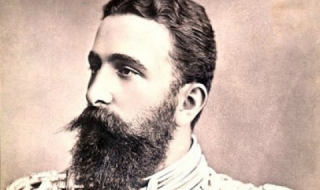
Let's go back to July 1, 1881. The convened II Great National Assembly suspended the Tarnovo Constitution and voted for the extraordinary powers requested by Prince Alexander Battenberg to govern the country for the next seven years.
This step was expected. Since his accession to the throne in 1879, Prince Alexander Battenberg has had strained relations with the Liberal Party, which favored the parliamentary system enshrined in the Tarnovo Constitution at the expense of monarchical power. However, after two consecutive electoral victories for the Liberals and the dissolution of the First Ordinary National Assembly, he was forced to cede power to them in March 1880. His repeated attempts to suspend the constitution were not supported by Russia, which had a dominant influence over the Principality. The Russian position changed only after the assassination of Tsar Alexander II by Narodovoltsi in March 1881. The new Russian Tsar, Alexander III, pursued a reactionary policy at home and favored a similar turn of policy in Bulgaria.
On April 27, 1881, Alexander I Battenberg overthrew the liberal government of Petko Karavelov and dissolved the National Assembly. He appointed Gen. Casimir Ernroth as Prime Minister. The general simultaneously performed the functions of military and interior minister. The government was composed of supporters of the monarch. The country was divided into five regions, governed by extraordinary commissions.
After the election of Alexander I Battenberg (1879-1886) as Prince of the Principality of Bulgaria, Gen. Ernroth became his personal advisor and thus became involved in Bulgarian domestic and foreign policy. During the period 1880-1881 he was the Minister of War in the government of Dragan Tsankov. He supported Prince Alexander Battenberg in his ambitions to repeal the Tarnovo Constitution and establish a one-man regime. It was with the help of the Russian general - Minister of War in the Principality - that the prince prepared a plan for a coup d'état.
On May 11, the requests for extraordinary princely powers for a period of 7 years were publicly announced. A princely decree was also issued to organize military courts against the actions of the opposition. Under the military dictate of the Prime Minister, a Grand National Assembly was convened, in which the prince's supporters gained a majority. It met in Svishtov on July 1, 1881 and in just two hours approved the powers requested by the prince and repealed the Tarnovo Constitution. The country was introduced a one-man regime of the prince for a period of 7 years.
However, it lasted until December 1883.
The main reason for this was the disagreements that arose between Austria-Hungary and Russia, which initially supported the regime.
The Treaty of Berlin required Bulgaria to complete the unfinished Vienna - Constantinople railway line through a section on its territory. After supporting the coup in the Principality, Austria-Hungary expected Battenberg to fulfill this commitment with priority over all other railway projects. The Russian government, which was in allied relations with the Austrian one, supported his claims. At the same time, however, the Russian supporters of the regime in the Principality insisted on the priority of the project for a railway from Sofia to Ruse, which, along with the development of shipping on the Danube, would provide convenient transport links between the Principality and Russia.
The regime of Alexander Battenberg also rearranged the political system in the country.
It came to pass that the Liberal Party split definitively into two formations - the one led by Dragan Tsankov, which supported the amendments to the constitution, and the wing of Petko Karavelov, which advocated the full restoration of the basic law.
The Conservative Party, whose authority had been lost, practically ceased to function and did not play a role in the parliamentary elections of May 1884, which were won by the irreconcilable liberals. With the formation of the new Karavelov government in June 1884, the constitutional changes were effectively annulled. Formally, this happened in 1886 with a decision of the Fourth Ordinary National Assembly.