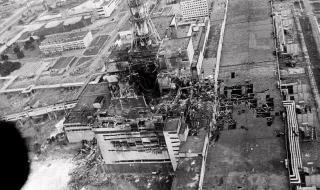
At exactly 1:23 a.m. on April 26, 1986, an explosion occurred in the fourth power unit of the Lenin nuclear power plant.
This is the worst accident in the history of nuclear power.
It caused a cloud of radioactive waste that passed over parts of the USSR, Eastern Europe and Scandinavia. Vast areas in Ukraine, Belarus and Russia were contaminated, and about 200,000 people were evacuated from their homes. Nearly 60% of the radioactive waste fell on the territory of Belarus.
The accident raised questions about the safety of Soviet nuclear power, temporarily slowing its development.
Wrong decisions and unfortunate coincidences led to a fatal explosion, Deutsche Welle summarizes.
The reactors at the Chernobyl nuclear power plant were shut down and later decommissioned. A fourth reactor was enclosed in an unstable concrete cocoon.
The battle to contain the accident and prevent a second explosion with a power of over 5 megatons, which would have flooded all of Europe with radioactive dust, as Pripyat is now flooded, cost the USSR approximately $50 billion in less than 6 months. This, combined with the subsequent collapse of oil prices on the international market (the price fell by 1/3), created a serious hole in the budget and the beginning of a severe economic crisis in the USSR.
According to a 2006 report by "Greenpeace", the Chernobyl disaster led to over a quarter of a million cases of cancer, of which almost 100 thousand were fatal. The Union of Concerned Scientists - a non-governmental organization - suggested that the number of deaths due to Chernobyl would vary around 25 thousand - six times higher than the UN forecast. And according to the International Agency for Research on Cancer, the incident will take the lives of 16 thousand Europeans by 2065.
Why, despite the disaster, does Ukraine still rely on nuclear energy today? The 15 nuclear reactors available provide nearly 60 percent of the energy supply. "We are a poor country, we need nuclear energy," says Ukrainian Environment Minister Hanna Vronska. The nuclear disaster is hardly discussed in today's Ukraine.
"People have other concerns - the conflict with Russia, corruption, a wavering government, poverty," a German embassy employee who grew up in Chernobyl told Deutsche Welle.
Officially, in Ukraine alone, 2.3 million people, including 220,000 "liquidators," are considered "victims of the Chernobyl disaster."
Around 300 people still live in a 30-kilometer radioactive zone. These are people who would not leave their homes for anything in the world, even though they are contaminated with radiation. They live by the rules of subsistence farming. They start returning to their homes a few weeks after the accident...