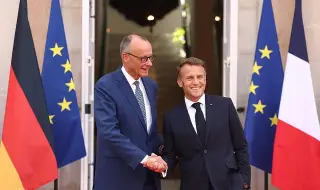
German Chancellor Friedrich Merz called on Monday for a complete overhaul of the European Union's budget system, which he said was outdated, and supported a simpler approach aimed at investing in defense and boosting European competitiveness, Reuters reported, quoted by BTA.
In a speech at the ceremony for the awarding of the “Charlemagne“ in the German city of Aachen, Merz outlined the growing opposition over the EU budget for the period 2028-2034, in which demands for increased security spending clash with the need to maintain funding for traditional policies such as agriculture and regional development.
In April, the European Parliament, which is involved in approving spending plans together with member state governments, voted to increase the budget above the level proposed last year by the European Commission.
This year, the “Charlemagne“ award went to former European Central Bank (ECB) President and former Italian Prime Minister Mario Draghi, who in 2024 warned in a report that the EU's competitiveness was weakening. The ceremony was also attended by Greek Prime Minister Kyriakos Mitsotakis, whose country suffered the brunt of the eurozone debt crisis when Draghi, as president of the European Central Bank, promised to do "whatever it takes" to save the euro, Reuters recalls.
“Sovereign Europe needs a budget prepared for Draghi's warnings“, Merz said today.
“Simpler structures, investments in competitiveness and defense, and a focus on European policies are needed because resources are limited,” he added.
Modernization is imperative
French President Emmanuel Macron called in February for joint European financing through common debt so that the EU can remain competitive in the race with the United States and China - an idea that Berlin opposes, however. Germany has also spoken out against other proposals by the European Commission, including the introduction of European taxes on tobacco products and on the revenues of large companies.
„Some believe that difficult decisions can be avoided by taking on a new common European debt and covering current expenses with loans. Germany cannot support such an approach, including because of the country's constitutional restrictions (the so-called debt brake)“, said Merz.
According to him, currently more than two-thirds of the EU budget is directed to subsidies, while some countries spend more on servicing their debt than on defense.
„We cannot meet the challenges of the 21st century with a 20th century budget. "That's why fundamental modernization is essential," the German Chancellor said.
"Furthermore, the reality is that excessive debt threatens sovereignty and limits our ability to act," he added.