


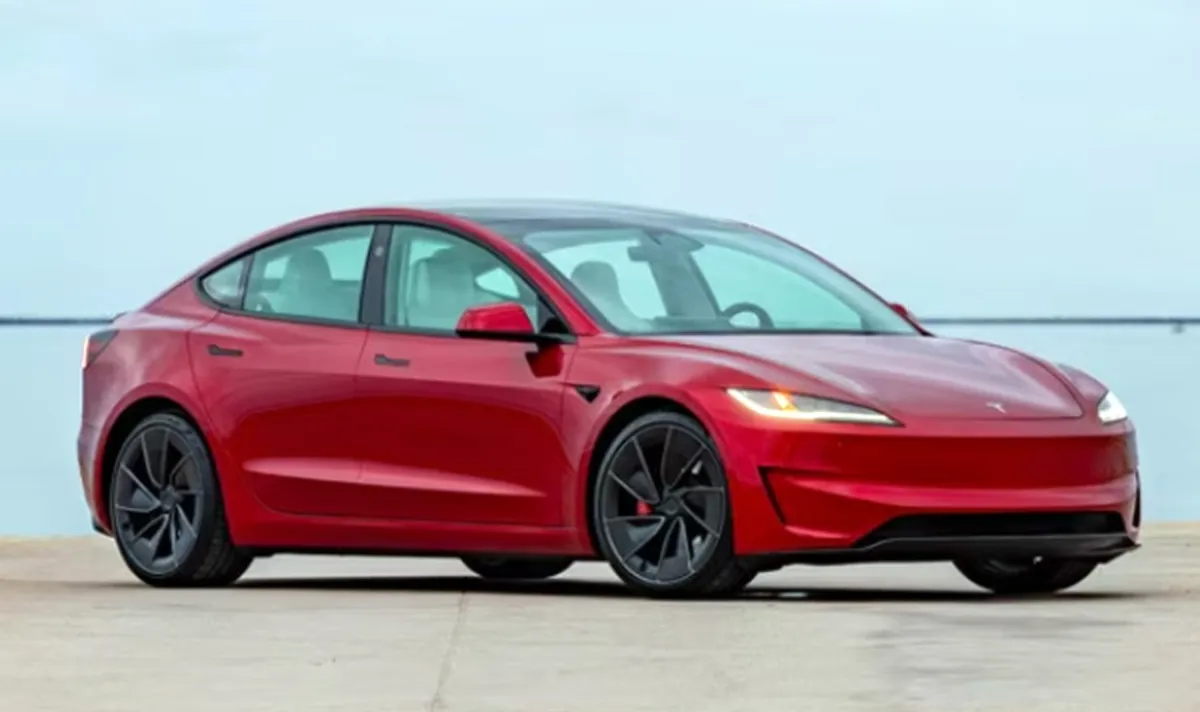

The new package of tax amendments, which we have already informed you about, prepared by the Ministry of Finance, provides for the introduction of a special excise tax from January 1, 2027 for all passenger cars with a power of over 250 kW (340 horsepower). Since (like everything else in our country) the proposal was not made by narrow specialists, it does not distinguish according to the type of drive, and thus a large part of electric cars find themselves among those directly affected.
Unlike internal combustion models, where reaching 340 hp requires a serious working volume and falls into the deep premium or super sports class, with electric cars this limit is crossed extremely easily. The reason is that installing a second electric motor for four-wheel drive almost automatically shoots the power at the system level above 300-400 hp, even in relatively affordable family crossovers.
The proposed scheme provides for a basic excise tax for a new car of 10,000 euros, plus 10 euros for each kilowatt above the 250 kW threshold, while for used cars the tax is 5,000 euros plus 8 euros for each additional kilowatt. In practical terms, this means that one of the most popular family electric cars with two-wheel drive, such as the Volvo EX30 Twin Motor (428 hp / 315 kW), will be more expensive by over 10,600 euros upon first registration. The situation is similar with the popular Tesla models — Model Y Performance and Model 3 Performance, as well as with sports versions such as the Hyundai Ioniq 5 N (650 hp) or the Kia EV6 GT (585 hp).
The financial dimension of the new taxes becomes even more visible with Chinese manufacturers, whose model range relies heavily on an aggressive price-to-power ratio. Models such as the BYD Seal Excellence AWD (530 hp), Zeekr X AWD (428 hp) or XPeng G6 AWD (470 hp) are purchased by customers for the security of two-wheel drive and their rich technologies at the price of a basic European model. If the proposal comes into force in its current form, buyers of these Chinese cars will have to pay between 11,000 and 12,000 euros in additional state tax, which completely changes their final market price.
The affected segment accounts for nearly 15% to 18% of total sales of new electric vehicles in Bulgaria and includes a large part of the most technologically advanced models. Since the financial framework only treats the peak power of the drive, the new excise tax scale directly affects the standard configurations with two engines and four-wheel drive in electric vehicles.
This proposal is a pure absurdity and a demonstration of complete bureaucratic blindness, which treats modern technologies as a luxury sin. Punishing the electric dual-drive with thousands of euros in punitive tax is not tax policy, but brutal robbery that directly hits the consumer who has decided to invest in a more environmentally friendly and modern car. Under the pretext of pursuing luxury, the state once again demonstrates technological illiteracy, turning its fiscal hunger into a punitive action against the modern car fleet in our country.