


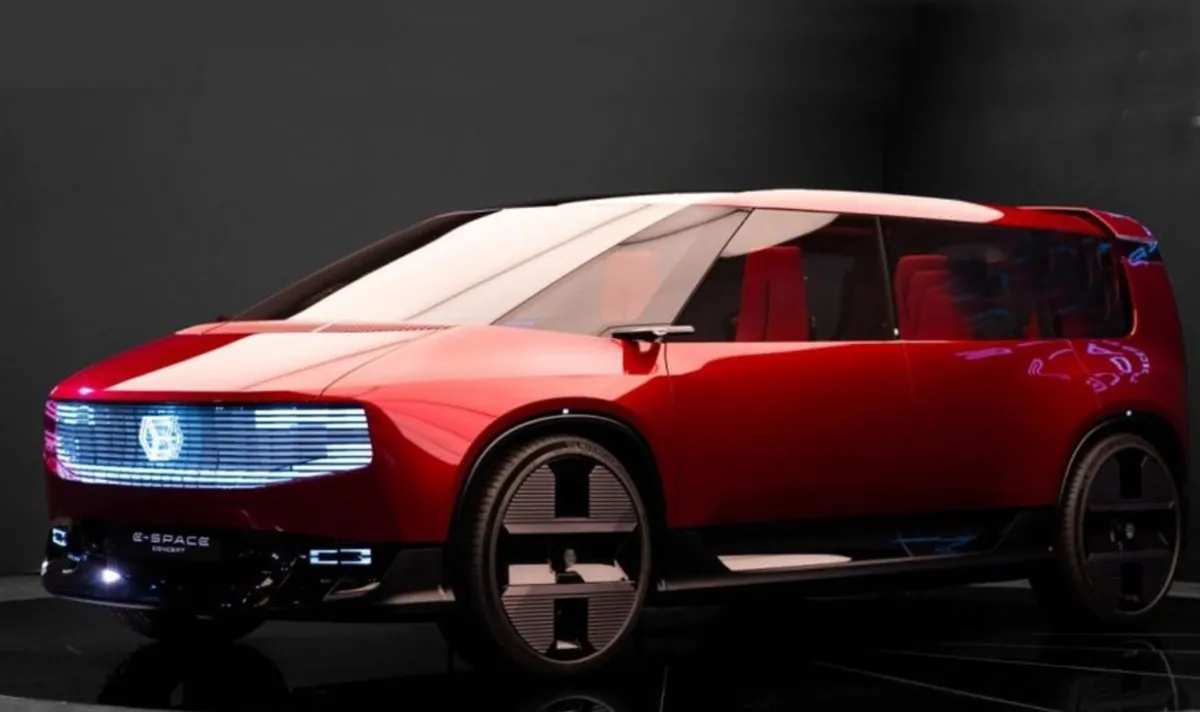

The French automaker Renault is ready to rewrite its stylistic signature, moving towards a more harmonious and unified vision for its future vehicles. After a period of creative experiments in which each individual model sought to stand out with its own unique personality, the brand is returning to a more restrained and consistent concept. An exception to this rule, however, will be the cult revived icons such as the Renault 4, Renault 5 and Twingo, whose iconic appearance will not be subject to common corporate standards.
The transformation in the design approach was explained in detail by Laurens van den Acker, responsible for visual identity at Renault Group. He recalled that under the previous leadership led by Luca de Meo, the team had the task of giving maximum originality to each premiere. Today, however, the range has reached the other extreme, turning into a heterogeneous palette, which necessitates an urgent search for the golden ratio and balance.
Behind the new course stands CEO François Provost, while the key role in shaping the look is entrusted to Alexandre Malval, who headed the brand's design. The strategy envisages a division into two fronts. For models with historical significance, their own essence will remain the leading one. The Twingo buyer is looking first and foremost for the emotion of the specific name, not a car inscribed in the company's general design language. For this reason, the R4, R5 and Twingo retain their complete freedom in terms of proportions, light signatures and body shapes.
The situation is completely different in the mass range, where the models will be significantly more closely integrated. This is particularly true for the higher C and D segments, where the French brand is ambitiously seeking to strengthen its positions. While the company has traditionally felt confident in the compact class, larger and more expensive cars require a more solid presence and clean lines that will remain relevant over time. To achieve this goal, the designers plan to drastically reduce unnecessary decorative elements and surface effects.
Van den Acker explicitly emphasizes that the sought-after change is related to elegant restraint, not to limiting creative freedom. A wonderful example of this evolution is the E-Space concept, which draws inspiration from the heritage of the legendary Espace minivan, but without blindly copying it, demonstrating more relaxed volumes. At the same time, the new electric platforms broaden the horizons of engineers, allowing for longer wheelbases, shortened overhangs and massive wheels. The result is silhouettes that successfully position themselves in the intermediate space between classic sedans and traditional crossovers.