


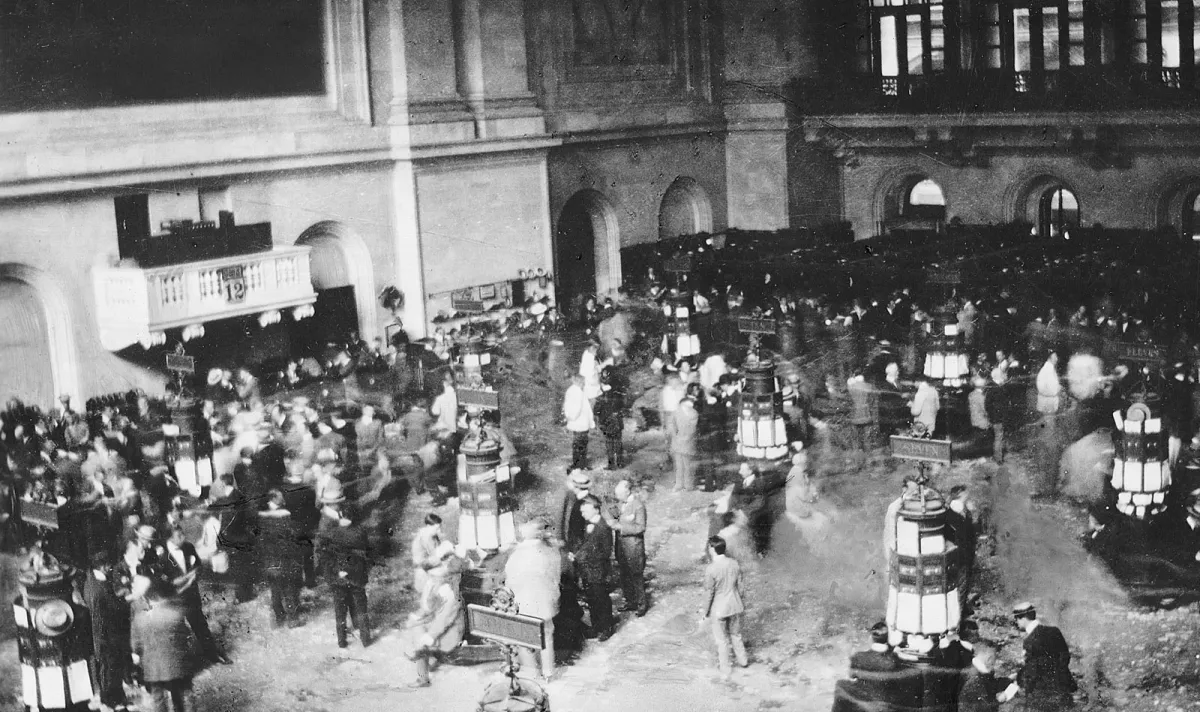

On Thursday, October 24, 1929, the New York Stock Exchange becomes the center of a panic that changes the economic history of the 20th century. During the day, a record 12,894,650 shares are traded, and prices collapse under the pressure of an avalanche of sell orders. The day remains in history as Black Thursday.
The crash comes after a long period of speculation. On September 3, the Dow Jones index reaches 381.17 points - its highest level to date. Many Americans buy stocks with borrowed money, counting on the fact that the price increase will continue. As prices began to fall in September and October, brokers made demands for additional funds, and investors were forced to sell.
The Panic on the Stock Exchange
On October 24, the sell-off became so severe that the stock market ticker lagged behind actual trading. According to a contemporary account in The New York Times, it was “the most catastrophic decline in the largest and broadest market in history“.
A group of leading bankers gathered to stop the collapse. Charles Mitchell of National City Bank and other financiers organized large purchases of stocks. Richard Whitney, then vice chairman of the stock exchange, publicly bought securities at above-market prices to restore confidence. By the end of the session, the market had partially stabilized, and the loss for the day was about 2 percent. However, the intervention turned out to be temporary.
Black Monday and Black Tuesday
After a brief lull, the sell-off resumed. On Monday, October 28, the Dow Jones lost nearly 13 percent. The next day - October 29, which went down in history as Black Tuesday - 16,410,030 shares changed hands on the New York Stock Exchange. This was a new record, and the losses could no longer be limited by purchases by the banking consortium.
The crash destroyed huge amounts of paper, but the consequences were not limited to Wall Street. The fall in prices undermined confidence in banks and companies, limited lending and reduced consumption. Bank failures, a decline in industrial production, and a sharp increase in unemployment followed.
The Beginning of the Great Depression
The stock market crash is often cited as the beginning of the Great Depression, but the economic decline in the United States began as early as August 1929. Historians and economists attribute the crisis not to a single cause, but to a combination of speculation, excessive indebtedness, weaknesses in the banking system, and a decline in production. According to the Library of Congress, the economic decline lasted 43 months - until March 1933.
The Wall Street crash became a global crisis because American banks and investors withdrew capital from other countries, and international trade contracted. The Dow Jones regained its record level of September 3, 1929, only in November 1954. Thus, Black Thursday remains not just a day of stock market crash, but a symbol of the boundary between the optimism of the 1920s and the long economic depression that followed.
Sources: pbs.org, history.com, time.com