



What will Europe look like tomorrow? What if 2027 shakes it to its foundations? An unprecedented electoral calendar, centered on France, could profoundly change the face of the European Union and paralyze the functioning of its mechanisms.
Never before has the EU faced such a series of political events.
Over the coming months, four of the five largest countries in the union will choose new governments. The elections will take place against a backdrop of growing strength for Eurosceptic forces that are distrustful of Brussels and seeking to give more power to the member states.
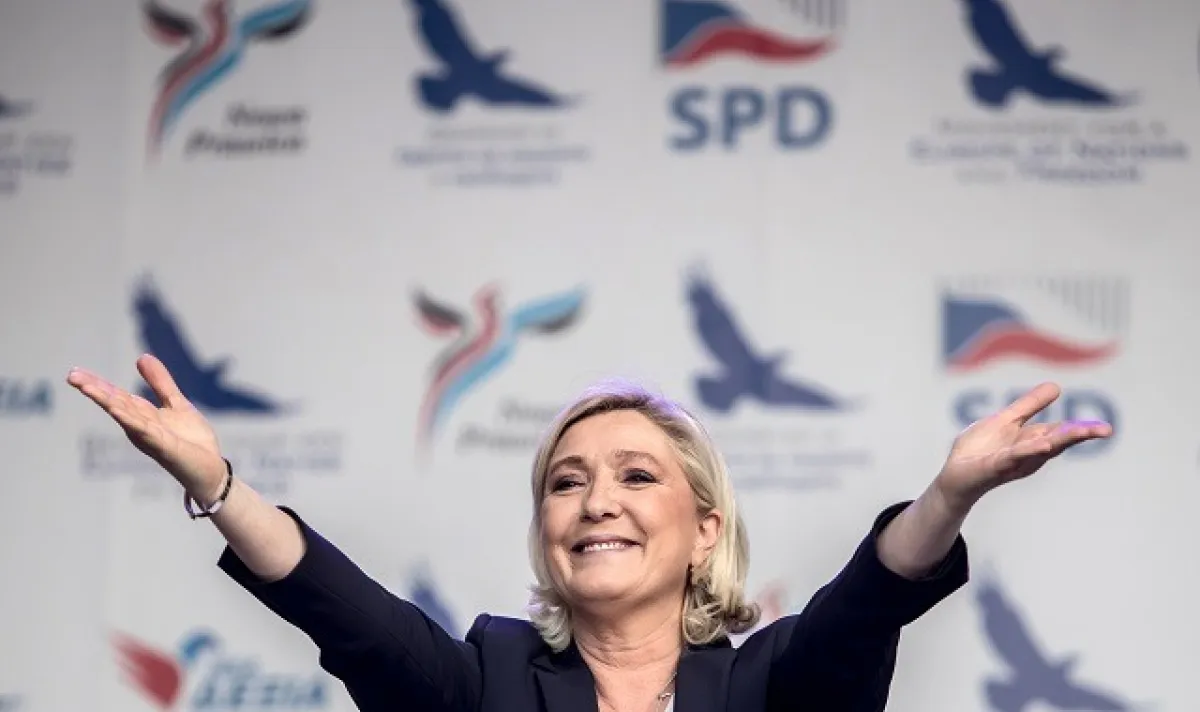
The decisive moment will be the presidential election in France, where far-right candidate Marine Le Pen is leading convincingly in opinion polls.
“What we risk is a paralysis” of the European machinery, a diplomat in Brussels sums up.
The electoral wave begins in Spain this Sunday.
Marked by heated debates on immigration and housing affordability, the elections there could bring the Pedro Sánchez era to an end.
The Spanish prime minister has been in power for more than eight years and is one of the EU's last socialist leaders. He maintains a position that differs from that of most of his counterparts, particularly on migration and defence. Most opinion polls predict a defeat for him in favour of his conservative rival Alberto Núñez Feijóo. For the first time since the Franco regime, the far-right Vox party could join the government.
In 2027, elections will also be held in Estonia, a Baltic state shaken by repeated attempts at sabotage by Russia.
There will also be elections in Greece and Finland, as well as in Slovakia, where Prime Minister Robert Fico maintains ambiguous relations with the Kremlin.
After that, all eyes will turn to Italy, where far-right Prime Minister Giorgia Meloni faces competition from the right in the form of an anti-immigration candidate opposed to aid for Ukraine – former General Roberto Vannacci.
There is also great interest in the parliamentary elections in Poland, which will be the arena for a new clash between the camp of liberal Donald Tusk and that of nationalist Karol Nawrocki. At stake is a clash between two incompatible visions of Europe, as was also demonstrated by the dramatic tensions surrounding Poland's Constitutional Tribunal in the autumn.
But no election is causing as much concern in Brussels as the presidential election in France.
Marine Le Pen, considered the favourite in the race for the Élysée Palace, promises Europe the exact opposite of the vision Emmanuel Macron has defended over the past ten years. It is worth recalling that he celebrated both of his presidential victories to the sound of “Ode to Joy”.
An end to EU enlargement, and an end to financial aid for Kyiv as well – a few weeks ago, the presidential candidate of the National Rally visited the Belgian capital to present this message. She pledged to reduce Ursula von der Leyen's European Commission to “the role of a secretariat serving the national states”. In addition, Le Pen promised to drastically reduce France's contribution to the European budget.
“Her proposals would represent a radical change of course that could put France in open conflict with the European institutions,” believes Célia Belin, an expert at the European Council on Foreign Relations.
Those at the highest levels of the European institutions scarcely dare imagine what the EU would look like under far-right rule in France, all the more so because genuine contacts with Marine Le Pen have never been established.
How will discussions among the 27 countries unfold during summit nights? Should we expect unmanageable meetings and the paralysis of the European machinery? What will happen to the Franco-German tandem – the historic pillar of European integration – given that Friedrich Merz is already politically weakened in Berlin? Could Ursula von der Leyen herself become a victim of these processes? In Brussels, some are already imagining the worst-case scenario.
Others, however, play down the significance of Marine Le Pen's statements and argue that if she comes to power, she will have no choice but to comply with European rules and play by the EU's rules.
“Not everything necessarily has to be viewed as a catastrophe,” another European diplomat assures. “If a vacuum opens up, other countries will immediately rush to fill it,” he predicts.
Some are also calling for great caution when interpreting opinion polls in an era marked by so many crises and upheavals.
What if, in the end, Eurosceptic forces fail to turn their growing popularity into electoral victories?
Worried or cautious, resigned or surprised, everyone acknowledges how important it is for the EU to become more resilient in the face of the coming electoral upheavals.
This could be achieved through intensive negotiations on the adoption of the next European budget or by seeking a way to approve funding for Ukraine for the whole of 2027.
You never know.
Translated from French by Gabriela Golemanksa
Source: www.bta.bg