


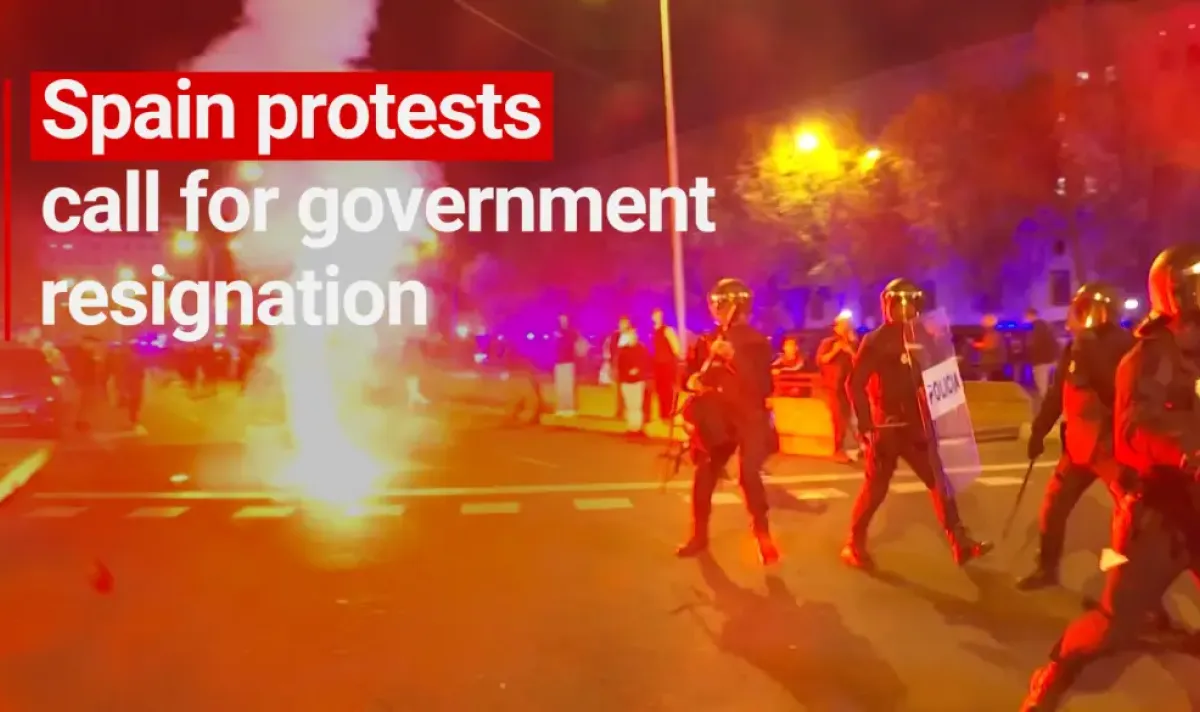

Calls for the resignation of Spain’s Interior Minister Fernando Grande-Marlaska were made following police actions during the general strike on November 11. Left-wing formations, including Podemos and Frente Amplio, accused law enforcement of using excessive force during the protests in Madrid and Barcelona.
According to “El País”, officers were filmed in central Madrid pushing and striking demonstrators with batons. Tear gas, pepper spray and rubber bullets were used during some operations. The UGT and CCOO trade unions described the response as disproportionate and announced that they were considering legal action.
In Barcelona, the protests were followed by clashes in which groups of masked individuals smashed shop windows, set fire to rubbish containers and threw pyrotechnic devices at the Catalan police. According to “El País”, more than 1,500 incidents were recorded across the country during the strike. The figures for those detained vary: the newspaper reported nearly 70 people, while other figures cited by Spanish media indicated a total of 115 arrests, including in Catalonia and the Basque Country.
Montero also called for police chiefs to be removed
Podemos candidate for the upcoming parliamentary elections Irene Montero called for Grande-Marlaska’s resignation, as well as the removal of police chiefs and officers who took part in the controversial actions. She said there must be accountability “from the minister to all the police chiefs and officers” who had committed acts of violence.
Montero cited as an example a video showing a police officer spraying pepper spray at a person on Madrid’s Gran Vía. She said the actions amounted to “repression” and that the government had not responded adequately to reports of broken ribs, baton strikes and unlawful checks. These claims are a political assessment and are yet to be verified as part of the investigations.
Government orders investigation
Grande-Marlaska ordered the General Directorate of Police to launch special reviews of the individual incidents. They are to be conducted independently of the usual internal inspection of National Police actions.
The Interior Ministry also announced that tear gas would no longer be used in operations to control demonstrations. Police unions objected to the measure. JUPOL called for the minister’s resignation but warned that restricting these tools could force officers into more direct physical contact with protesters.
Minister of the Presidency Félix Bolaños defended Grande-Marlaska and rejected the possibility of his dismissal. “Under no circumstances” is his position in question, Bolaños told Spain’s public radio, adding that police chiefs must determine whether there had been disproportionate use of force in individual cases.
The general strike was the first in Spain in 14 years. In Madrid, the government delegation estimated that more than 120,000 people took part in the main march, while organisers put the figure at between 600,000 and 750,000. In addition to police actions, the protests targeted unaffordable housing, low incomes and the rising cost of living.
Sources: elpais.com, europapress.es, ondacero.es