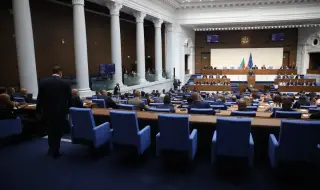
The ruling majority withdrew the proposal to increase the state debt ceiling by up to 3.8 billion euros, which was submitted between the first and second reading of the bill for changes to the so-called extension budget.
During a meeting of the temporary parliamentary committee on budget and finance, Konstantin Prodanov from “Progressive Bulgaria“ explained that the decision was made after public and political criticism of the idea, as well as after a conversation with Finance Minister Galab Donev.
In order to comply with the letter of the law, the proposals to raise the debt ceiling under the conditions of an extended budget will be submitted at a later stage by the Council of Ministers with the necessary justification, it became known from Prodanov's words.
However, the withdrawal does not affect other controversial proposals included in the bill. Among them are the elimination of the Covid supplement for newly granted pensions and the reduction of the state subsidy for political parties.
The Temporary Parliamentary Committee on Budget and Finance also approved, on second reading, changes to the Law on the Administrative Regulation of Economic Activities Related to Oil and Petroleum Products.
The main goal of the bill is to strengthen control over the activities of the so-called special commercial manager in companies that are part of the country's critical infrastructure. The changes expand the powers of supervision of the Minister of Economy, Investments and Industry and introduce additional mechanisms for judicial control over key transactions.
According to the adopted texts, the special commercial manager will be obliged to submit monthly reports on the activities of the companies managed by him, and the reports must be submitted to the minister within one week after the end of each month.
The draft law also provides for judicial control over transactions of particular importance, including the disposal of shares, shares in the capital or property of companies. These transactions will be able to be checked by the court, as they have a direct impact on the rights of owners and shareholders.
Clearer rules are also proposed regarding the validity of such transactions, as well as procedures for judicial challenge of those that are declared null and void. According to the proponents of the bill, the changes will limit the risk of abuse and violations in the management of companies of strategic importance. The new control mechanisms are expected to reduce the likelihood of financial losses and reputational damage to the state, as well as future claims for compensation from affected companies.