There is indeed a change in Bulgarian foreign policy, but I have concerns that this change will cost us too much.
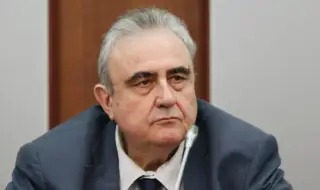
This was stated to the Bulgarian National Radio by Assoc. Prof. Ognyan Minchev, a political scientist and lecturer at the Sofia University.
"In practice, Bulgaria's new foreign policy, so called by the Deputy Prime Minister, led not only to the manipulation of the infamous "Botas" contract, but also to the cancellation of the contract with "Rheinmetall" for the construction of factories in Bulgaria, which could be a very significant part of Bulgarian industrial development. Without mentioning any reasons, the Bulgarian government unilaterally put an end to this agreement.
Some of the public statements of the Prime Minister, in particular in Ankara, do not greatly embellish Bulgarian foreign policy. His statement that "we cannot seek a conventional victory against a nuclear power". He is referring to the war that is being waged in Ukraine after the Russian aggression in 2022. But at the same time he does not say anything more than that peace should be achieved through diplomatic means. How can this peace be achieved through diplomatic means if we really do not make enough efforts to ensure that Ukraine has the means, the capabilities, the resources to oppose aggression on the battlefield, so that it can influence and convince the aggressor to sit at the negotiating table, and not seek a final resolution to this conflict on the battlefield?!"
He also analyzed Donald Trump's position at the NATO summit in Ankara and the promise of the American president to the Ukrainian to provide the technology for the production of missiles for the "Patriot" air defense systems.
"The evolution of the American position towards Ukraine is obvious. I would not require Radev to follow it. It may have its own, but it should reflect the Bulgarian national interest and the interest of those EU and NATO communities in which Bulgaria is a member.
It is a blank bullet fired into the air to embark on diplomacy without formulating clear prerequisites for when such diplomacy could be effective".
When we talk about Rumen Radev's positions, we are not talking about a new face in Bulgarian politics, noted Ognyan Minchev in the program "Nedelya 150".
"He is in a new position. We know that he occupies the so-called. dual-track foreign policy position. She is one when she speaks abroad, another when she speaks to the Bulgarian media.
Does any reasonable person think that Turkey will start giving us gifts without having its own conditions, the political scientist also noted regarding the freezing of our contract with "Botaş".
"The Republic of Turkey has its own agenda of requirements towards Bulgaria, of claims, of proposals, some of which are difficult to refuse, but must be evaluated through the prism of the Bulgarian national interest.
For 15 months we will not pay this tax for the "Botaş" contract, which we do not use. The postponement may lead to an increase in this obligation of 3.5 billion and it is not necessary to pay it in cash in all likelihood. We can pay it by incorporating the "Botaş" contract in a broader agreement that would be even more beneficial for the Turkish side.
In the current situation of exercising various sanction regimes against Russia, Turkey plays the role of a facade that conceals a significant part of the transactions of Russian energy carriers through the wall of the sanction regimes. When, by decision of Brussels, the import of Russian gas to Europe is stopped, Turkey could turn out to be an invaluable partner for Moscow in disguising Russian gas as neutral, flowing through Turkish pipes and sold by Turkish corporations to European countries.
Due to its geographical location in the Balkans, Bulgaria has real chances to become such an energy hub for the redistribution of energy resources. But it must have a portfolio of diversified supplies and energy corridors.
Turkey's goal is to absorb Bulgaria into its own infrastructure of energy corridors and energy transit, in order to turn Bulgaria from a potential hub for energy distribution into an impersonal territory that is a geographical extension of the Turkish energy hub. This is Turkey's interest. We cannot condemn it for this. We can condemn those Bulgarian politicians who allow this to happen in an easy way.
I never expected that "Progressive Bulgaria" could turn out to be an anti-oligarchic force, commented Assoc. Prof. Ognyan Minchev.