On April 19, 1939, Prime Minister Georgi Koseivanov issued Directive No. 19.
The document officially recognized that Bulgaria had territorial aspirations towards its neighbors. Since we do not want to quarrel with England, we do not show our claims to Greece.
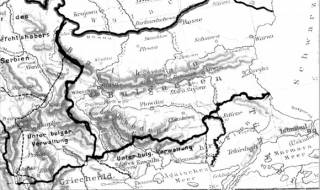
For this purpose, the Bulgarian demands are clearly graded - receiving Southern Dobrudja within the borders determined by the Berlin Congress on July 1, 1878, White Sea Thrace - within the borders of the Bucharest Treaty of July 28, 1913, and the Western Suburbs, possibly handed over to Yugoslavia with the Neuilly Dictate.
In exchange, Bulgaria will remain neutral in the event of war, but if one does break out, Bulgaria will in no case go to war with Germany. Everyone in Europe knows that Bulgaria wants Southern Dobrudja. For this purpose, we also find support in the person of Russia, Italy, Germany, Great Britain and others. The question is how to make Romania return Southern Dobrudja without war. In June 1940, the Russians give Romania an ultimatum to return Bessarabia, the Hungarians want Transylvania. Germany arbitrates and the Romanians return the territories. Germany pressures Romania to meet to negotiate with Bulgaria in August. Difficult negotiations. The Romanians want Balchik and Silistra. The Bulgarians want the territories from the Bucharest Peace Treaty of July 1913.
Koseivanov's successor as prime minister - Bogdan Filov even wants to take them by force, but does not do so. On September 7, 1940, the Craiova Agreement was signed. About 80,000 Romanians must emigrate from Bulgaria and 60,000 Bulgarians from the territory of Romania. Bulgaria is supported by the USSR, Germany and England. The Russians are coaxing Bulgaria to take back Northern Dobrudja, and Bulgaria's response is that it is not crazy to border Russia! Pressure from Russia begins for Bulgaria to join the Tripartite Pact. This is only temporary. Mussolini declares that he will attack Greece and offers Bulgaria to attack it together. The special envoy of the American government, William Donevan, arrives and convinces the Tsar to remain neutral. A personal message arrives asking Bulgaria not to attack Yugoslavia and Greece. Bulgaria has nothing against it, but it depends on how many divisions they send. Finally, the Soviet envoy Arkady Sobolev arrives. He brings Boris a proposal for a pact that Bulgaria will not fight with Russia. Russia promises that it will not change the system and gives it Eastern and Western Thrace.
Sobolev's proposal is rejected, but at the end of 1940-1941, some decision must be made and on January 20 the government decides to join the Tripartite Pact, but at a later date. Hitler must crush Russia. He must pass through Bulgaria, and she, in turn, must decide how: as friends or as enemies. The government decided that it was better for them to pass as our allies. On March 1, 1941, Bogdan Filov signed the Tripartite Pact in Vienna, with which Bulgaria entered the war. Shortly after us, Yugoslavia also joined the pact. Then a coup took place in Yugoslavia and it concluded ........ with Russia.
On April 6, 1941, a German attack against Yugoslavia and Greece. Bulgarian troops did not participate in this attack, but because they provided terrain, Yugoslavia bombed Kyustendil. In May, Bulgarian troops occupied Vardar Macedonia and Western Thrace. Civil administration was also introduced there. Bridges, roads, bridges, schools were cut. Not all of Western Macedonia was given to Bulgaria. One part was given to Italy (because of the Albanians). They also held Albania. Western Thrace: German administration was introduced in its eastern part (Dedeagach – Svilengrad). On July 22, 1941, Germany attacked the USSR.