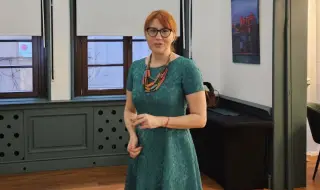
There is a number of medical evidence that shows that homeopathy is a reliable, effective and safe companion for patients with various health challenges. What else… Dr. Zorka Ugrinova speaks to FACTI.
- Dr. Ugrinova, you are a specialist in general medicine and homeopathy. When did you get interested in homeopathy and why?
- I graduated from medicine in 1996 and that same year in the fall I found out from colleagues about a two-year course in clinical homeopathy. The seminars were held at the Medical University of Sofia, organized by a French school. The lecturers were French lecturers with many years of experience. What impressed me the most was the holistic approach to the patient. The ability to help him in the acute phase of the disease and to prevent relapses if he suffers from a chronic disease. I have been a practicing homeopathic doctor for more than 25 years and I never cease to be amazed by the possibilities of this method. Harmless, effective, gentle…
- When standard treatment does not help, do you resort to homeopathy, or do you combine them based on your extensive experience?
- It depends on the specific case. I have had patients with thyroid problems, psycho-emotional problems, dermatological diseases, various allergies, etc. in whom, with properly selected homeopathic treatment, the patients' condition permanently improves and the conventional remedies previously prescribed to them are stopped. In another group of patients - with metabolic disorders, arterial hypertension, degenerative bone and joint diseases, severe neurological, psychiatric, oncological, etc. Homeopathy remains only a supplement to the patient's main treatment and the prescribed conventional medications should not be stopped under any circumstances.
- Nowadays, we are increasingly faced with the problem that we are taking antibiotics, but they do not help us. People are becoming more and more resistant. How can homeopathy be useful here?
- Antibiotic resistance is a problem that the WHO has been warning about for several years. Easy access to antibiotics by patients, the mass prescription of antibiotics for viral infections, improper antibiotic treatment (such as a smaller dose or a shorter course than necessary) are some of the causes of this problem. Homeopathy is particularly suitable for starting therapy in a patient with an acute viral infection, for example. And in 90% of cases it will be sufficient.
If additional tests are needed or proof of a bacterial pathogen that requires antibiotic treatment, only then will an appropriate antibiotic be prescribed, in a certain dose and duration. Self-medication, of course, is not recommended.
- You have been a long-time lecturer in clinical homeopathy. How widespread is homeopathy in Europe?
- In France, Great Britain, Germany, Spain, Italy, homeopathy is extremely popular. A few years ago, the largest study in the field of homeopathy was conducted in France - EPI 3, which covered more than 800 medical practices and more than 8,000 patients. The EPI3 pharmaco-epidemiological study program aims to assess the role of homeopathy in general practice and to measure the public health interest in homeopathic treatment in France.
Doctors are divided into three groups - without homeopathic training (conventional practice), mixed practice - doctors with extensive homeopathic practice.
This study aims to assess the role of homeopathic medicines in general medicine and to describe and compare patients, depending on the doctor's practice (conventional, mixed or homeopathic).
3 cohort studies targeting 3 different pathologies:
- Musculoskeletal pain (MSP)
- Upper respiratory tract infections (URI)
- Sleep disorders, anxiety and depression (SAD)
The results are eloquent:
- The inclusion of homeopathic therapy in medical practice has a therapeutic benefit for the patient affected by MSP. He will use 2 times less non-steroidal anti-inflammatory drugs and will be exposed to fewer unwanted side effects.
- The inclusion of homeopathic therapy in medical practice in patients affected by upper respiratory tract infections will reduce the need for antibiotics, antipyretics/anti-inflammatory drugs.
- And in patients affected by anxiety-depressive disorders and/or sleep disorders, it leads to the use of fewer psychotropic substances and will also be exposed to fewer unwanted effects.
Therefore, the homeopathic therapeutic strategy is of important public health interest not only in Europe, but also throughout the world.
- Homeopathy and cancer – how they have developed in recent years as a process in the body and treatment…
- This area is one of the hot spots of our time. As I said, in cancer, the role of homeopathy is complementary to the patient's main treatment. There are homeopathic medicines that can help a cancer patient tolerate the mandatory aggressive therapeutic courses more easily. There are also homeopathic medicines to support the patient's psycho-emotional state, sleep and quality of life. The relatives of these patients also need attention and support in these cases, and there are also very suitable homeopathic remedies for them.
- And the big question that is often asked - homeopathy and vaccines… Is there a dilemma for you here?
- There are vaccines that are mandatory in the Republic of Bulgaria and are included in the national immunization calendar. There are patients who, for health reasons, are exempted entirely or partially from these vaccines. There are also such immunizations that are seasonal or optional for certain groups of patients. There are also homeopathic medicines that make it easier to administer a vaccine. The issue is more about reasonable medical judgment in each clinical case and the personal responsibility and conscience of the homeopathic doctor.
------
Dr. Zorka Ugrinova graduated in 1996 from the Medical University - Sofia. She acquired a specialty in "General Medicine" in 2005. Dr. Ugrinova's professional development took place in various medical institutions. Over the years, she has worked successively in: First Children's Department of Infectious Diseases Hospital - Sofia, in the Emergency Department at the 28th, 27th DCC and in the Medical Center “Lora” – Sofia works as a general practitioner and pediatrician on duty. This includes the period from 1996 - 2004. Since 2005, he has been practicing as a homeopathic doctor at the private Medical Center "Fitolek". Since 2006, he has been an associate lecturer in clinical homeopathy for medical students at the Department of "Pharmacology and Toxicology" at the Medical University - Sofia. For the period 2006 - 2011, he was a lecturer in clinical homeopathy at the Center for Training and Development of Homeopathy.