


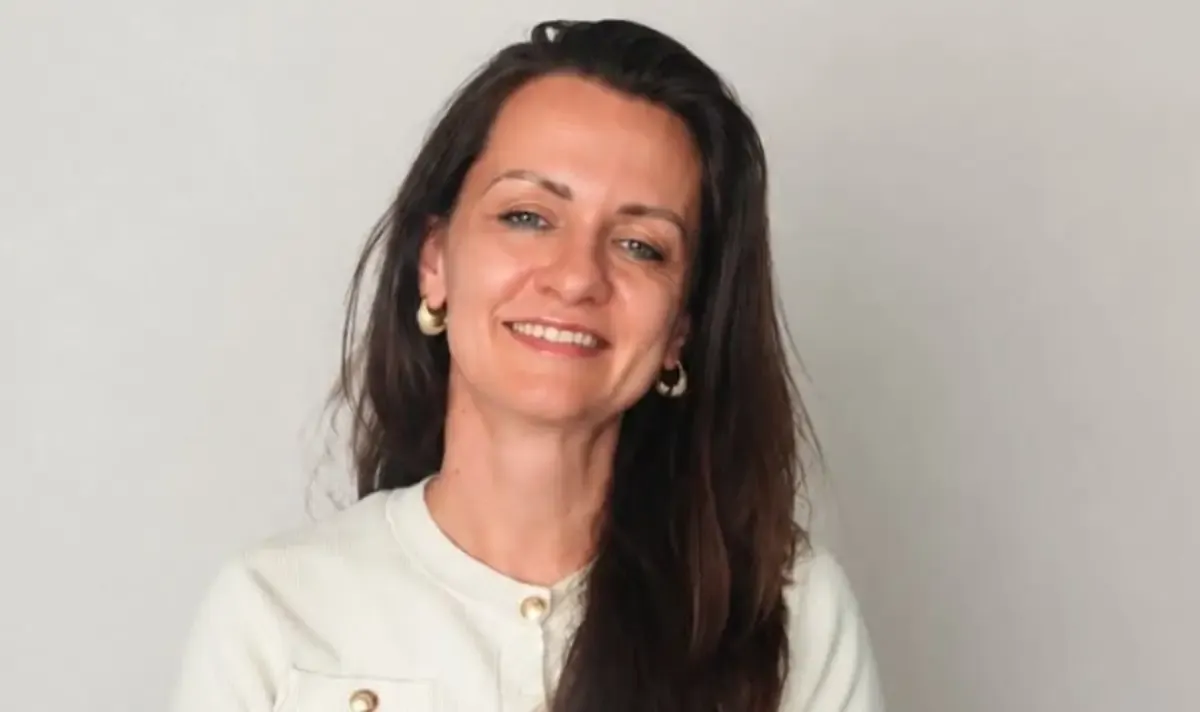

The first round of the presidential elections called into question the expectations of a convincing lead for Iliyana Yotova and showed a serious voter exodus. What is behind the low voter turnout, why did traditional electorates stay away from the vote and what will be their role in the runoff? Political scientist Dr. Maria Kazakova speaks to FACT.
— Ms. Kazakova, the results of the first round of the presidential elections show a much smaller difference between Iliyana Yotova and Andrey Gyurov than the pre-vote forecasts suggested. To what do you attribute this discrepancy between expectations and the actual result?
— Of importance for the difference between the predicted and actual results are the parallel collapse of support for Yotova and the predicted and actual voter turnout. This led to a positive effect for the Gyurov-Kandev couple.
Among the key events for the decline in her support are the attacks in the Black Sea and her positioning on the Europe-Russia axis, the revelations about the pardon of a drug lord in good health, which turns out to be one of her small personal management decisions that became known to the public after her extremely long political career compared to the average for Bulgaria. For most of the time, however, she has been on the political scene in party or collective bodies such as the National Assembly or the European Parliament without visible personal management decisions leading to the assumption of specific responsibility.
Regarding the second factor - a decline in activity, the outflow of voters from “Progressive Bulgaria“ in general, due to the galloping prices and the increasingly surrounding war, as well as the landmark murder on the eve of the vote, have also influenced the decline in the desire to vote at all.
Here we should not miss the quiet pounding on the table of Peevski and Borisov, who, with their absence, also significantly reduce activity, increase the relative weight of Gyurov, but also mark the magnitude of their influence.
— Is this a sign of a change in political attitudes, or of an underestimated mobilization of the opposition vote?
— Yotova's low result is, to a large extent, a vote of no confidence in Rumen Radev's government.
Six months after the elections, the result resembles the rapid melting of support for anecdotal parties such as Slavi Trifonov's ITN.
900,000 fewer votes mean an outflow of those who believed that entry into the eurozone was reversible, that price control was possible, a collapse of the illusion of an open fight against the oligarchy despite media campaigns that partially initiated some actions with a similar flavor. Significant arrests began, and on the eve of the vote, but the question is why they were selective.
This allows them to be labeled as political repressions.
Here it is not a question of stopping them, but of expanding them to include representatives of other political forces, and of still reaching convictions. The local elections next year will also be key for the party's implantation. It will also have to deal with emerging problems such as the failure of the tourist season at sea due to the attacks, as well as "Eurovision" to the sounds of drones and constant military risk.
It should be borne in mind that these parties are more like electoral waves, temporary networks in a destructured information society, which, however, fall apart just as quickly as they are created.
This is especially true when party building progresses slowly, is based on clientelistic principles and operates in conditions of exhaustion of leadership potential in the localities due to long-term instability and a series of short-lived party formations.
— Voter turnout is around 22% — one of the lowest levels in a presidential vote in Bulgaria. Why do we have this result?
— Many factors influenced this direction. On the one hand, this campaign as a whole did not offer bright political figures. On the part of “Progressive Bulgaria“ there was semi-support through an initiative committee for a candidate who rather represents a form of political inheritance for Rumen Radev, something like a “BSP tax“, which he had to agree to in order to be elected for his first and second term.
After that, their candidate Ms. Yotova remained to “guard“ the presidency and despite the collapse of her party - BSP, she also turned out to be a semi-candidate of the progressives.
On the other hand, the Gyurov - Kandev couple, although not originally deeply rooted in Sofia and its socio-political circles, symbolically personifies them, which is difficult to find support outside the capital. That is why it even leads in terms of results in places like Sofia, Plovdiv and the vote from abroad.
The low voter turnout is also the result of another collapse of the illusion of change that Rumen Radev created, and could not offer either prepared personnel or the freedom and determination to act.
This is only the second vote after the appearance of “Progressive Bulgaria“ on the political scene at all, and a key figure of the BSP is being proposed as its representative, for whom information constantly emerges about a deep commitment to clientelistic and corrupt practices, against which part of society is fighting. The structural absence of those who support GERB and MRF is also important for the low voter turnout. With them, the result would be significantly more similar to that of previous years. However, several types of abstentionism are noticeable in this vote. For part of society, the reason is a lack of quality political proposals and it is a method of boycott. For other social groups, it shows that they are unfortunately under political control.
— Is it a question of fatigue from the series of elections, of distrust in the political system or of the feeling that the citizens' vote does not change anything?
— As for fatigue, given the pace of electoral activity in recent years, it can be said that from April until now, voters have had the opportunity to gather strength for another election.
However, there are significant and relatively slender electorates such as those of GERB and DPS, whose absence is symptomatic.
Through it, their leaders are blackmailing the ruling party into not giving in to the demands of society to take action against them and to cease verbal and potentially and possibly real actions to investigate the nature and mechanisms of their influence.
Bulgarian society is divided into heterogeneous groups.
The awakened citizenship, mainly in Sofia, has the intellectual and economic freedom to raise the topic of changing the principles of governance or at least introducing some elementary ones. In parallel with this, feudalization is in effect in small settlements and the boycott, especially by MRF voters, to the greatest extent marks the geographical territory where society essentially lives in a more primitive political system.
There, people have practically voluntarily surrendered their political freedom for economic dependence. The population protects its corrupt leaders because, despite the deductions for their luxurious life, they leave something for them.
With GERB, the situation is more nuanced, even if it is not a question of exclusive feudal lords, the support is of a clientelist type and the expectations for direct material performance and benefit, for example through statuses and appointments, are leading in solidarization and following the leadership of the political leadership.
In any case, the special shifts within the framework of these elections as a result of the longer cycle after the overthrow of Boyko Borisov, the political instability and elections with an atypical frequency lifted the curtain on the methods of political connection in general and the depth of the tentacles of corruption. Contrary to the political myths about “those above“, it turns out that wide social circles are also included in the networks for capturing public funds. For this reason, it is not certain whether the entire society wants corruption to be fought.
— In some sections there were almost no voters, and in the Kardzhali region the turnout was particularly low. What does this indicate about the relations between political parties and their traditional voters? Is it possible that the apathy in Kardzhali is related to the arrests and police actions against mayors affiliated with the MRF?
— In these areas, it is clearly more a question of boycott than apathy. In this situation, this once again outlines the well-known perimeter of the MRF's influence and raises the price of a possible support for one of the candidates in the second round next week. However, if the deserted sections support any of the candidates as one, this will be a clear and undeniable picture of the purchase of political influence in our country.
— What should the two candidates change in the one week remaining until the runoff?
— Gyurov should try to gain more audibility and present himself, if nothing else, as the lesser evil compared to Yotova, because the situation now allows it. Yotova is stuck in the conjuncture of her biographical burden and her passive position mainly with regard to the events in the Black Sea and the positioning towards Russia. She should probably try for a week to fit into the image of the supreme commander of the nation.
This is a big challenge for a quiet party player.
In addition, at such moments it is important that, although strongly feminized, Bulgarian politics does not allow women at the top of the pyramid. Apart from Reneta Indjova, let's say, but in her capacity as only an acting prime minister years ago, the presidential and prime ministerial positions remain reserved for men. And currently Yotova is something of an acting president. Women are only allowed to hold the ceremonial role of Speaker of the National Assembly.
— Which groups of voters will be decisive?
— These are, of course, those who boycotted the vote, because even just one of the two parties, either DPS or GERB, can tip the scales in one direction or the other. As for the redistribution of the scattered vote in the first round for Kostadin Kostadinov, Radostin Vassilev, Ivelin Mihaylov, it is rather nationalist, has some ideological kinship with Yotova's profile, but it is unlikely that the redirection will be automatic and orderly.
It is important how the “controlled“ vote will be directed, because unfortunately it is clearly significant. Paradoxically, in some small settlements, in addition to the well-known use of municipal and forestry employee appointments as a political resource, even teachers have become “political appointments“… In addition to the violated requirements for political independence of the administration, even schools have been covered in the networks of salary exchange for support…
— Andrey Gyurov issued a public invitation to Iliana Yotova for a television debate. Would it be a political mistake if she refused?
— She should have joined the debate, but it is interesting to observe what political capital she could wield within the framework of such a conversation. She is currently the acting president, and the Black Sea was declared by the “Financial Times“ the most dangerous for commercial shipping in the world, more dangerous than the Strait of Hormuz. On the other hand, silence would be an even bigger mistake, because it will only be pelted with compromising material. It is interesting whether there is a major revelation prepared, which will be made, for example, between the two rounds. At the moment in Bulgaria, political confrontations have become the only mechanism for revealing the actions of the elites, because the institutions that should do them in principle are captive and conveniently silent.
It seems that her headquarters have overtrusted the inertia of the election of Rumen Radev.
In fact, it turns out that neither he enjoys high support only six months after his election, nor is he giving it away selflessly for Yotova.
— The presidential institution is often perceived as representative, but in conditions of political instability its role becomes much more significant. What specific commitments should Yotova and Gyurov make to show how they will exercise their presidential powers?
— Important periods of crisis, such as that of military danger, or the formation of interim governments, remain in the hands of the president. Paradoxically, it was Ms. Yotova who gave Gyurov a chance to become acting prime minister, which gave him a boost and, in the current situation of collapse and constant turbulence, he turned out to be a presidential candidate. The topic of war also became crucial within the campaign, and Bulgaria has not yet been led by a woman in a time of military danger….
— To what extent will their differences in foreign policy and attitude towards the war in Ukraine determine the choice of citizens?
— Their differences appear to be significant, and the election results show it. Although gratitude to Russia in our country is historically strong, some specific manifestations of separation from the European mainstream seem to have cost progressives electorally dearly so far.
— What is the most important political signal from these elections for Bulgaria and Europe? If few voters vote again in the runoff, will the winner have sufficient public legitimacy?
— Seen from the outside, the elected president will be considered legitimate regardless of the levels of activity. Ultimately, regardless of his support during the elections, he will be accepted in our country. However, who exactly will take office matters, because a president with a hesitant attitude towards Moscow on the eastern border of the EU will certainly strengthen the perception of Bulgaria as a “Trojan horse“, which could be left with two chairs on the ground...
------------------------------------------
Dr. Maria Mateeva-Kazakov is defending her doctoral dissertation at the Sorbonne in Paris (Paris II) with the title "honorary and admiration from the jury" under the supervision of Prof. Jacques Chevalier on the topic of populism in Bulgaria. Long-time observer of the processes in Bulgaria for the magazine Est-Europa, which is published in France. Former political advisor to the European Parliament and consultant on European policies at the Center for Strategies and Evaluations in London. Director of the Institute for Research, Analysis and Strategies (RAS institute), working in the field of strategic planning of EU policies. Board member of the Green European Journal, published in Brussels.