


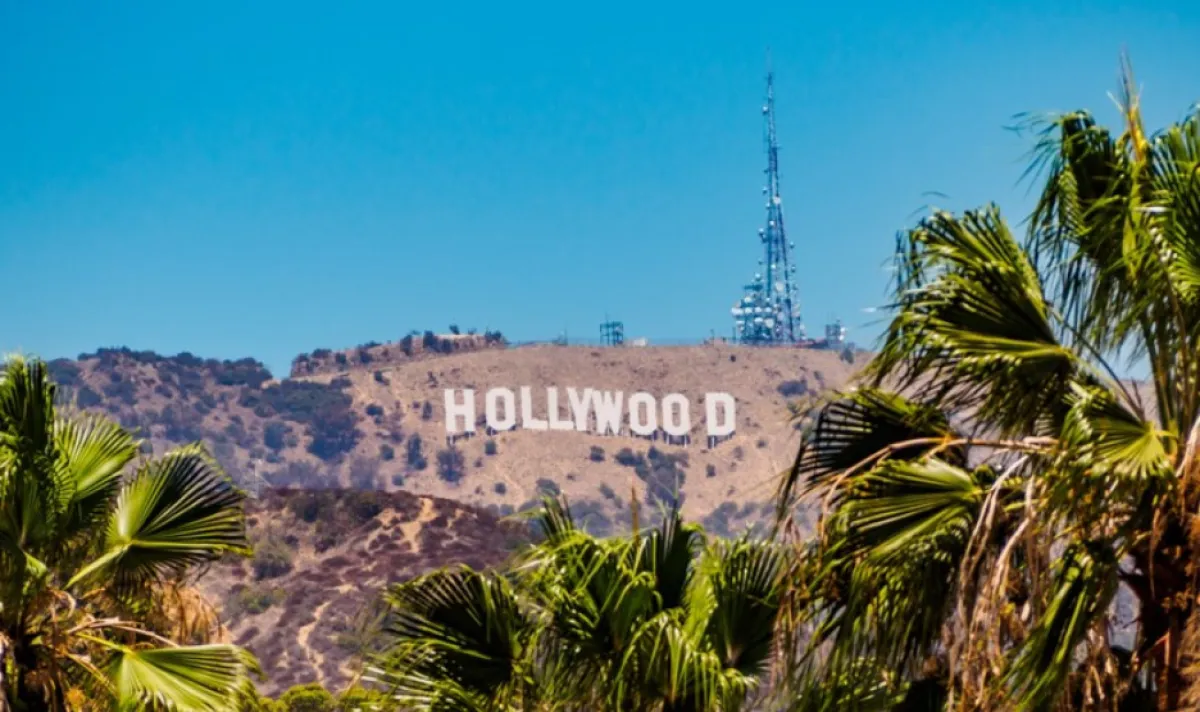

For decades, Hollywood has sought its villains among mad scientists, criminal corporations, dictators and people dreaming of conquering the world. Today, the role increasingly falls to another figure - the tech billionaire.
And this time, the characters often have real names.
Mark Zuckerberg, Elon Musk, Elizabeth Holmes, Sam Altman and Sam Bankman-Freed are among the tech entrepreneurs who are inspiring a new wave of films and television productions. What they have in common is not only the connection to Silicon Valley, but also the way in which cinema has begun to represent the enormous concentration of technological, financial and social power.
This is part of a broader “techlash“ - a backlash against the influence of Big Tech on everyday life, the economy and politics.
From the entrepreneur hero to the tech villain
The shift is remarkable. Just a decade ago, the tech entrepreneur was often portrayed as an eccentric visionary – a person capable of changing the world from a garage or a small office.
Today, the scenario is increasingly different.
The tech billionaire owns a huge company, controls sensitive data, invests billions in artificial intelligence, builds data centers, and has an influence that sometimes exceeds that of entire institutions.
It is this image that is becoming Hollywood's convenient new antagonist.
This fall, the trend is particularly clear. “The Social Reckoning“ returns to the story of Facebook and Mark Zuckerberg, the documentary “Musk“ puts Elon Musk in the spotlight, “You Can See Everything“ deals with the story of Theranos founder Elizabeth Holmes, and “Artificial“ focuses on the world of OpenAI and Sam Altman.
They are joined by “The Altruists“, related to the story of convicted FTX founder Sam Bankman-Fried.
“Cupertino“ turns the fight against Big Tech into a series
Perhaps even more indicative of the change is the new CBS series “Cupertino“.
The production of Robert and Michelle King, known for “The Good Wife“ and “The Good Fight“, uses the classic “David vs. Goliath“ formula, but this time Goliath is the tech industry.
The story centers on two fired lawyers, played by Mike Colter and Rachel Keller, who form a firm that defends people who have stood up to the tech elite of Silicon Valley.
CBS officially describes the series as the story of a small law firm representing people who have been harmed by the actions of the tech elite.
The cases involve intellectual property theft, sexual harassment, wrongful termination, and the risks of artificial intelligence.
In one of the plots, a drone company tries to shift the blame onto a programmer after a fatal accident. In another, a mysterious informant insists that a company reminiscent of Anthropic should introduce more restrictions on its most powerful AI model.
The series opened with an audience of over 3 million viewers and overtook “Grey's Anatomy“ in its time zone - a sign that a critical look at tech giants is no longer just a topic for a limited audience.
Hollywood has always reflected society's fears
The technological villain actually has a long history.
In classic science fiction, the danger often came from the mad scientist - a person who crossed moral boundaries in the name of scientific discovery. Later, huge, faceless corporations appeared in its place.
Cyberdyne Systems in the “Terminator“ series, Umbrella Corporation in “Contagious Evil“ and many other fictional companies embodied the fear of technology that could get out of human control.
The difference is that modern stories are becoming much more personal.
Instead of an impersonal corporation, the viewer is increasingly given a specific entrepreneur or hero who clearly resembles a real-life tech billionaire.
Researchers Joe Street and Russ Hunter from Northumbria University describe Silicon Valley capitalists as a new type of cinematic villain in a scientific analysis from 2024. They argue that modern science fiction films use technology corporations and their leaders to express public fears in a way similar to how American cinema of the 1950s reflected Cold War anxieties.
But there is one crucial difference.
The classic mad scientist violates the laws of nature in the name of science. The modern corporate villain often does so for the potential financial gain.
Why now
The reason is probably not just in the cinema.
Technology companies already shape much of how people communicate, work, shop, get information, and spend their free time.
With the rise of generative AI, their influence is expanding even further.
Data centers are changing energy systems. Algorithms are influencing the information that billions of people see. Artificial intelligence is raising fears about jobs. Tech billionaires are also increasingly involved in public and political life.
Tech company executives themselves are also much more visible than corporate leaders of the past. They participate in podcasts, conferences and political events, post directly on social networks and build personal brands, sometimes almost as recognizable as their companies.
Thus, the line between the corporation and its founder is increasingly blurred.
Silicon Valley as a symbol of power
This explains why the new Hollywood trend goes beyond specific individuals like Musk or Zuckerberg.
Behind the image of the “evil tech billionaire“ stands a larger social issue – how much power is reasonable to concentrate in the hands of people who control the technologies used daily by billions of users.
Hollywood simply turns this fear into a narrative.
And if in the 20th century, mass culture feared nuclear war, communism, robots, or uncontrolled corporations, in 2026 one of the most recognizable images of power is now the technological entrepreneur with billions of dollars, a huge platform, and an ambition to change the world.
But in new Hollywood stories, he is increasingly rarely the hero.